US lawmakers push new bill on AI safety, state law limits, worker protections
US House lawmakers on Thursday are proposing AI legislation that would keep advanced AI model development under Washington’s control – all while preempting state laws attempting to regulate the technology, including those laws already on the books.

Image by VideoFlow | Shutterstock

 Follow us
US House lawmakers on Thursday are proposing AI legislation that would keep advanced AI model development under Washington’s control – all while preempting state laws attempting to regulate the technology, including those laws already on the books.
- US lawmakers unveiled a new federal AI framework that would preempt individual state laws regulating AI model development.
- The proposal comes days after Trump signed a new AI executive order, signaling a broader push to keep frontier AI oversight under federal control.
- Washington is increasingly treating advanced AI systems as national-security infrastructure rather than just consumer technology.
Key Takeaways by nexos.ai, reviewed by Cybernews staff.
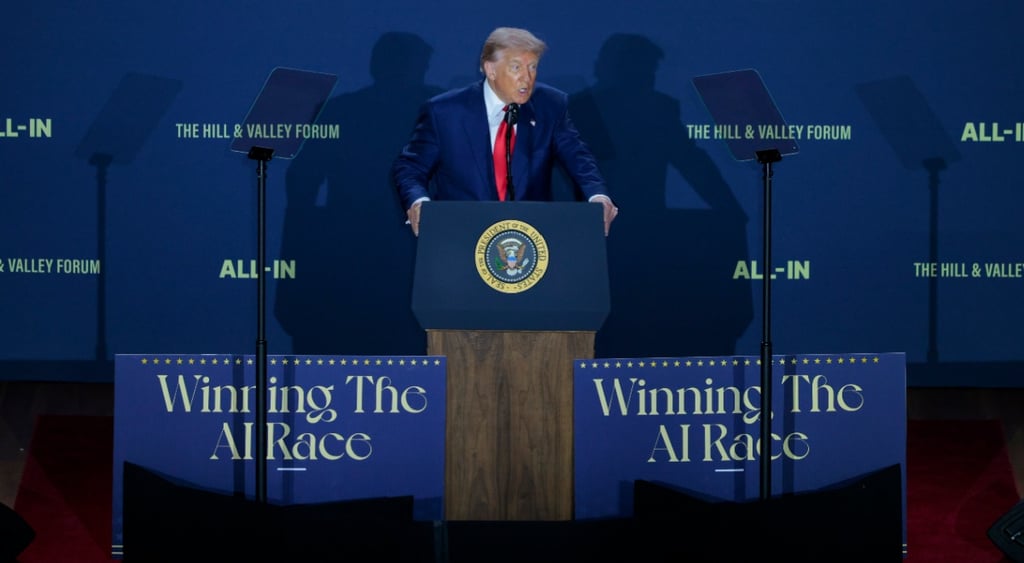
The move comes days after US President Donald Trump signed a new executive order on June 2nd, aimed at centralizing oversight of frontier AI systems to accelerate AI growth while maintaining control over potential national security risks and competition with China.
Both the latest EO and the new proposal stress collaboration between Washington and the private sector, framing frontier AI systems as part of the nation’s critical infrastructure.






The lawmakers say they are releasing the draft to solicit feedback from stakeholders, experts, and the public before the legislation is formally introduced.
Bill puts frontier AI developers on notice
The bipartisan “Great American AI Act” (GAAIA) was unveiled by House Energy and Commerce Committee members Democrat Lori Trahan of Massachusetts and Republican Jay Obernolte of California.
“The threats AI poses to our national security, safety, and workforce are here and growing by the day,” Trahan said in a post on X.
Trahan said the bill would “protect workers, establish real accountability for the most powerful AI systems, and position the US to lead on AI.”
One of the main tenets of the 269-page bipartisan draft legislation is that large frontier AI model developers – including Anthropic, OpenAI, xAI, and Google DeepMind – would be required to:
- Publish and follow plans to address catastrophic risks.
- Report safety incidents to federal and state regulators.
- Submit to third-party audits.
- Face civil penalties and injunctions if they fail to comply.
Under the proposal, the US Department of Commerce would be responsible for developing AI safety guidelines and best practices through a newly formed Center for AI Standards and Innovation (CAISI).
The AI framework would establish a baseline of cybersecurity requirements, risk thresholds, and reporting deadlines in the event of a security incident.
“Developers must file a report with CAISI within 15 days of a critical safety incident or within 24 hours if the incident poses an imminent risk of death or serious injury” – or face fines of $1 million per day for non-compliance, the document said.
The companies would also be subject to independent audits and must adhere to anti-retaliatory whistleblower measures, along with other worker protections (more on that below).
New bill targets state AI model laws
AI regulations enacted by the federal government would supersede state laws to avoid a patchwork of rules lawmakers say AI companies would be challenged to navigate, according to the document.
With AI laws already passed in California, New York, and Illinois, lawmakers say GAAIA would preempt those specifically targeting frontier model development.

For example, under California’s AB 2013, which regulates training data summaries, all model developers, regardless of their size, must publicly post high-level summaries of their training data.
Under GAAIA, that requirement would only cover frontier-level models, “exempting open-source developers, startups, and lower-resourced organizations.”
States would still be able to regulate how AI technology is used, leaving state governments in control of what happens after a model is released.






This includes state laws covering civil rights, labor and workplace protections, copyright, child sexual abuse material (CSAM), and consumer privacy.
The preemptions would expire after three years, ensuring Congress continues to revise and update the Act as needed.
Workers' rights included in AI oversight
The proposal further addresses AI oversight when it comes to American workers, requiring large frontier AI developers to establish whistleblower protections for employees who raise concerns about safety, security, or compliance issues.
As part of the AI framework, companies would be prohibited from retaliating against workers who report potential violations, critical safety incidents, or other risks related to the development of advanced AI systems.

The legislation also addresses growing concerns over AI-driven job displacement, requiring developers to examine how advanced systems could impact the workforce and economy.
As AI systems become increasingly integrated into the workplace, frontier AI companies would be tasked with conducting regular workforce impact assessments and consulting with labor organizations, workforce experts, and federal agencies.
Developers would also be required to report certain risks tied to large-scale workforce disruption, including whether advanced AI systems could significantly alter job functions, reduce labor demand, or create economic instability in critical sectors.

In January 2025, just days after returning to office, Trump signed an executive order launching an AI Action Plan, containing a slew of initiatives to tackle in his second term.
Thursday’s draft builds on that broader AI agenda, which aims to accelerate AI innovation, build the infrastructure needed to support it, and strengthen US leadership in the global AI race.
Has your password leaked?
Unlock more exclusive Cybernews content on YouTube.