Collien Fernandes “virtual rape” scandal shakes Germany
From sexualized deepfakes to “body count checkers,” artificial intelligence (AI) has become a powerful weapon against women. Celebrities like German TV presenter Collien Fernandes, who accused her intimate partner of digital abuse, are the main targets.

Collien Fernandes by Joshua Sammer/Getty Images

 Follow us
From sexualized deepfakes to “body count checkers,” artificial intelligence (AI) has become a powerful weapon against women. Celebrities like German TV presenter Collien Fernandes, who accused her intimate partner of digital abuse, are the main targets.
Fernandes was confronted with alleged nude photos and sex videos of herself at a dinner party in 2024. At the time, she didn’t know these deepfakes existed, according to BILD.
It later came to light that hundreds of deepfake photos and videos were circulating online. The images were crafted to look like Fernandes’ nude selfies, while videos created an illusion that she filmed herself having sex.
At the same time, social media profiles impersonating Fernandes started reaching out to her professional network.












The story took an unexpected turn after Der Spiegel recently reported that Fernandes filed a lawsuit accusing her ex-husband, Christian Ulmen, a prominent TV personality, of identity theft, public insult, and bodily harm. She referred to allegations as “virtual rape.”
“My body was stolen from me for years,” Fernandes was quoted as saying.
Ulmen denies the allegations, stating that Der Spiegel’s reporting contains “untrue facts based on a one-sided account.” According to a statement released by Ulmen’s lawyer, he was instructed to take legal action against the newspaper.
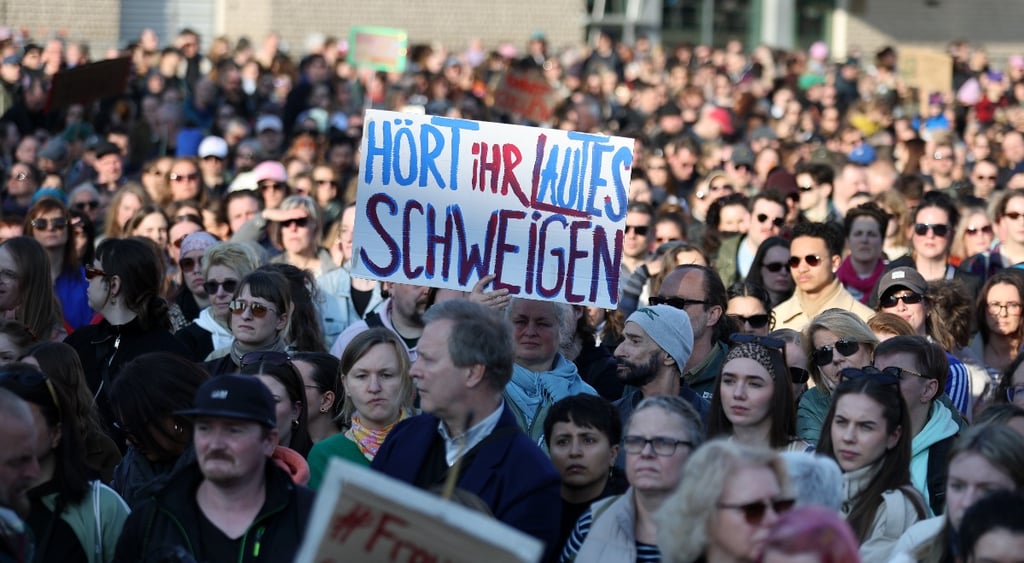
The case has sent shockwaves across Germany, with people gathering in Berlin over the weekend to protest against sexual violence and express support for Fernandes.
Whether Ulmen will be found guilty or not, the Fernandes case shows that anyone can become a target of sexualized deepfakes, and such harassment can last for years.
Germany is preparing a law against deepfakes
Fernandes filed a lawsuit in Spain, where she currently resides, citing stronger protections for women's rights. However, the case didn’t go unnoticed by German officials.
German Justice Minister Stefanie Hubig said last week that the government was preparing a new law to criminalize pornographic deepfakes, Deutsche Welle reports.
The legislation would make the production and distribution of such deepfakes a criminal offence and introduce civil measures that make it easier for victims to act against platforms, including the right to obtain information on perpetrators and to enforce account suspensions.
Six in ten (60%) of women and girls in Germany have experienced digital violence, reflecting the broader trend enabled by the increasing use of generative AI.
Most (98%) of all deepfake videos are deepfake pornography, with women depicted in nearly all of them, usually without their consent, according to a 2023 report.
Taylor Swift, Scarlett Johansson, and Emma Watson are among high-profile victims of sexualized nonconsensual deepfakes. However, anyone can become a target.
Grok, xAI’s in-built chatbot, may have produced three million sexualized images in 11 days in January 2026, including 23,000 of children, as part of the digital undressing trend.
Deepfakes are just the tip of the iceberg
Deepfakes, however, are only one of many ways AI can enable harassment of women.
According to a 2025 report by UN Women, AI tools trained on existing gender biases enable violence against women “to spread further, faster, and in a more complex way,” and can also be used for the following:
- Enhanced impersonation and sextortion: realistic AI bots that adapt to simulate human conversations can be used to lure women and girls into revealing private information or meeting up offline.
- Sophisticated doxing campaigns: AI tools can identify vulnerable or controversial content in women's posts, making them easier targets for doxxing campaigns.
“Check her body count,” an AI tool to estimate how many sexual partners a woman had in the past, based on her social media account, has recently started gaining traction.
While the website claims the results are made up and just for laughs, it attracted wide criticism for perpetuating misogyny and disproportionately shaming women for their sexual encounters.
The Cybernews community is talking about this. Be a part of the conversation.
UN experts say AI tools allow the spread of “manosphere” content further by using algorithmic tweaking, further adding to gender violence.
The manosphere, as recently portrayed in a Louis Theroux documentary, refers to online communities that claim to address men’s struggles but often promote harmful advice and misogynistic attitudes.
Unlock more exclusive Cybernews content on YouTube.