“Political hot potato:” What can governments do about Grok’s sexualized deepfakes?
Officials across Europe, Asia, and Australia have been looking into xAI’s chatbot Grok's production of unconsented explicit deepfakes of women and children. However, the current political climate may help X to avoid real punishment.

Image by Cybernews

 Follow us
Officials across Europe, Asia, and Australia have been looking into xAI’s chatbot Grok's production of unconsented explicit deepfakes of women and children. However, the current political climate may help X to avoid real punishment.
Grok-generated images featuring female users who were digitally de-clothed, dressed in tiny bikinis, or put in sexualized positions have flooded the Elon Musk-owned platform X, causing a global outcry.
As some of the images portrayed children, Musk has warned that anyone who uses Grok to create illegal content or post it on X will “face consequences,” but nothing was done about unconsented sexualized deepfakes of adults.
On Friday, access to Grok was limited to subscribers only, meaning that the chatbot would fulfill requests to edit images if users’ names and payment information were on file.
Governments around the world have condemned these images, calling on X to comply with digital laws and threatening the platform with fines and investigations.










However, an expert suggests that in the current political climate, governments may be hesitant to take action against the American technological giant.
UK expert: fines for X are unlikely
Ofcom, the UK’s regulator for the communications services, said that the agency “has made urgent contact” with X to understand the steps the company took to protect UK users and promised to make a swift assessment over potential compliance issues.
Andrew Murray, a professor at the London School of Economics and Political Science, says that generating and sharing a sexualized image without the consent of the individual is an offence under Section 66B of the UK’s Sexual Offences Act 2003 and can lead to imprisonment.
The punishment is even harsher if the person portrayed is under the age of 18. However, identifying the individual who made and distributed these images requires considerable law enforcement effort, and the UK law can only be applied to those who are in the UK.
Investigations take time, and the politics of taking interventionist measures against X by Ofcom in the current climate would make such actions a political hot potato.Andrew Murray
Murray says X could be made responsible for sexualized deepfakes under the Online Safety Act 2023. Ofcom may open an investigation, and if X is confirmed to have breached its safety duty, the company may face economic sanctions or even be blocked in the UK.
However, while the possibility of an investigation is real and the issuance of a provisional notice is possible, financial penalties and business disruption are unlikely.
Murray tells Cybernews, “Investigations take time, and the politics of taking interventionist measures against X by Ofcom in the current climate would make such actions a political hot potato.”
The country’s Prime Minister, Keir Starmer, has said on Friday that the images won’t be tolerated and asked for all options to be on the table.
“It’s disgusting. X needs to get their act together and get this material down,” he said.
The EU calls images “appalling and disgusting”
The European Commission said it was “looking very seriously” into the matter of Grok-generated images of young girls, calling them “appalling” and “disgusting”. The Commission spokesperson also urged X to comply with the Digital Services Act (DSA).
Ella Jakubowska, head of policy at European Digital Rights, a non-profit organization, says that under the DSA, X should be taking swift action, including ensuring that their terms and conditions clearly prohibit the sharing of AI-generated abuse material.
The platform is also obligated to remove content and suspend accounts that spread material found to be clearly illegal.
“If X fails to do this, they could be investigated and fined by the Commission for breaching the DSA,” she tells Cybernews.
However, Musk may not be willing to bend to Brussels pressure, especially given the increasingly tense relationship between the EU and American tech over the regulation of digital platforms.
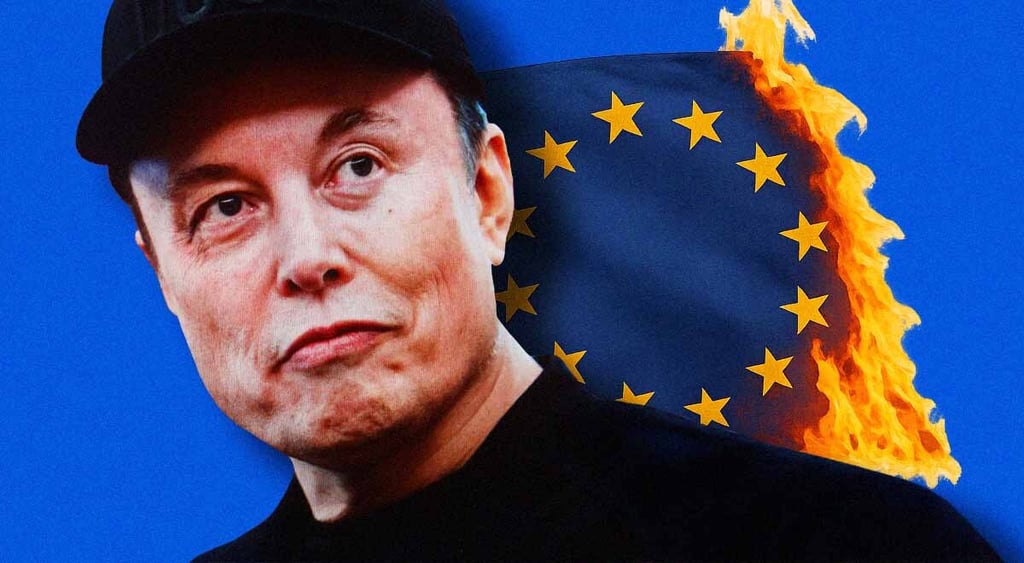
When the bloc has recently issued a €120M ($140M) fine to X for breaching transparency rules under the DSA, Elon Musk has responded by calling for the abolition of the EU.
On Thursday, the Commission ordered X to retain all internal documents and data relating to Grok until the end of 2026, extending the retention order sent to the company last year.
The Commission cited doubts about X’s compliance and said the company will have to provide access to documents if explicitly requested.
Individual EU states turn to law enforcement
The Paris prosecutor's office will investigate sexually explicit deepfakes of women and children, following complaints from French lawmakers, Politico reports, adding to the existing investigation into X.
The office noted that the offense is punishable by two years' imprisonment and a €60,000 ($70,000) fine.
France has long been critical of US digital platforms, with the country’s President Emmanuel Macron lambasting the slow pace of the EU in imposing rules on them.
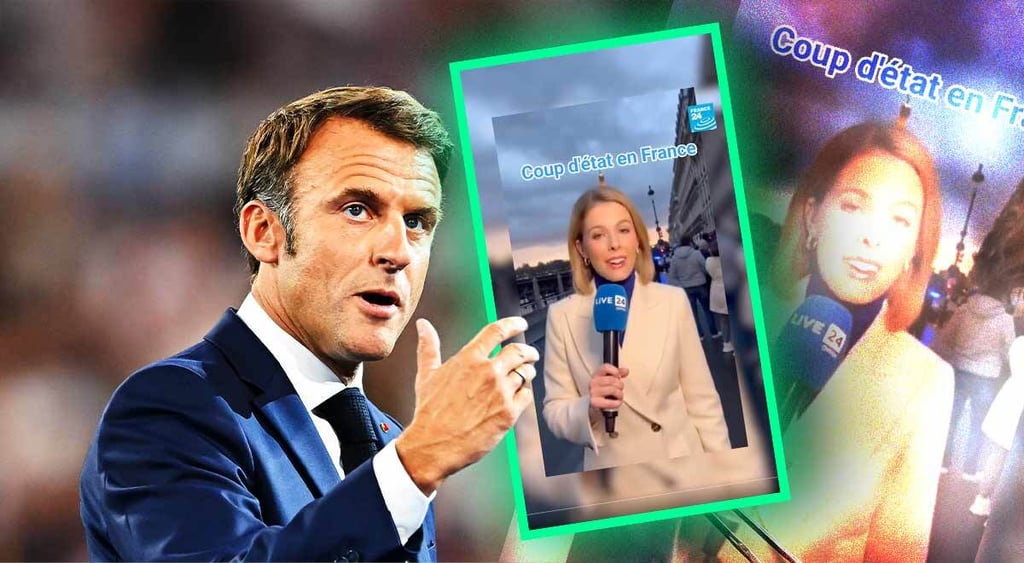
The president himself has been a victim of poor digital platform oversight. After a deepfake news report claiming that a coup had removed Macron went viral, Meta initially rejected his office's demand to take down the video.
Ireland’s media regulator, Coimisiún na Meán, has said it was engaging with the European Commission over the matter, because the bloc is responsible for the "oversight of platforms under the DSA, RTÉ News reports.
The watchdog has encouraged users to report illegal content to both online platforms and local police.
However, Irish Media Minister Patrick O’Donovan has attracted harsh criticism after saying that Grok isn’t responsible for these images and it’s “a personal choice for people” to create them.
“Every government department will obviously make its own decision with regard to that, but it’s not necessarily the app that’s making the images,” he said.
Meanwhile, German minister Wolfram Weimer urged the Commission to take legal action to stop what he called the “industrialization of sexual harassment” on X.
The Polish Minister for Digitalization, Krzysztof Gawkowski, wrote in his X post that Grok was testing “which boundaries it can cross” and urged the country’s president to sign the DSA, which would make the removal of illegal content easier.
Australia: the threshold for child exploitation has not been met
Australia’s regulator for online safety, eSafety Commissioner, has told the Guardian that the authority has received several reports relating to the use of Grok to generate sexualized images without consent, with some potentially related to child sexual exploitation material.
As reports are recent, the assessment is ongoing.
However, an eSafety Australia spokesperson said the reports did not meet the classification threshold for class 1 child sexual exploitation material. Therefore, it didn’t issue removal notices.
India: enforce guardrails or face consequences
India’s Ministry of Electronics and IT has sent a letter to X highlighting concerns about Grok-generated images targeting women and demanding the immediate removal of illegal materials.
The government stated that if X fails to enforce the required AI guardrails and submit a detailed report on the actions taken within 72 hours, the company will face severe legal consequences.
Malaysia also joined the ranks of governments concerned with Grok-generated images undressing female users. The country’s Communications and Multimedia Commission has issued a statement stating that it is investigating online harms on X.
Unlock more exclusive Cybernews content on YouTube.