Microsoft unveils AI-designed quantum chip and targets 2029 for usable quantum systems
Microsoft on Tuesday unveiled a new quantum computing chip that it redesigned with the help of AI, saying it now believes it will have commercially useful quantum machines by 2029.

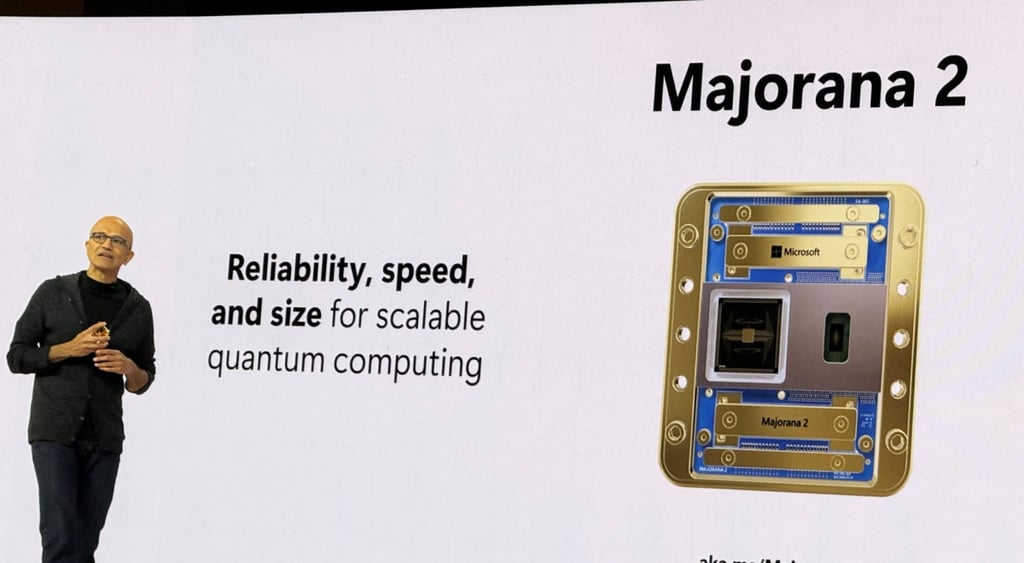
Microsoft's Majorana 2 quantum computing chip. Microsoft/Handout via REUTERS
 Follow us
Microsoft on Tuesday unveiled a new quantum computing chip that it redesigned with the help of AI, saying it now believes it will have commercially useful quantum machines by 2029.
- Microsoft targets 2029 for commercial quantum systems with new AI-designed chip.
- “Majorana 2” chip boosts performance, using lead-based materials optimized by AI.
- Quantum race heats up with Microsoft, IBM, Google, and Amazon all competing.
- Scientists question Microsoft’s claims, citing lack of fully reproducible data.
Key Takeaways by nexos.ai, reviewed by Cybernews staff.
The new target date puts Microsoft on track to have quantum computers the same year as rival IBM, which last month said it plans to spend $10 billion on quantum machines. It also spun out a company to make quantum chips for others, with backing from President Donald Trump's administration.
Microsoft had not previously given a target year for the new chip, saying only that it would be a matter of years, not decades.
Microsoft and IBM are racing against Alphabet's Google, Amazon and several Chinese efforts to develop quantum systems that could crack problems in medicine, chemistry and cybersecurity that would take conventional computers thousands of years. On Tuesday, Microsoft unveiled a new chip called Majorana 2, a follow-on from its first Majorana chip last year.











Microsoft uses AI to improve quantum chip materials
The biggest change to Microsoft's internally made chip versus its predecessor is that it uses an entirely new set of materials. While Google, IBM and many others make quantum chips with superconducting wires made out of aluminum, Microsoft's will be made out of lead, a larger atom.
Curious what others think about this story? Contribute your thoughts to the debate below.
Microsoft made the switch with the help of AI tools that it developed for use in materials science, and the result was a 1,000-fold improvement in some aspects of Majorana 2's performance, said Jason Zander, an executive vice president at Microsoft who oversees the firm's quantum efforts. The breakthrough, Zander said, was figuring out how to use lead, which is water soluble, on a chip without the lead washing away during the manufacturing process.
"The reason why people don't use it to build chips is it requires an incredibly specialized process to be able to go figure that out. And we figured it out," Zander said.
Microsoft's approach to quantum computing relies on quasiparticles known as Majoranas, which had not been proven to exist until Microsoft claimed to have observed them.
Scientists question Microsoft quantum claims
Its claims have kicked off a flurry of criticism among physicists who say Microsoft has not publicly released enough data to verify its claims. The publication Science last year alerted readers that it was investigating the data used in an earlier Microsoft study from 2020, and some critics of Microsoft's earlier papers say that the problems with its data and protocols still exist in the research released on Tuesday.
"Microsoft can use as much lead as they like – it is not going to shield them from the basic scientific principle that your results need to be reproducible," said Henry Legg, a lecturer in quantum physics at the University of St. Andrews in Scotland.
Strong password generator

Microsoft executives said that trade secrets prevent the company from releasing all of its data but that it has been shared extensively in confidential discussions with the US Defense Advanced Research Projects Agency, which is evaluating the feasibility of several different types of quantum systems.
"We've done enough of the physics to really have great data," Zander said of the criticisms of Microsoft's approach. "Believe me, I would not spend the money on the engineering if I felt like we were still off on the physics."
Unlock more exclusive Cybernews content on YouTube.