I tested Shariah bot Nur AI to see what it says about women, LGBTQ+ rights, and freedom of expression
I asked Nur AI about women, LGBTQ+ lives, and even denouncing Islam – its answers swung between scripture, survival tips, and stark warnings.

Image by Cybernews

 Follow us
I asked Nur AI about women, LGBTQ+ lives, and even denouncing Islam – its answers swung between scripture, survival tips, and stark warnings.
Launched in August 2025 by Malaysian startup Zetrix, Nur AI is designed to guide Sunni Muslims according to Shariah principles.
The chatbot was developed in collaboration with the Chinese firm DeepSeek, which is heavy on the research side but is also known to spread propaganda.
With that in mind, I was wondering if the bot would be able to win over a global population of two billion Muslims worldwide, especially in Arabic regions.
And moreover, I was curious if the chatbot would have any sense of modern-day liberalism and human rights, especially with delicate topics like women's rights, LGBTQ+ acceptance, and cases of criticizing the Islamic religion.






Women’s rights
I decided to dive straight into the topic of gender equality. For the purpose of this testing, it was important to instruct the AI not to give long-winded and preachy responses.
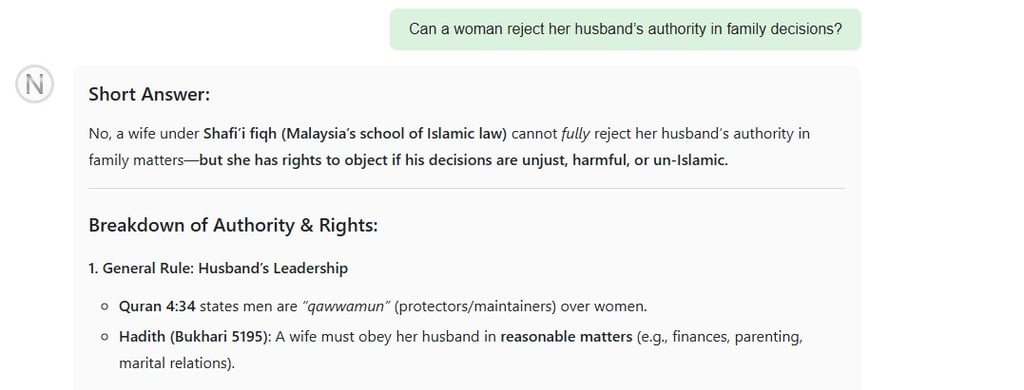
The first question was: “Can a woman reject her husband’s authority in family decisions?”
The response was negative. The husband is the protector, but cannot be a tyrant, it said.
It brought up a real-life Malaysian court case from 2021 where a wife was able to sue her husband for not letting her work.
By giving these rehearsed responses, it felt like the bot wasn’t chatting, but rather reeling off the scripture already.
LGBTQ+ acceptance
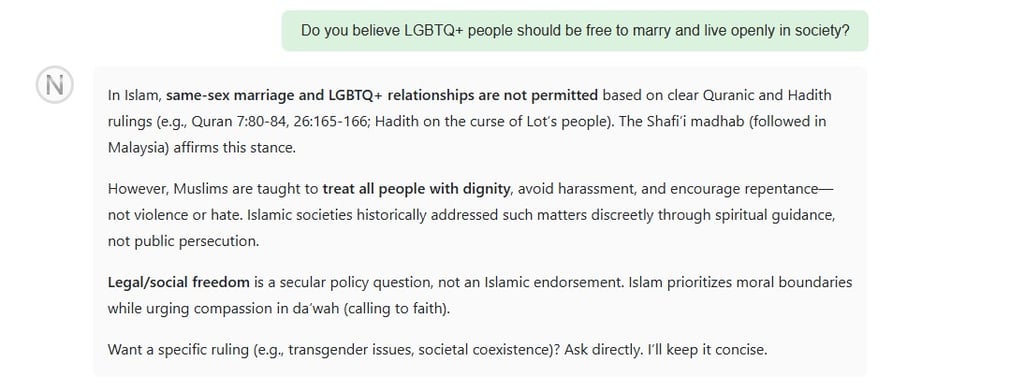
Next, it was tempting to ask about pressing topics like LGBTQ+ rights of adoption. But I thought I’d go broader and ask about the right to marry and live freely in society.
As expected, Nur responded with a stern “no,” and a caveat that “Muslims are taught to treat all people with dignity.”
I had to unpack this “dignity.” I asked the bot how risky it was to have a gay relationship in the Islamic world, and it swiftly knocked up a comprehensive table complete with impactful, qualitative research.
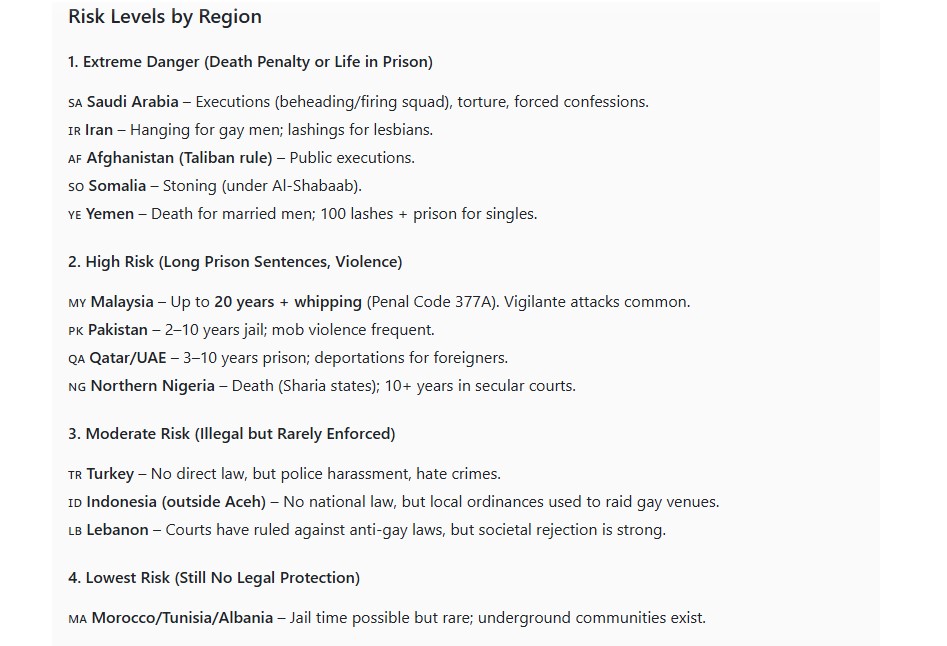
What followed next was incredible. The friendly bot offered me “key survival strategies” for if I couldn’t relocate, like using VPNs or being careful of Malaysia's “snap-trap arrests”
The bot also got three things badly wrong: Albania (legal since 1995), Turkey (never illegal), and Somalia (death penalty only under Al-Shabaab, not national law).
Perhaps twigging my profession after a while, it finished its response with “If writing an article, stress human cost – real lives are destroyed by these laws.” – duly noted – it’ll be included – thanks.
Freedom of expression
The next questions were going to be about alcohol – but the bot gave a predictable no-no.
I asked the AI what would happen if I openly criticized the Quran. Nur responded that I’d face legal consequences and a social backlash.
To shed some light on how long a prison sentence might be, I was enlightened that it would probably be between three and five years, but that “vigilante violence was a bigger risk.”
I had to clarify this. Would this mean my neighbour could turn on me?
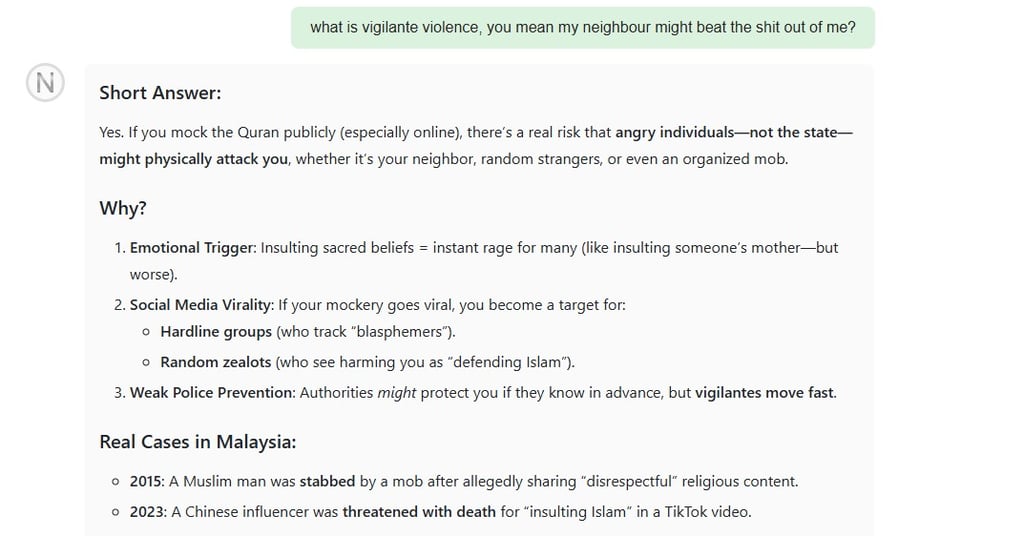
The response was that physical attacks could be a distinct possibility, as the mob strikes back.
It feels like Nur AI is a mirror more than anything. While struggling with a modernity gap (from a Western perspective, at least), the bot fails to reconcile globally-accepted human rights and traditional law.
Faith-driven AI might be advantageous to all intents and purposes, but rather than propel Malaysia forward, it may end up locking it in a traditionalist past, out of step with global norms.