Tokyo cops deploy cutting-edge AI and drones to combat stalking and disasters
The Tokyo Metropolitan Police Department is embracing advanced technology, including generative AI, autonomous drones, and bomb-disposal robots, to revolutionize law enforcement.
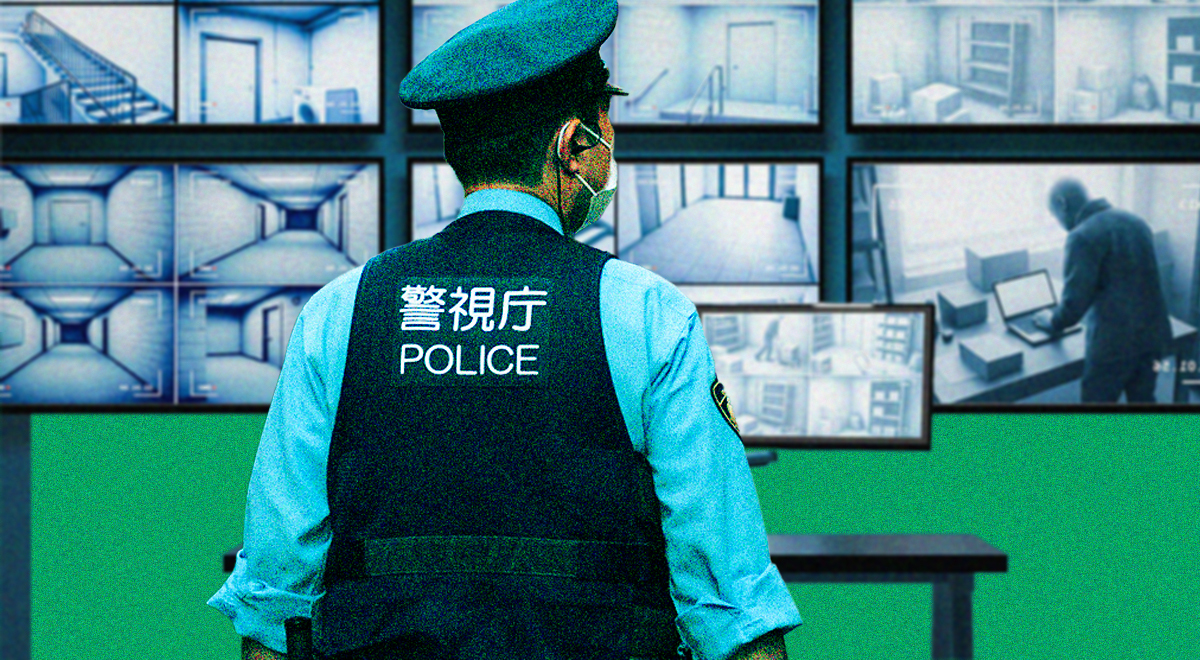
Image by Cybernews

 Follow us
The Tokyo Metropolitan Police Department is embracing advanced technology, including generative AI, autonomous drones, and bomb-disposal robots, to revolutionize law enforcement.
You may have heard people ask the question: “Why don’t we let AI police society?”
Well, that integration is already happening, especially in the city of Tokyo. The Tokyo Metropolitan Police Department (MPD) is set to utilize generative AI with the goal of responding more quickly to stalking and domestic violence cases in their early stages.
The concern in crimes of this nature is that they escalate into really serious cases, as jealousy and toxicity rage. And oftentimes, as stalking swells, officers can miss a beat, as much of the unwanted attention slips beneath the human (surveillance) radar. The consequences can even be fatal.
The MPD plans to utilize generative AI to manage consultation records, marking one of Japan's first broad-scale applications of this technology. Japanese police investigated 1,300 cases of stalking last year, which was 260 more than the previous year.






And as Tokyo is one of the world's biggest cities, by both population density and sheer land mass, police can be very stretched when it comes to arriving at the scene of the crime in a timely fashion. Operational efficiency and clerical workload could be boosted, especially in conversations between citizens and police.

Officers usually take notes by hand, which slows response times. Yet, automation could remove that bottleneck and provide the victim with a vital helping hand. Accuracy is especially important in high-risk cases.
This is not to say, however, that human empathy will make way for automation. Freed-up staff and time can go towards human protection efforts, as personal contact can rebuild human trust.
Furthermore, this initiative was made at the request of the police force itself, as it plans its budget for the upcoming fiscal year. The funding approval depends entirely on how quickly the rollout occurs, and, therefore, policymakers are closely monitoring the situation.
Another form of high-tech deployment is the use of autonomous drones. The Tokyo Police Force is aiming to utilize drones for disaster response. Aerial footage could be provided within mere minutes, meaning the chaos of natural disasters, such as tsunamis, would become more data-driven.
Blocked roads, flying debris, and communication breakdowns can paralyze emergency response during major disasters. Japan’s experience with earthquakes and typhoons – most tragically the 2011 Great East Japan Earthquake and Fukushima crisis – underscores the need for faster data and automation. The MPD’s planned use of AI, drones, and robots aims to prevent such paralysis if another large-scale event were to strike.

Niijima Island, part of Tokyo’s Izu Islands, will be a key test site for the drones. The island’s isolation makes it ideal for controlled trials. Officials want to see how the drones perform in harsh conditions.
The MPD will also introduce four-legged robots to handle suspicious or explosive objects.
These mechanical units have undergone extensive experience and testing in industrial settings, and their agility can thankfully reduce the risk to human police officers.
And the same goes for instances of bomb disposal. Cameras and X-ray angles can help flag suspicious shapes, wires, and modifications than a faster eyeball, potentially saving lives and boosting the police's decision-support & risk scoring.






Unlock more exclusive Cybernews content on YouTube.