American cybersecurity pros guilty of ALPHV/BlackCat ransomware attacks
The guilty pleas of two American "cybersecurity professionals-turned-affiliates" of the ALPHV/Blackcat ransomware gang – carrying out multiple attacks and raking in millions – is accepted by a federal judge on Monday.

Image by Cybernews.

 Follow us
The guilty pleas of two American "cybersecurity professionals-turned-affiliates" of the ALPHV/Blackcat ransomware gang – carrying out multiple attacks and raking in millions – were accepted by a federal judge on Monday.
- Two American security professionals pleaded guilty to ALPHV/BlackCat attacks, extorting victims including medical device company for $1.2M ransom.
- The accused leveraged their incident response expertise to deploy BlackCat malware, splitting proceeds with the Russian-linked gang through sophisticated money laundering schemes.
- Duo faces maximum 20-year penalties and a fine of up to $250,000 to be determined at a March 2026 sentencing.
Key Takeaways by nexos.ai, reviewed by Cybernews staff.
Initially pleading guilty in Southern Florida’s federal district court on December 18th, the accused are identified as:
- Ryan Goldberg, 40, of Georgia – worked as an incident response supervisor at Sygnia, an Israeli-owned cybersecurity firm
- Kevin Martin, 36, of Texas – worked as a ransomware threat negotiator at DigitalMint, a Chicago-based threat intel and incident response company
FBI officials say the two specifically admitted to hacking a medical device company using the ALPHV/BlackCat ransomware and then extorting the company for a $1.2 million ransom demand in 2023, among others.





The duo – along with an unnamed co-conspirator who also worked at DigitalMint but is not charged – were said to have “successfully deployed the ransomware known as ALPHV BlackCat between April 2023 and December 2023 against multiple victims located throughout the United States.”
“These defendants used their sophisticated cybersecurity training and experience to commit ransomware attacks – the very type of crime that they should have been working to stop,” said Asst. Attorney General A. Tysen Duva of the DoJ’s Criminal Division.
Court records show Goldberg and Martin admitted involvement in four additional extortion attempts between May and November 2023 that failed to secure ransom payments.
These included ransoming a Maryland-based pharmaceutical company, a California doctor’s office for $5 million, a California engineering firm for $1 million, and a Virginia drone manufacturer for $300,000.
Both Sygnia and DigitalMint said the defendants were no longer employed, emphasizing their cooperation with law enforcement.
ALPHV/BlackCat fed off affiliates
During its heyday, ALPHV/BlackCat was known to operate as a ransomware-as-a-service model.
ALPHV would offer its “affiliates” access to its stealthy BlackCat 2.0 ransomware and supporting infrastructure in exchange for a cut of the crypto generated from attacks.






Investigators say all three men agreed to pay the ALPHV administrators a 20% share of any ransom made using the Russian-linked gang’s signature variant.
In the case of the medical device company, the trio was said to have split the $1.2 million in proceeds three ways, laundering the funds through various means.
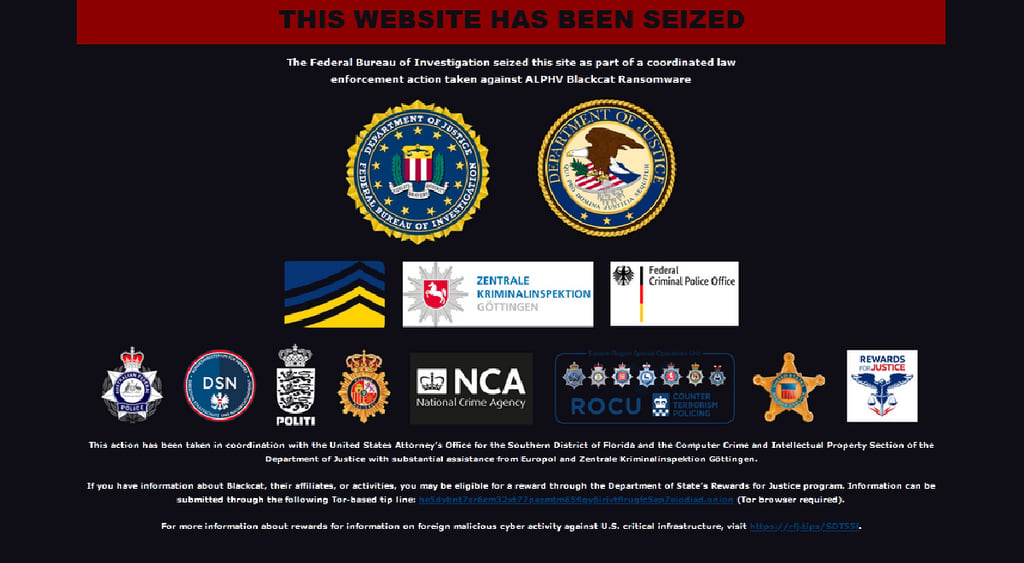
Coincidentally, during the same December 2023 timeframe, the FBI seized ALPHV/BlackCat’s darknet website, kicking off a year-long cat-and-mouse game with the agency – eventually ending with the notorious gang abruptly exiting the stage the following December.
In a nutshell, ALPHV allegedly closed up shop, pocketing a $22 million ransom paid by the gang’s latest victim, UnitedHealth Group’s Change Healthcare, that was meant to be shared with several now-disgruntled affiliates – including the infamous M&S hackers, Scattered Spider.
Rumors soon began to swirl that the ransomware cartel may have faked its own takedown as part of a “classic ransomware exit scam" to rebrand under a different name when law enforcement is bearing down. Either way, the MGM hackers have not been heard of since.
It’s unknown whether the accused were among those abandoned affiliates.
According to court documents, ALPHV/BlackCat is said to have targeted the computer networks of more than 1,000 victims worldwide during its existence. At one point, the FBI issued a $15 million reward for information leading to the capture of any members of the group.

Goldberg and Martin each pleaded guilty to conspiring to extort others by interfering with interstate commerce, a federal crime under US law, according to Monday’s announcement.
Sentencing for both men is set for March 12th, 2026. They each face a maximum penalty of 20 years in prison.
As part of its December takedown, the FBI released a decrypter tool to help at least 500 victims restore their previously encrypted networks, saving them tens of millions in ransom payments.
Unlock more exclusive Cybernews content on YouTube.