Here’s how bosses know that you’re not doing what you said you were doing
As per the TV Series Adolescence and real-life examples, it’s extremely difficult to be a teacher these days. The same applies to middle management, as those kids just think they know better.

By Betsie Van Der Meer/GettyImages

 Follow us
As per the TV Series Adolescence and real-life examples, it’s extremely difficult to be a teacher these days. The same applies to middle management, as those kids just think they know better.
Once upon a time, I had a colleague who voluntarily chose to visit me at another office – traveling over 100 miles just to fall asleep in the cloakroom and then brag about it on social media to a handful of corporate followers.
It’s beautiful. I love when fellow employees feel so comfortable around management that they can be so honest.
As long as you’re doing a great job, you can push social boundaries to a point, too.
However, how many people are actually irreplaceable enough to allow such behavior? In large corporations, some jobs seem more like social projects, where a workplace is created to allow a person to retain their dignity. It feels like a basic-income situation, where people are stuck in so-called bullshit jobs.






In fact, 20% of Americans say they don’t think they are making meaningful contributions to the world. In the UK, nearly 40% of adults think they may be stuck in BS jobs.
It’s one thing if you were hired to manage the managers who manage the managers who manage the EXCEL SHEETS. The company would do just as fine without you.
However, in many cases, companies hire people for certain tasks and expect them to be present during the agreed hours.
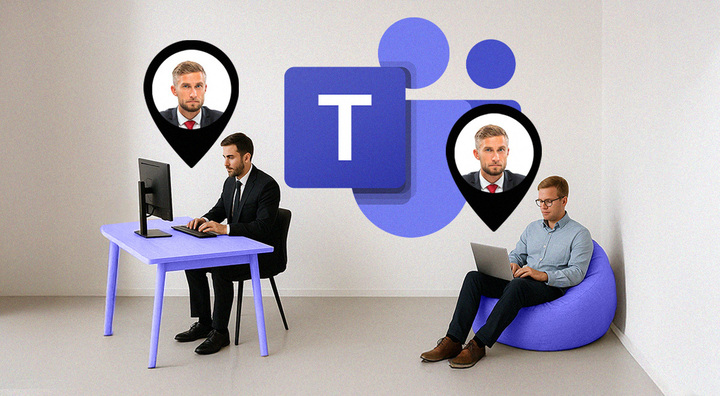
The reason I am bringing this up is the uproar caused by a Microsoft Teams update that now allows tracking employees on company premises. Starting this December, Microsoft Teams will automatically detect when an employee arrives at the office by monitoring their connection to the local WiFi.
It’s unclear how precise the location will be, meaning I probably won’t be able to locate my dear colleague in the cloakroom unless they voluntarily brag about those naps. There are many caveats to this update, but unsurprisingly, it was met with mostly mockery online.






Here are a few quotes from Cybernews Facebook profile followers:
“Next…Teams is gonna track your keystrokes to see if you’re working.”
“Great, all I ever wanted my coworkers to know is which bathroom I'm hiding in.”
“Most companies can do this without teams.”
“I mean why not, the entire Microsoft ecosystem is basically just corporate spyware at this point anyway.”
“Micromangers Unite ”
It is definitely unpleasant to have the feeling of being watched. That’s why I asked to relocate the entire newsroom to a more secluded office space – we felt like we were being constantly surveilled by upper management. That was not necessarily true, but we just couldn’t shake that feeling.
But the truth is: if you’re doing what you agreed to, such as performing your tasks from an agreed location, why should it matter?
People don’t just do exactly what they are asked; they toggle between work and the office depending on personal appointments. That’s understandable. It gets worse when people merely pretend to be working, juggling multiple jobs and adding little or no value to the company.
Those employees will go to great lengths to evade or fool tracking tools.
For me, the biggest telltale sign someone isn’t at their computer is their language. From the way people respond, you can often tell whether they’re driving, distracted because they’re doing something else, or limited to a smartphone.
The poorer the language, the stronger the suspicion that they aren’t doing what’s expected of them.
Subscribe for the full experience.
More from Cybernews:
- With home seekers getting increasingly frustrated with AI-generated images in real estate listings, regulation is largely in the hands of professional realtor organizations.
- Most tech giants aren’t even hiding the sad fact that we, the everyday users, don’t matter to them anymore. They’re only after our money – more of it each year. This is what The Great Enshittening, according to Cory Doctorow, looks like. But hey, the future might actually be bright again, the tech activist explains in his new book.
- This software engineer was a happy user of an iLife A11 vacuum cleaner for nearly a year, until he discovered a constant stream of data being beamed to China. But that wasn’t the worst of it.
- Text-to-video models were bound to shake up Hollywood, but no one thought AI would be used to create a movie like this. A fresh take on the age-old fable has recently been reimagined by provocative director Radu Jude, who transforms the cult classic into a lusty cesspool of AI-fueled chaos. Fictional filmmaker Adonis Tanta is tasked with creating a rendition of Dracula using AI.
- Amazon CEO Andy Jassy has said that 14,000 people laid off this week were simply not a cultural fit, noting that costs or artificial intelligence (AI) were not factors. “Not right now, at least,” he said.
- Subscription fatigue continues to rise as gamers feel the squeeze of price hikes affecting the monthly services they once loved. The game libraries feel bloated, day-one drops can be hit or miss, and that all-you-can-eat buffet now comes with caveats that weren't there when these platforms were hooking users with offers.