Apple’s slim iPhone Air falls flat with key buyers in the US and China
The iPhone Air raised eyebrows in the tech community for being record-thin, but that wasn't enough to open buyers’ wallets.
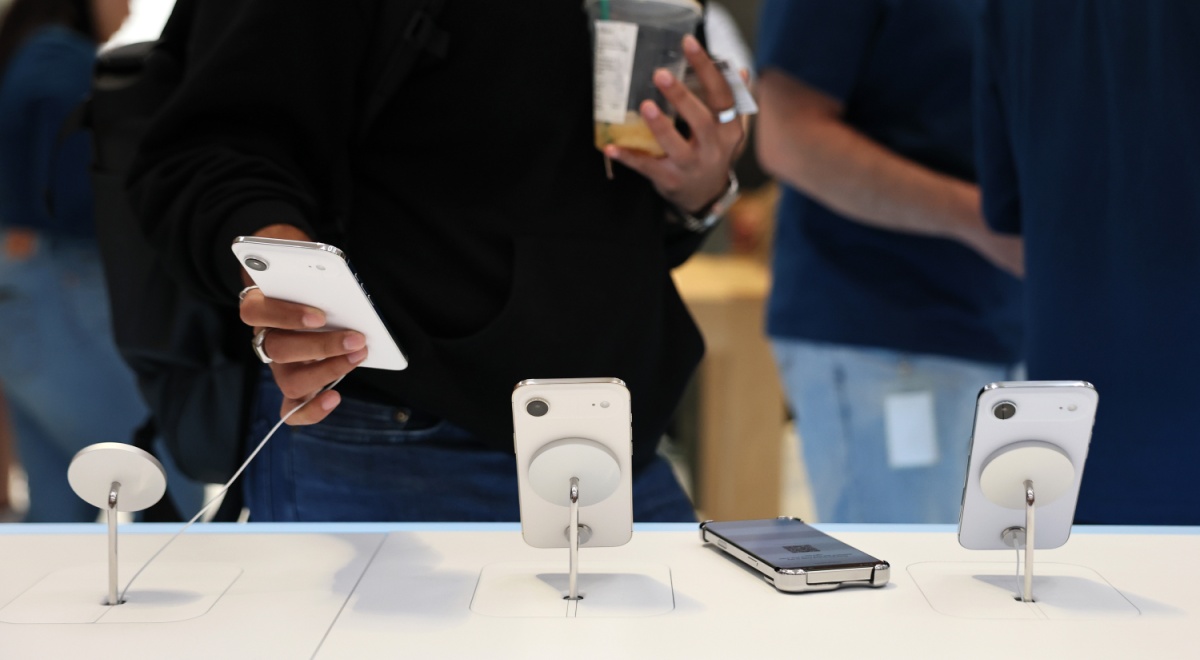
iPhone Air phones on display. Photo by Michael M. Santiago/Getty Images

 Follow us
The iPhone Air raised eyebrows in the tech community for being record-thin, but that wasn't enough to open buyers’ wallets.
- Apple's "thinnest iPhone ever" failed to convert hype into purchases despite heavy marketing.
- The Air captured just a fraction of iPhone 17 series buyers compared to the standard, Pro, and Pro Max models.
- Even with eSIM adoption progressing in China, Apple couldn't capitalize on the market opportunity.
Key Takeaways by nexos.ai, reviewed by Cybernews staff.
Apple’s big bet on the dramatic redesign of the iPhone Air hasn’t worked out as well as the company had hoped.
The phone, at just 5.6 mm thick, was marketed as “slimmer than slim” and eagerly awaited by tech enthusiasts eager to see the "thinnest iPhone ever."
With the hype around the phone so dramatic, the snap back to reality appears to be just as intense. Compared with sales of other phones in the iPhone 17 series, it’s fair to say that the iPhone Air has flopped.





New market research from Consumer Intelligence Research Partners (CIRP) shows that iPhone Air adoption lags behind that of the iPhone 17, 17 Pro, and 17 Pro Max.
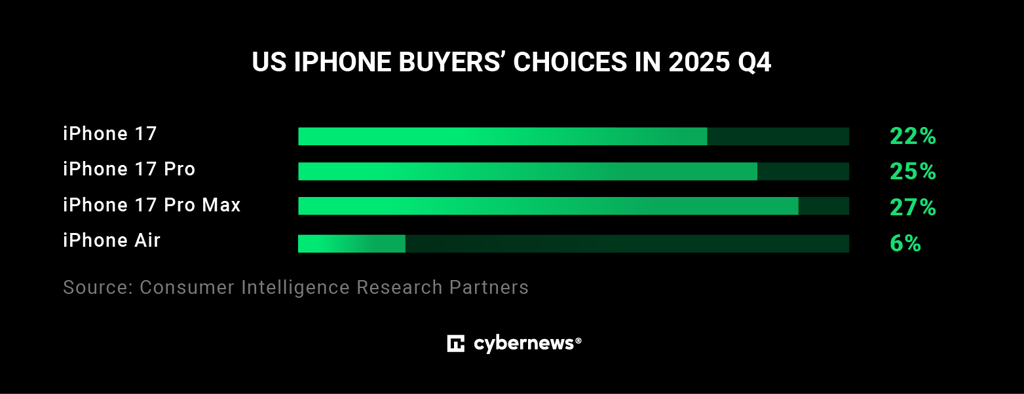
Only 6% of US iPhone shoppers who have participated in a survey have purchased the iPhone Air in the last quarter of 2025. It’s the first full quarter that the iPhone Air was available to buy.
In comparison, 22% of US buyers purchased the regular iPhone 17. A quarter bought the iPhone 17 Pro, and another 27% went for iPhone 17 Pro Max, the survey data cited by CNN reveals.






This news comes ahead of Apple’s earnings report, which should include global iPhone revenue for the quarter, although it does not specify the number of sales for each iPhone model.
However, during the same quarter covered by the CIRP survey, it was reported that Apple will not release the next version of the iPhone Air in the fall of 2026. Even though this had been planned previously, weak sales confirmed its cancellation.
Analysis at the time claimed the demand for the iPhone Air had been weaker than originally anticipated.
According to Steven Athwal, CEO and Founder of The Big Phone Store, a UK refurbished tech retailer, one of the reasons why iPhone Air’s sales were unsuccessful was a change in consumer preferences. According to him, ultra-thin gadgets might sound “cool” in a launch video, but people now see features such as battery life and durability to be key.
“If the main feature is a thinner physique rather than a noticeable improvement you will see daily, then people will… wait. It's abundantly clear within the refurbished market,” explains Athwal.
“The demand remains high for the Pro and standard models, which are slightly older because they still feel capable, dependable, and familiar. If last year’s phone does the job just as well, a little novelty won’t be enough to pull purchases. It was a decent option, but it did nothing to solve any real phone issues like longevity or battery life.”
In October of 2025, the company said the iPhone Air would be available for pre-order in China, another huge market to grow sales.
According to an established tech news tipster on X, Ice Universe, Apple has sold just 200,000 units of the iPhone Air in China, compared to 17 million units of the iPhone 17 lineup.
China has long been a resistant smartphone market to eSIM adoption, with regulators and carriers preferring physical SIM cards over eSIMs that came with the extra-thin iPhone Air.
However, China did push its carriers to normalize eSIM usage for everyday consumers. Despite that, Apple failed to take advantage of it and profit.
Unlock more exclusive Cybernews content on YouTube.