Apple reacts: you now can’t download 18+ apps from iOS if you live in these places
As of this week, Apple is blocking the download of apps rated 18+ in countries such as Brazil, Australia, and Singapore. Users who want to use the apps must confirm they’re of legal age.
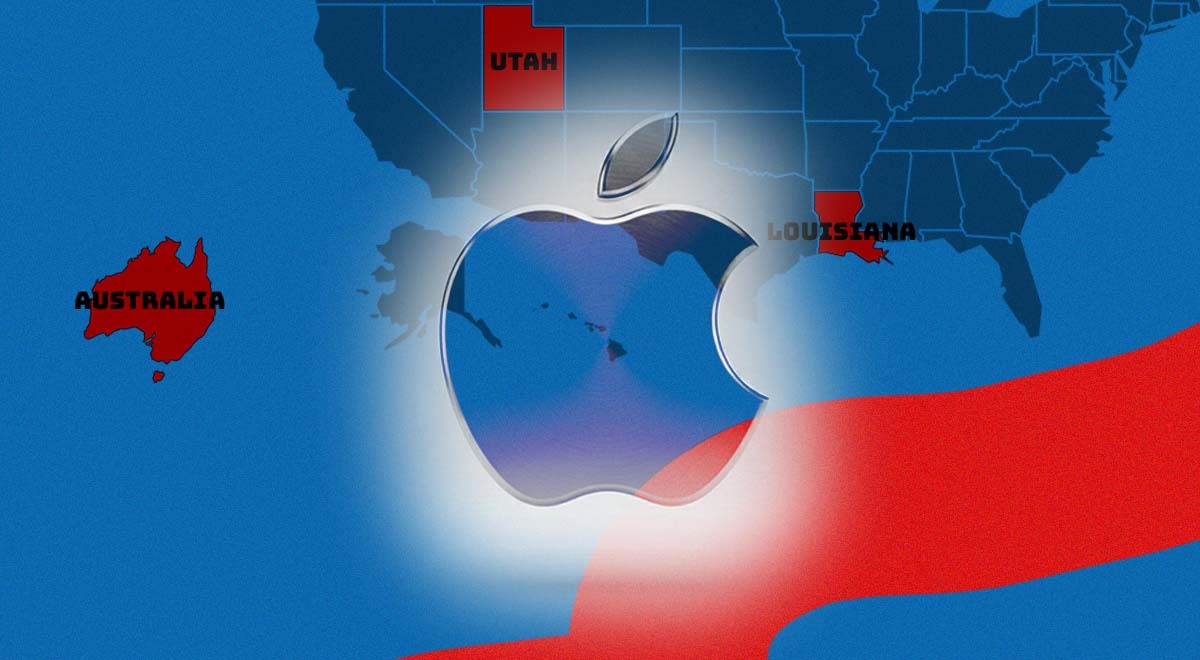
Image by Cybernews.

 Follow us
As of this week, Apple is blocking the download of apps rated 18+ in countries such as Brazil, Australia, and Singapore. Users who want to use the apps must confirm they’re of legal age.
Additionally, the company announced new details about its age-verification tools that developers can use to “meet their age assurance obligations under upcoming US and regional laws, including in Brazil, Australia, Singapore, Utah, and Louisiana.”
This has been done to meet a growing web of child protection laws worldwide. Governments in multiple regions have implemented laws to limit children’s access to apps that include social networking, explicit content, or gambling content.
The age of users in the aforementioned countries and regions is automatically confirmed by the App Store using “reasonable methods,” Apple said. It’s unclear what those are.
Since developers “may have separate obligations under local laws to independently confirm that their users are adults,” Apple is rushing to help them, too.












“To assist with this, the Declared Age Range API – available on iOS, iPadOS, and macOS – provides developers with a helpful signal about a user’s age,” Apple said in an update.
“The API will also let you know if you need to get a parent or guardian’s permission for significant app updates for a child.”
The Declare Age Range API, an “age assurance” tool announced in June 2025, allows developers to obtain a user’s age range without accessing their personal information, such as their date of birth.
Parents, though, need to be proactive for the Declare Age Range API to be effective.
The tech giants essentially have no choice: non-compliance will mean massive fines.
Adults in the ultimate control of Apple’s Child Accounts, associated with a parent or guardian account in a Family Sharing group, have to allow (or not) their kids to share their age range with app developers. Again, in a way that doesn’t reveal the child’s birth date and keeps them in control of their data.
“Parents can choose if they would like age-range information to be shared always, for each app request, or never, and can change their selection at any time. Children with managed Screen Time settings are not allowed to change how their age range is shared,” Apple said last year.
On the surface, this looks like a reasonable, if a little complicated, approach as Apple is trying to align privacy, compliance, and accountability. Plus, the tech giants essentially have no choice: non-compliance will mean massive fines.

Check if your data was exposed
Find out if your email and related personal information have appeared in known data breaches.
Even Redditors seem quite content with the update. One said, “If Apple or whoever can authenticate on my behalf without sharing my personal information with that third party, I’ll accept it as a necessary evil.”
“They’re not asking for ID,” another agreed.
“Unlike proposals in some jurisdictions that mandate uploading government-issued identification, Apple’s approach relies primarily on account-level data already supplied by users or guardians. The company has framed the changes as consistent with its longstanding emphasis on privacy.”
Unlock more exclusive Cybernews content on YouTube.