IOC slammed for selling “Nazi Olympics” T-shirt on official e-shop
Critics accuse the International Olympic Committee (IOC) of glorifying the 1936 Berlin Olympics as backlash mounts over its decision to ban a Ukrainian athlete from the games for wearing a helmet honoring victims of Russia’s war.
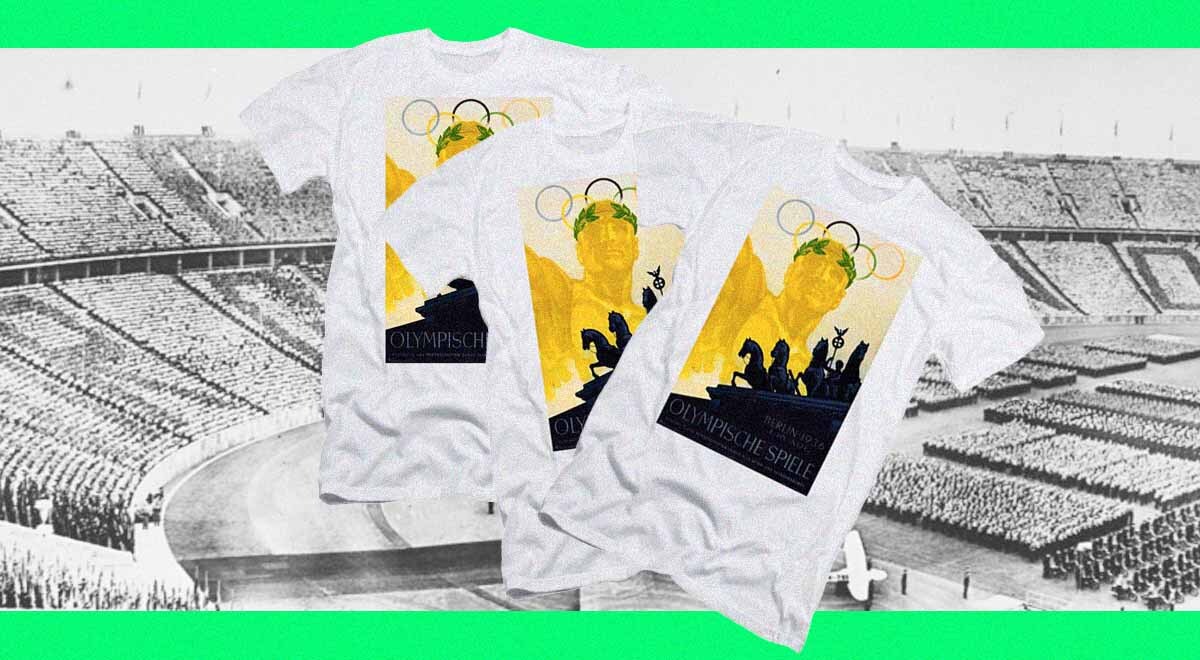
Image by Cybernews

 Follow us
Critics accuse the International Olympic Committee (IOC) of glorifying the 1936 Berlin Olympics as backlash mounts over its decision to ban a Ukrainian athlete from the games for wearing a helmet honoring victims of Russia’s war.
The T-shirts commemorating the 1936 Berlin games – used by Adolf Hitler to promote his Nazi regime and the ideals of racial supremacy – were sold on the official fan shop of the Olympic Games, drawing criticism in Germany and online.
The fresh controversy adds to the backlash the organization is already facing after disqualifying Vladyslav Heraskevych, a Ukrainian skeleton racer, just minutes before he was scheduled to compete at the Milan-Cortina Winter Games this week because he wanted to wear a “helmet of memory” honoring Ukraine’s war dead.
The IOC defended the T-shirt as being part of its Heritage Collection in a statement to the BBC, but critics remain unconvinced.
“Nothing says Olympic values like vintage fascism merch,” one user posted on X, a social media platform.





The T-shirt features the original Berlin Olympics poster designed by Franz Würbel. It depicts a golden male figure wearing a laurel wreath beneath the Olympic rings, with the Brandenburg Gate in the foreground.
Klara Schedlich, a sports policy spokesperson for the Green Party faction in the Berlin House of Representatives, told the German news agency DPA that the use of the imagery was “problematic” without context.
“The 1936 Olympic Games were a central propaganda tool of the Nazi regime,” Schedlich said, adding that the IOC is “clearly not reflecting sufficiently on its own history.”
The IOC said that “of course” it acknowledges the historical issues of Nazi propaganda. However, it said it also wanted to remember thousands of athletes from dozens of countries that competed in it.
"Many of them stunned the world with their athletic achievements, including Jesse Owens," a spokesperson told BBC. Owens was an African-American track and field athlete who won four gold medals in the 1936 Games, challenging Nazi propaganda.
The conversation on this topic is live. Join in the discussion.
However, critics still found the T-shirt, which was no longer available for purchase at the time of publishing, in poor taste – especially after the IOC decision to disqualify Heraskevych, who was considered Ukraine’s best shot at securing its first medal in this year’s games.
German pro-Ukraine activist and social media commentator Jürgen Nauditt said the IOC’s attitude was “unbelievable.”
“They can sell Nazi shirts but not allow a Ukrainian to wear a helmet with pictures of murdered athletes. Ridiculous,” John Jackson, a US veteran who says he fought in Ukraine, said in his own post on X.
The IOC has faced widespread criticism over its decision to bar Heraskevych from competing, with Ukraine’s President Volodymyr Zelensky accusing the Olympics of “playing into Russia’s hands” and saying that “sport shouldn’t mean amnesia.”
“This is [the] price of our dignity,” Heraskevych said in a post on X, later adding that he considers his disqualification “absolutely unjustified.”
The IOC told Heraskevych and the Ukrainian delegation that his helmet violated the Olympic Charter, which states that “no kind of demonstration or political, religious or racial propaganda is permitted in any Olympic sites, venues or other areas.”
The organization said that the Ukrainian athlete refused to consider any compromise and that “the essence of this case is not about the message, it is about where he wanted to express it.”
Unlock more exclusive Cybernews content on YouTube.
