EU bets €180M on homegrown cloud providers to break free from American tech dependence
Four European companies will receive €180 million over the next six years to develop European cloud services.

Four people looking at their smartphones. Mike Kemp/In Pictures Getty.

 Follow us
Four European companies will receive €180 million over the next six years to develop European cloud services.
- EU awards contracts to four European cloud providers over six years to reduce reliance on foreign tech giants.
- Brussels cites changing global relations and risks to vital processes as reasons for building homegrown alternatives.
- Providers needed SEAL-2 certification minimum; most achieved SEAL-3, meaning immunity from non-EU supply chain disruption.
- Four contracts split between German, French, Luxembourg, and Belgian providers to avoid new lock-in risks.
Key Takeaways by nexos.ai, reviewed by Cybernews staff.
According to experts, the EU has become too heavily dependent on a limited number of large, foreign cloud and IT service providers.
This dependence, combined with rapidly changing geopolitical relations, poses risks to the continuity of vital processes in European member states. Failure, disruption, or manipulation of vital processes can cause major social disruption and possibly irreparable economic damage.
In addition, storing personal or sensitive information of European citizens on servers abroad poses a risk to the privacy of millions of Europeans.
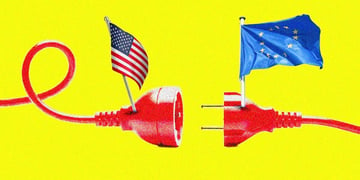




Therefore, the European Commission launched a tender in October 2025 to strengthen Europe’s digital sovereignty.
The executive branch of the EU has awarded 4 contracts to ensure diversification and resilience, avoiding potential lock-in by a single provider. The tender has been awarded to a Luxembourgish-French partnership led by Post Telecom with OVHCloud and CleverCloud, German IT company StackIT, French company Scaleway, and a Belgian-French-Luxembourgish partnership led by Proximus.
The conversation on this topic is live. Join in the discussion.
“By successfully introducing sovereignty in its cloud procurement, the Commission leads by example in advancing Europe’s digital sovereignty, setting a benchmark for secure, compliant, and values-based cloud adoption across the public sector. The success of the tender highlights the high quality of European providers, demonstrating their ability to meet the Commission's strict criteria,” the European Commission says.
Before awarding the contracts, the European Commission looked at how the companies achieved a certain level of sovereignty. To assess the level of sovereignty of the providers, the Commission developed the Cloud Sovereignty Framework.






The framework measures sovereignty across numerous objectives, from technical and operational considerations to security and compliance with EU laws. Service providers receive a so-called SEAL score, which is short for Sovereignty Effectiveness Assurance Level.
To be eligible for the tender, participants needed to score at least a SEAL-2 level, meaning that they abide by the EU laws and regulations without requiring additional technical measures by the customer to protect its data.
Except for Proximus, all of the awarded providers reached SEAL-3, which implies that their service, technology, or operations are immune to supply chain disruption from non-EU third parties.
Unlock more exclusive Cybernews content on YouTube.