Normie reporter gives face to malware with vibe-coded hash-to-image generator
A huge development in the cybersecurity space – a Cybernews reporter came up with an idea on how to give a face to malware, instead of long, “boring” hashes.

Image by Cybernews.

 Follow us
A huge development in the cybersecurity space – a Cybernews reporter came up with an idea on how to give a face to malware, instead of long, “boring” hashes.
Malware hunters depend on unique hashes to uniquely identify suspicious files. Run a large file through the SHA-256 algorithm, and you get a unique string of numbers and letters that is nearly unlikely to ever be reproduced by another malware sample.
It’s highly useful – compare the hash of a suspicious file to a known malware database, and if it matches, you’ve got malware. That’s basically how VirusTotal works.
“Aren’t hashes just boring? Every security report, every IOC list. Full of long, meaningless strings. I just hate them. Why can’t they be cute images?” Ernestas Naprys, a Cybernews journalist, said, articulating the pressing problem.
Behold, the HashBeast – SHA-256 hash to image generator. It transforms meaningless 2a5ff6ab9… hashes into something more visual.

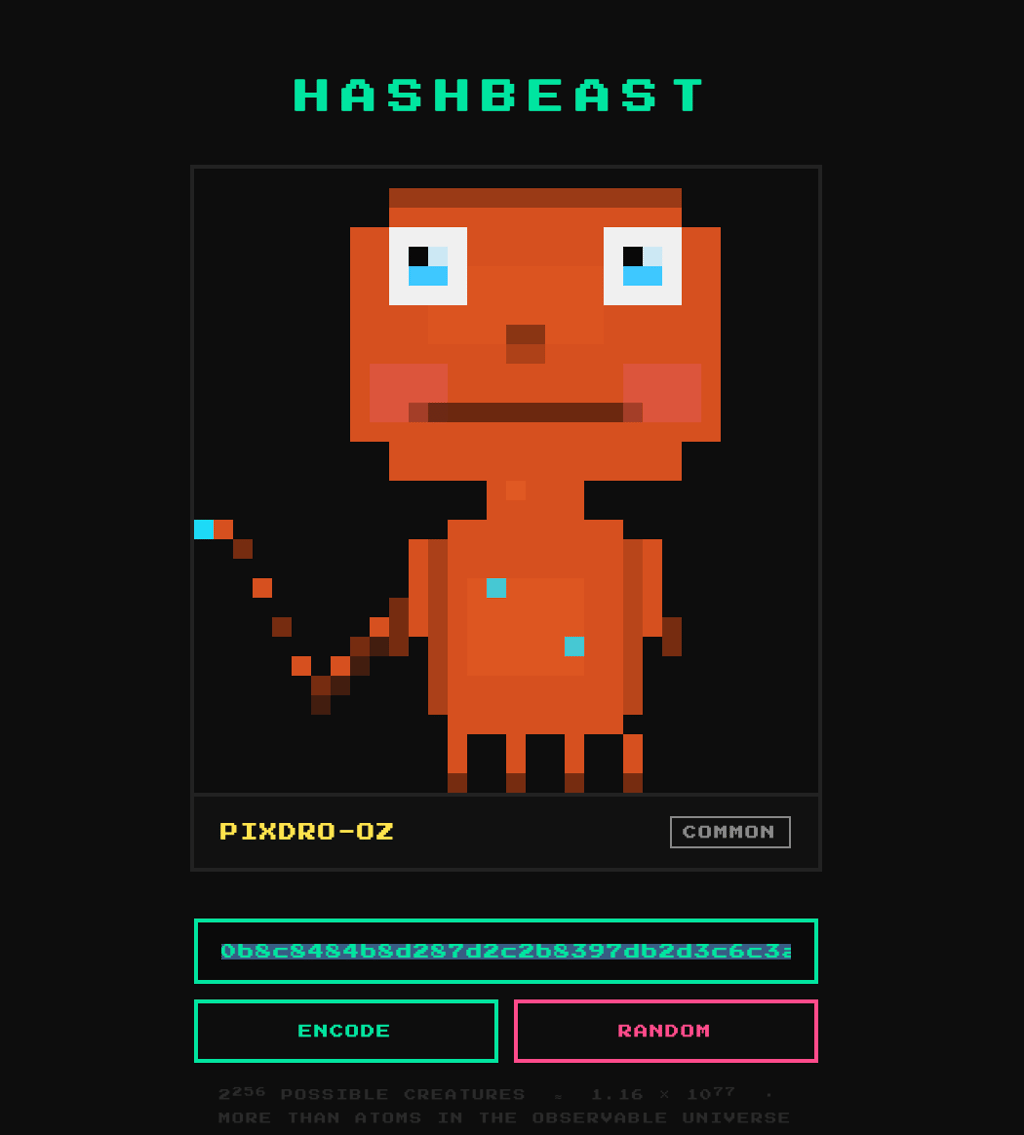
Each hash serves as a seed that determines the creature’s traits, such as colors, head or body shape and size, eyes, mouth expression, skin texture, limb types and counts, tail shape, etc. Or at least it should.
Just look at Akira Ransomware:

Or the malware used in the recent axios supply chain attack:
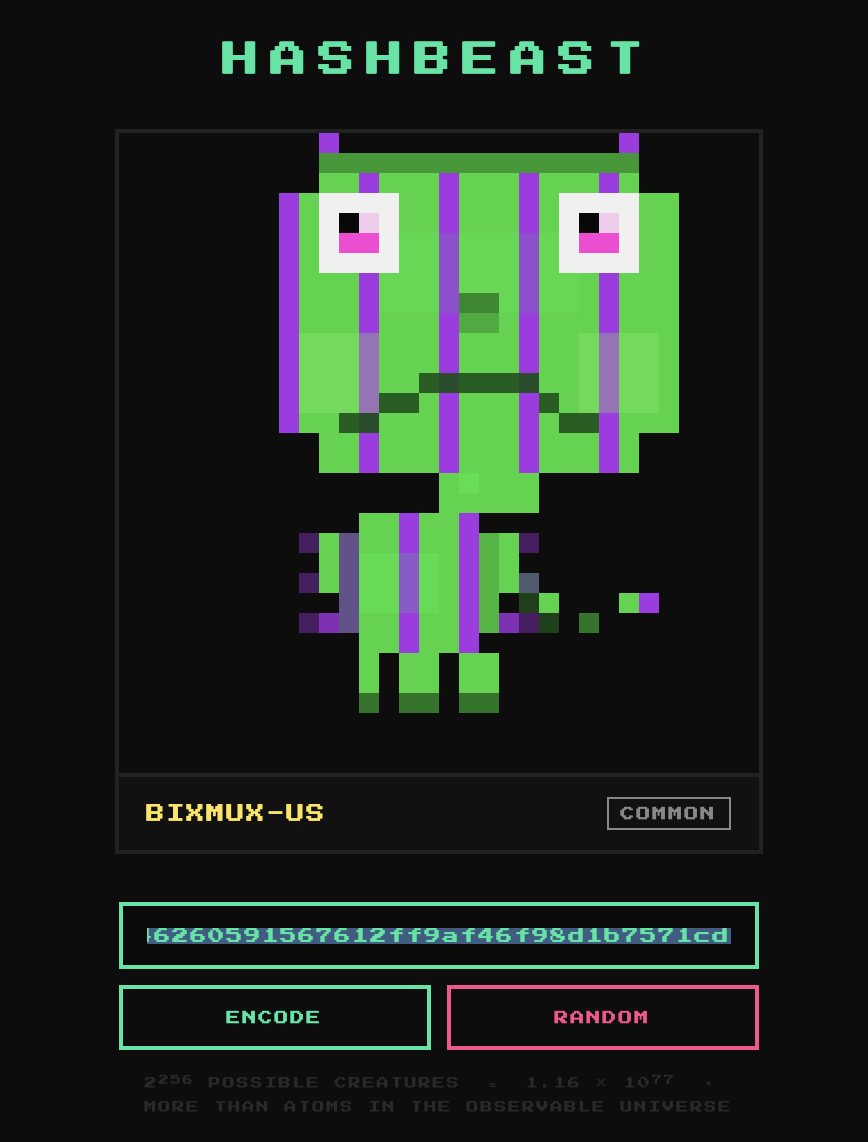
Lumma Stealer is elegant:
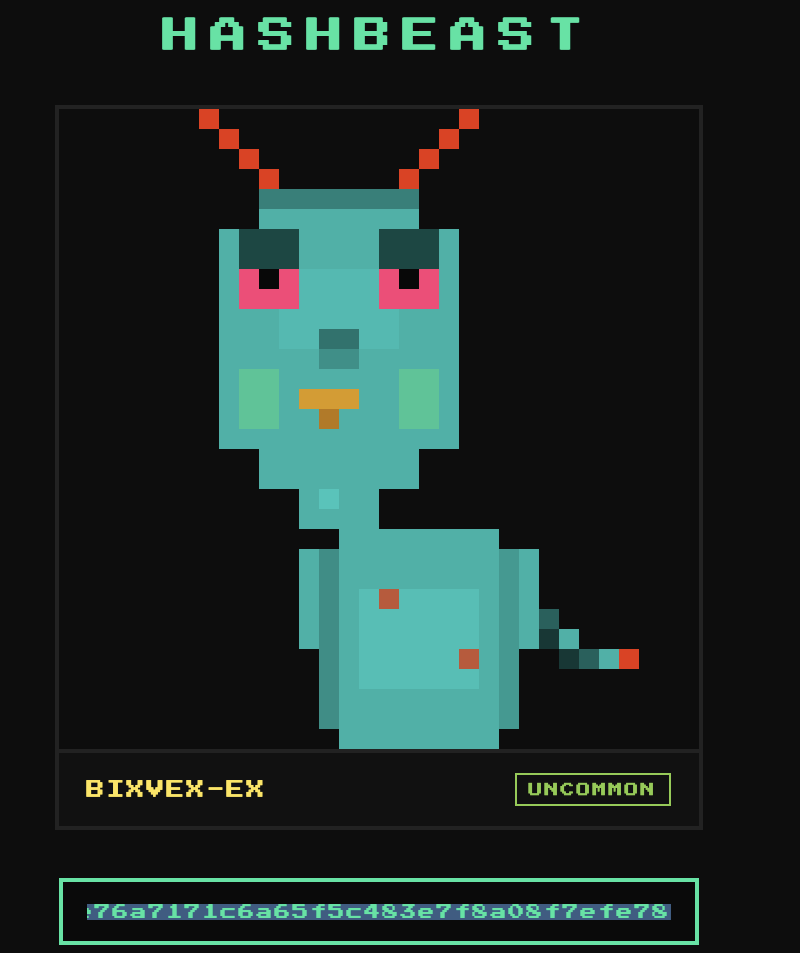
Blacksuit Ransomware is pink, who would’ve known:
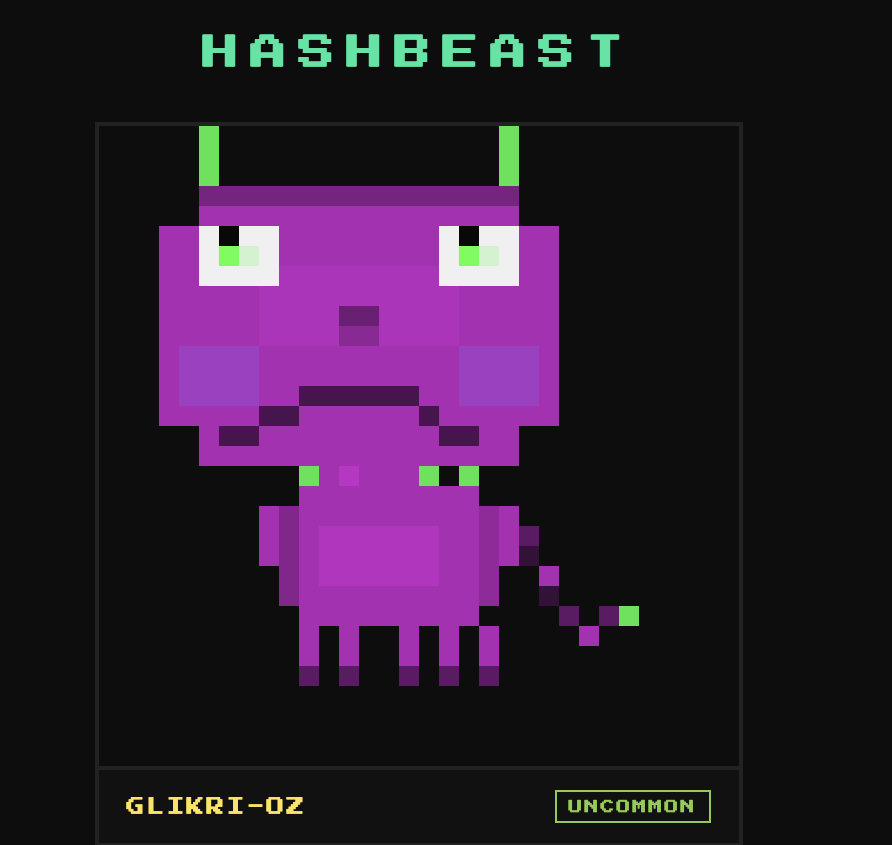
Work in progress
The reporter has always harbored ambitions beyond his workstation.
Last April 1st, the reporter published an initiative to rename threat actors after various species of feces to strip away the perceived glamour of cybercriminal life.
The cybersecurity community ignored it, and zero threat actors took note. But it got four Slack reactions, which fueled his ambition to go further.
Unsettled, Ernestas has returned this year with a grander ambition. He spent weeks training to write the first “Hello World” app, gaining confidence that he could ship software.
Soon he discovered that writing prompts is easier than writing code.






That’s how Hashbeast was born – Claude delivered it after a long and disappointing conversation.
“Can you trust this code to deliver unique images? Surely not. While chatbots swear that the math is correct, I tried it myself, and a large space of hashes is not covered. Can it be improved? 100%. Does anyone even need it? Nobody asked!” Ernestas acknowledged that there is work to be done.
“But isn’t it cute, when a hash represents something, a creature?”
Have thoughts about this topic? Others do, too. Join them in the discussion.
Ernestas would have liked to embed and share his AI-slop as a working prototype here, but he thinks he will make a million-dollar venture by selling it to VirusTotal himself (the system administrators didn’t allow him to embed unverified code).
You can find the published Claude artefact here and try it yourself.
Happy April Fool’s Day.
Unlock more exclusive Cybernews content on YouTube.