Network-level adblocking becomes standard in consumer routers: Fritz adds free block lists
Router-level adblocking is becoming mainstream.
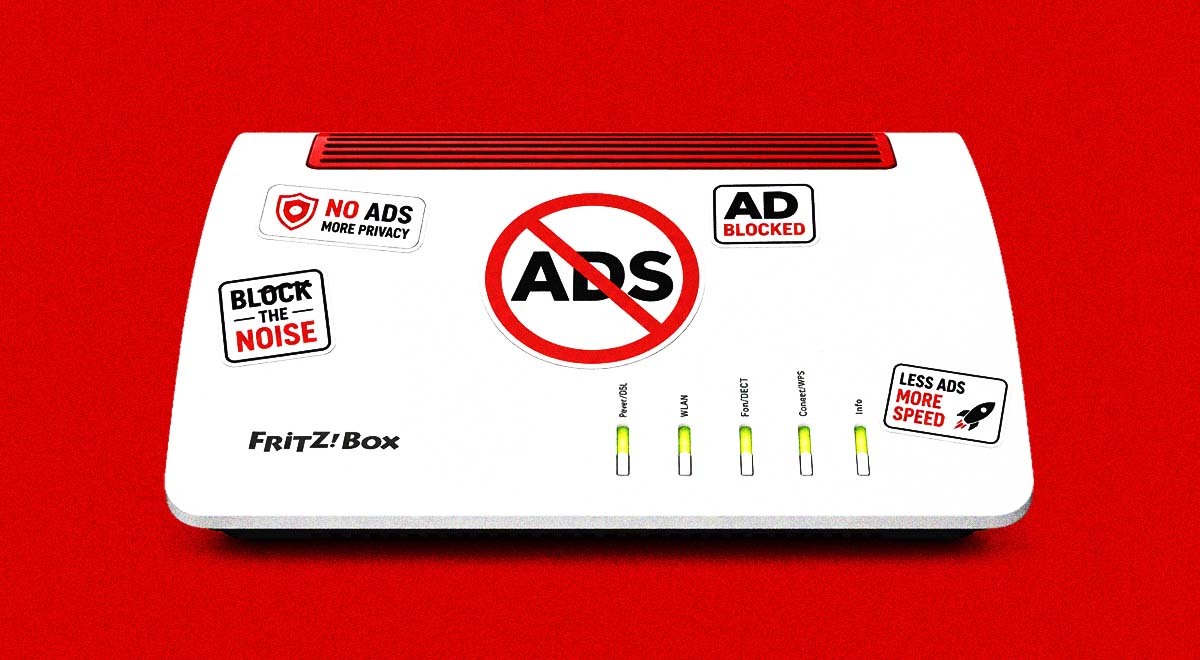
Image by Cybernews.

 Follow us
- Fritz will add DNS-level blocking to Fritz!Box routers through its upcoming FritzOS 8.50 update.
- The feature blocks ads, tracking, malware, phishing, and botnet domains across all home-network devices.
- Router-level filtering is easier than older DIY setups, but it can break websites and miss some ads.
- Wider router-based adblocking could deepen advertising losses, after estimated adblocker-related losses reached $54 billion in 2024.
Router-level adblocking used to be an involved DIY project for cyber hobbyists, but it is now becoming a default feature in consumer routers. The shift might hit the online advertising market harder than any browser extension ever has.
German leading router brand Fritz, known for its Fritz!Box devices, is adding DNS-level unwanted content blocking (DNS filters) to its routers, with the upcoming FritzOS 8.50 update.
Router-level DNS filtering covers all devices in the home network: smartphones, smart TVs, laptops, and even smart lights or refrigerators.
Fritz’s move significantly reduces the friction for users to get this security feature. For a long time, it was a niche practice requiring involvement: a dedicated device, such as a Pi-hole running on a Raspberry Pi or a prosumer/corporate-grade firewall, or a custom private DNS setup.




After a simple firmware update, router-level adblocking can be enabled with a toggle switch.
“With the new DNS filters, unwelcome websites can be blocked for all devices in the home network concurrently,” Fritz! said in the press release.
“Blocks can be configured for websites that are known for excessive advertising, tracking, or malware – but also phishing sites, botnets, and other unwanted content.”



Stay updated with our latest stories and follow us on social media
Be the first to discover new stories, ideas, and updates from our team.
The vendor assures users that they can use freely available block lists or choose those maintained by the online community.
The German publication Heise.de tested the beta version and confirmed that it requires minimal effort. Many filter lists are ready-made and periodically updated.
Fritz! is not even the first brand to add router-level content filtering.
Asus introduced router-level ad blocking as part of its “AiProtection” suite, which is a subscription-free, built-in network security solution integrated directly into Asus routers.
Amazon’s eero devices have the feature gated under an optional subscription, priced at $99 per year or $9.99 per month.
Netgear offers “Unlimited Adblocker & anti-tracker” as part of the Netgear Armor Plus plan, which costs $149.99 annually.
Check if your data has been leaked
Router-level ad blocking isn’t ideal, as it makes entire domains and subdomains unavailable, sometimes breaking some websites. At the same time, it can’t effectively block ads delivered by the same domain, i.e., on YouTube.
Adblocking extensions are more precise at surgically removing ad scripts from each website individually, but they are not available on smart home devices and don’t cover apps other than browsers.
However, router content filtering covers the entire home – if a smart TV wants to send tracking information or deliver the ad via blocked IPs, it won’t be able to.
DNS filtering covers much more than apps; it blocks malware, phishing, command-and-control server domains, and many other cyber threats, making the entire network much more secure.
Cybernews previously found that it’s hard to find the right balance between the amount of filtering and the usability of affected online services. Aggressive blocking of Meta’s tracking scripts prevents Reels or Facebook posts from loading.
Adblockers are already costing marketers dearly – Funnel estimated that the advertising industry lost $54 billion in ad revenue in 2024.
Router-level filtering, preventing ad delivery across the entire network, can significantly amplify the challenge for advertisers.