Russia is building its own internet: first 16 satellites are already up
The Russian government is taking aim at Starlink by launching 16 broadband internet satellites into orbit. It’s the early stage of project Rassvet – Russia’s plan to expand to a fully sovereign satellite internet system.
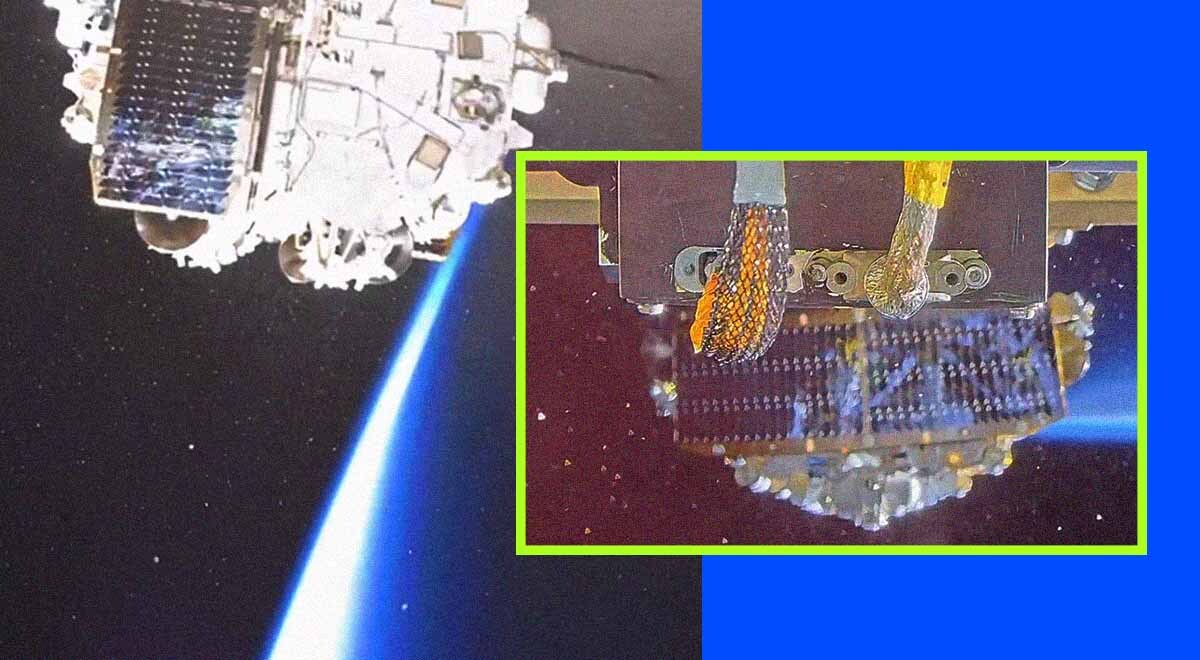
First satellites of Bureau 1440 communications in orbit. Screenshot from Bureau 1440 video.

 Follow us
The Russian government is taking aim at Starlink by launching 16 broadband internet satellites into orbit. It’s the early stage of project Rassvet – Russia’s plan to expand to a fully sovereign satellite internet system.
- Russia launched 16 satellites to build a sovereign internet system by 2027, positioning Bureau 1440 as its answer to Starlink.
- Russia plans 156 satellites by 2026 and 318 by 2028, though it still lags far behind Starlink's 7,000+ satellites.
- The project strengthens Russia's digital sovereignty and aids its war effort against Ukraine, which relies on Starlink.
Key Takeaways by nexos.ai, reviewed by Cybernews staff.
Sixteen Russian broadband internet satellites are already orbiting Earth. This marks the start of a low-Earth-orbit network run by Bureau 1440 – a space company seen as the Russian alternative to Starlink.
The business is a part of the Rassvet (Dawn in English) project, which wants to create a fully sovereign satellite internet system by 2027.
“Ahead lie dozens of launches and hundreds of satellites in Russia's low-orbit constellation for a global communications service,” claims Bureau 1440.





The launch of the 16 satellites has been confirmed by Bureau 1440’s Telegram statement, which says the launch “marks the transition from experiments to the creation of a communications service.”
Previously, the company had launched several experimental satellites.
"Several test vehicles in orbit have already been inspected, and the production ones have been modified accordingly," Dmitry Bakanov, head of Russia's Roscosmos space agency, told Reuters in September 2025.
The Cybernews community is talking about this. Be a part of the conversation.
"We are also moving at a rapid pace in this direction."
According to Bureau 1440’s statement, a total of 1,000 days had passed from its first experimental launch to the latest operational launch.
Has your password leaked?
Russia seeks a sovereign internet
The Rassvet project is a key tool to strengthen the country’s digital sovereignty and also to aid in its war against Ukraine.
Russia has allocated $1.3 billion for its implementation. Bureau 1440 plans to invest an additional $4.3 billion of its own funds through 2030, The Moscow Times reports.
The project has already put up 16 test satellites into Earth’s orbit in 2025. The aim for 2026 is 156, 292 in 2027, and 318 in 2028, with a total of 24 launches planned by 2030.
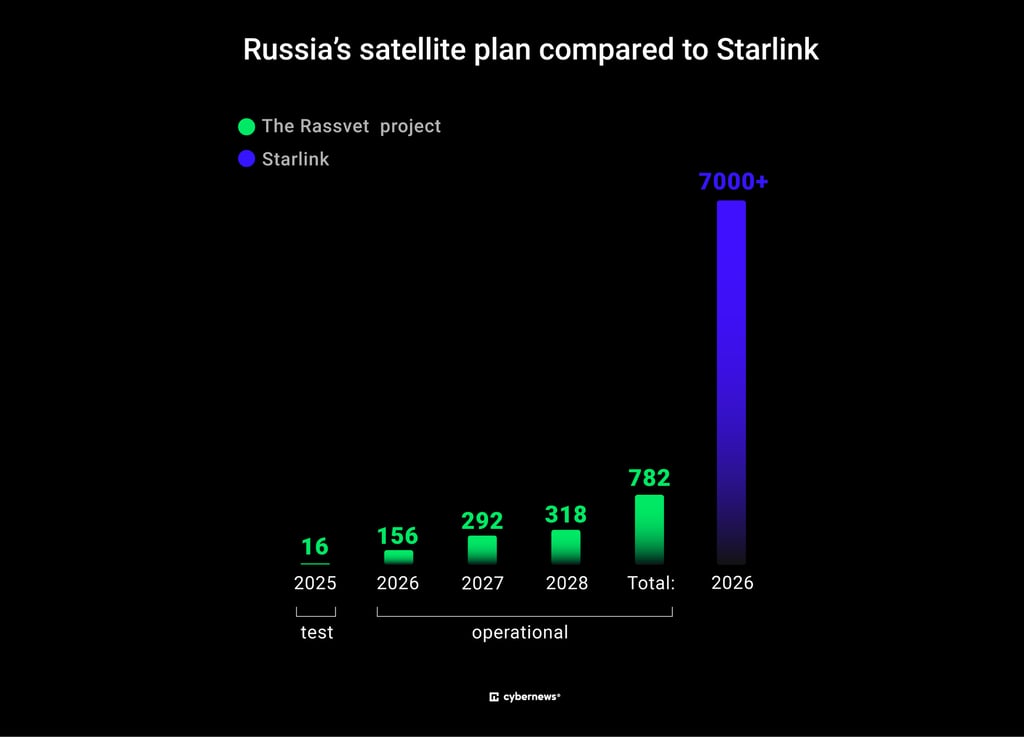
However, Russia still has a long way to go. In comparison, SpaceX’s Starlink network has deployed more than 7,000 satellites in low Earth orbit.
Officials describe the network as a domestic version of SpaceX’s Starlink, which has become a critical communication tool for Ukraine during the war.
SpaceX has worked with Ukraine to block the Russian army from using Starlink to control drones that carried out attacks. Simultaneously, this move made Russian drones easier to intercept and therefore disrupted some Russian military operations.
Internet shutdowns have occurred before
In early March 2026, the Russian government had either partially or completely shut down the internet across Moscow. According to various reports, in some places the internet was very slow, and in others, entire districts had lost mobile data.
According to Reuters, citing the Kommersant newspaper, mobile internet has been periodically shut down in some Russian regions for months, often after major Ukrainian drone attacks. By mid-January, Russia had blocked more than 400 VPN providers. That’s 70% more than late last year.
“We understand that, if they (the authorities) really manage to block both VPN (virtual private network) and Telegram, then we’ll have to leave the country, and I don’t know for how long,” said one Muscovite to CNN.
Some young Russians vowed to evade the clampdown by switching to different VPNs as services were banned, not for politics but simply to engage with Western apps such as Instagram and Snapchat, which are restricted in Russia.






Russian officials said that these limitations were necessary to ensure safety during Ukrainian drone attacks targeting the capital, and would remain in place for as long as necessary.
As a result, residents in Moscow have begun buying pagers and foldable maps to stay connected or avoid getting lost in the city. In the meantime, cab drivers saw passenger numbers plummet due to the unavailability of taxi apps.
Long before the government put limitations on the internet, it started blocking Western social media platforms – Instagram, WhatsApp, FaceTime, and Facebook.
Unlock more exclusive Cybernews content on YouTube.