Police bust ATM explosion gang across Europe
Following a series of ATM attacks in Austria earlier this year, local authorities in Austria requested assistance from their counterparts in Germany, the Netherlands, and Europol.

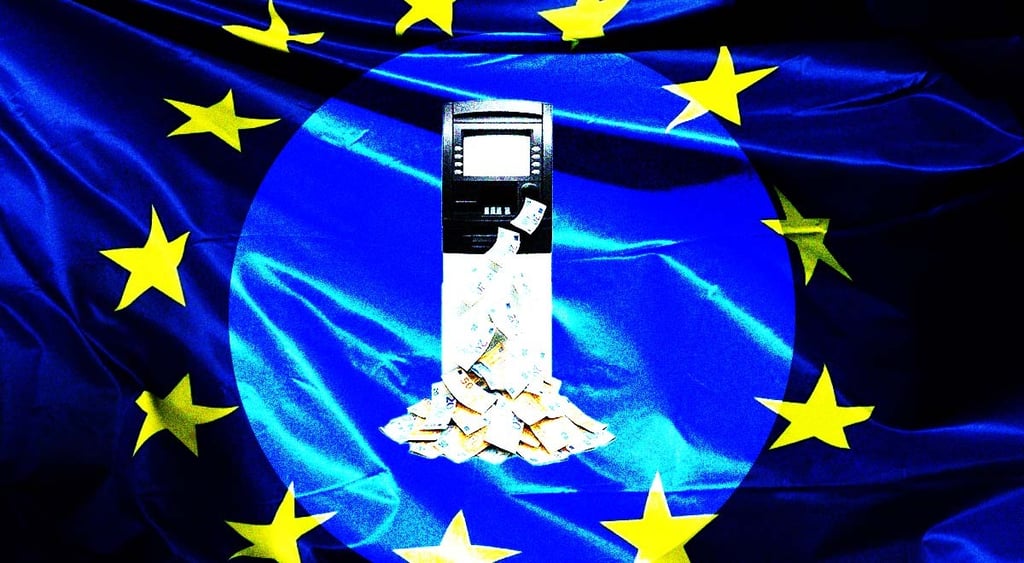
Image by Cybernews.

 Follow us
Following a series of ATM attacks in Austria earlier this year, local authorities in Austria requested assistance from their counterparts in Germany, the Netherlands, and Europol.
An intensive investigation revealed that two individuals are suspected of blowing up ATMs with explosives, with two more individuals aiding them in the process.
According to Europol, which supervised the operation, the ATM attacks were carried out by a highly sophisticated group. Before blowing up the cash machines, robbers would scout sites for suitable attacks. They would pick targets with modest security measures and convenient getaway options.
During the night, the attackers would rig the ATMs with solid explosives, made of flash powder sourced from heavy pyrotechnics. The criminals then grabbed the cash and fled the scene in high-speed vehicles.
On August 19th, police officers from Austria, Germany, and the Netherlands raided twelve properties in all three countries simultaneously. This resulted in four arrests and the seizure of two cars, explosive devices, mobile phones, and other evidence in Austria. Several mobile phones and further evidence were collected in Germany. Two cars, ammunition, €16,500 in cash, GPS trackers, and other evidence were confiscated in the Netherlands.




Destroying and collecting money from ATMs has become more and more common across Europe in recent years.
For example, last month, law enforcement authorities from Romania and the United Kingdom took down a criminal network that was involved in ATM fraud. The perpetrators used the so-called Transaction Reversal Fraud (TRF) method.
The criminals removed the screen of an ATM and then inserted a bank card to request funds. Before any money was dispensed, they cancelled the transaction, allowing them to reach inside the machine and take the money before it was retracted. Using this method, the perpetrators were able to steal approximately €580,000.




To make it harder for criminals to steal money from ATMs, Europol recommends restricting access to indoor machines at nighttime alongside elevated break-in technology, glue or dye packs in cash containers, stronger mechanical protection measures, and storing smaller amounts of cash.