Fresh AI tool able to predict risk of more than 1,000 diseases
To millions, AI is just play – or a ploy of the rich to automate our jobs. But the technology can also be potentially life-saving: scientists have just developed a new tool to predict your personal risk of more than 1,000 diseases.

Image by Cybernews.

 Follow us
To millions, AI is just play – or a ploy of the rich to automate our jobs. But the technology can also be potentially life-saving: scientists have just developed a new tool to predict your personal risk of more than 1,000 diseases.
Scientists have built a tool that marries your medical history to predictions on what health conditions you might face in the next two decades.
The new model, called Delphi-2M, uses diagnoses, “medical events,” and lifestyle factors to create forecasts for the next decade and beyond.
Trained on data from two totally separate healthcare systems, the tool was custom-built by researchers from the European Molecular Biology Laboratory (EMBL), the German Cancer Research Centre, and the University of Copenhagen.
Just as large language models can learn the structure of sentences, Delphi-2M learns the “grammar” of health data to model medical histories as sequences of events unfolding over time.











These events include medical diagnoses or lifestyle factors such as smoking. The model learns to forecast disease risk from the order in which such events happen and how much time passes between them, the scientists said in a study published in Nature.
“Medical events often follow predictable patterns,” said Tom Fitzgerald, staff scientist at EMBL’s European Bioinformatics Institute.
“Our AI model learns those patterns and can forecast future health outcomes. It gives us a way to explore what might happen based on a person’s medical history and other key factors. Crucially, this is not a certainty, but an estimate of the potential risks.”
AI is not some genie in a bottle, so the model works best for conditions with clear and consistent progression patterns, such as certain types of cancer, heart attacks, and septicaemia (a type of blood poisoning), the study said.
Delphi-2M isn’t yet ready for clinical use. But the model can already help researchers understand how diseases develop and progress.
Delphi-2M is, unfortunately but entirely predictably, less reliable for more variable conditions, such as mental health disorders or pregnancy-related complications that depend on unpredictable life events.
The model doesn’t predict exactly what will happen to you, to be sure. It offers “well-calibrated” estimates of how likely certain conditions are to occur over a given period.
“For example, it could predict the chance of developing heart disease within the next year. These risks are expressed as rates over time, similar to forecasting a 70% chance of rain tomorrow,” said the researchers, adding that generally, forecasts over a shorter period of time have higher accuracy than long-range ones.
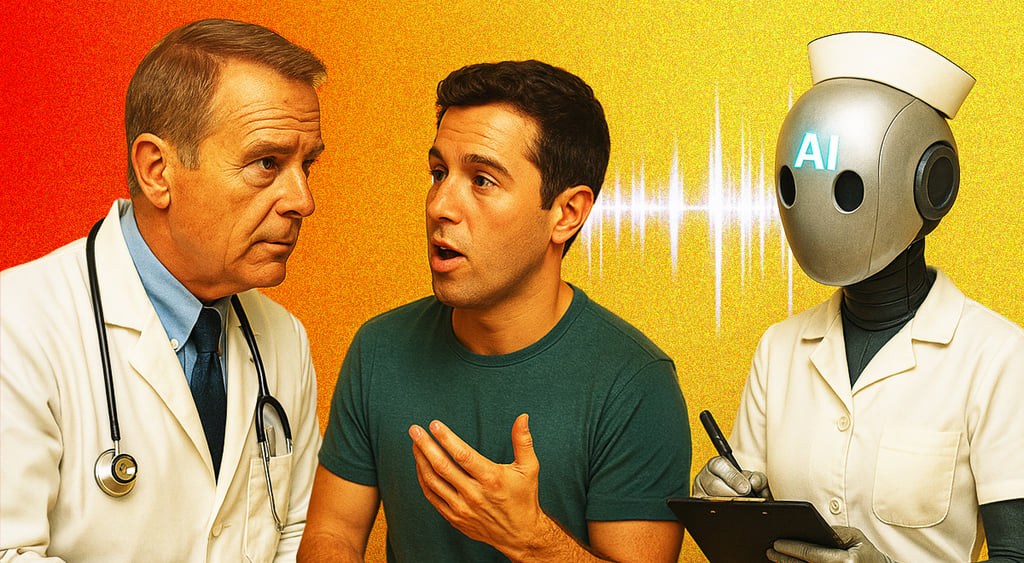
Delphi-2M isn’t yet ready for clinical use. But the model can already help researchers understand how diseases develop and progress. Healthcare specialists could also simulate health outcomes using artificial patient data when real-world data is difficult to obtain.
“Generative models such as ours could one day help personalize care and anticipate healthcare needs at scale,” said Moritz Gerstung, head of the division of AI in Oncology at the German Cancer Research Centre.
“By learning from large populations, these models offer a powerful lens into how diseases unfold, and could eventually support earlier, more tailored interventions.”
Unlock more exclusive Cybernews content on YouTube.
