World’s leading mathematicians ridicule AI hype in high-IQ declaration
Over 150 leading mathematicians from all around the world have called for the discipline to resist beating the drum for AI developers and conduct proper research. Indeed, actual professors have serious doubts about the math abilities of various AI systems.
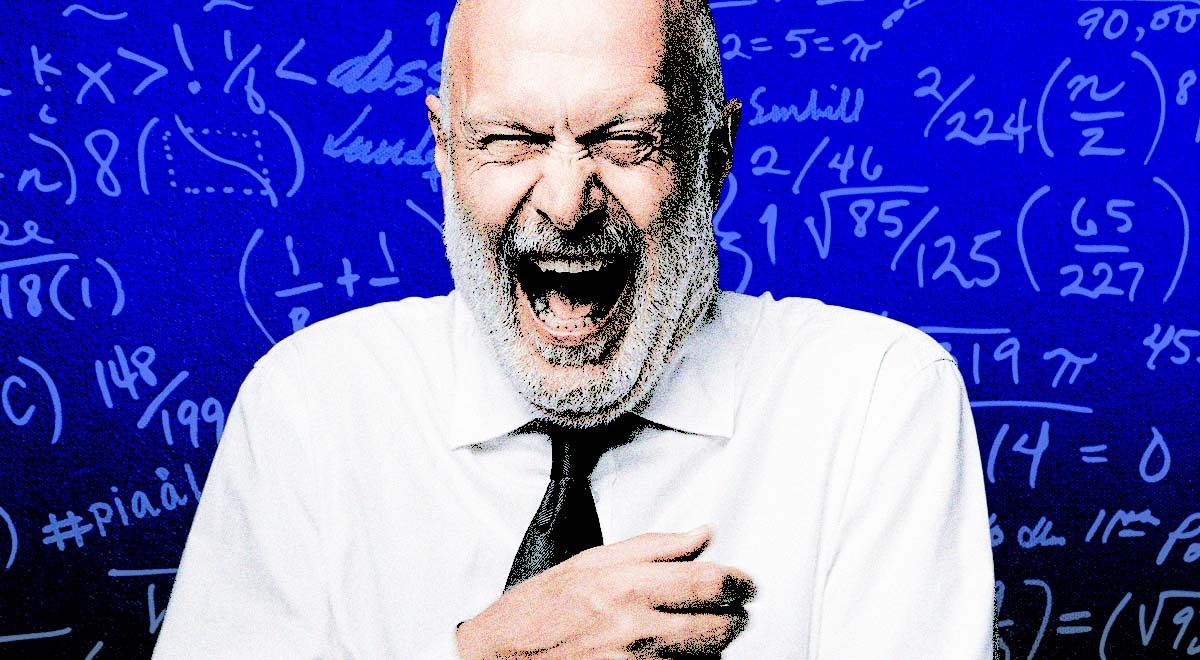
Image by Cybernews.

 Follow us
Over 150 leading mathematicians from all around the world have called for the discipline to resist beating the drum for AI developers and conduct proper research. Indeed, actual professors have serious doubts about the math abilities of various AI systems.
- Mathematicians warn AI-generated proofs can appear convincing while remaining incorrect, unverifiable, and harmful to research integrity.
- Experts say commercial incentives drive exaggerated claims about AI math breakthroughs, misleading policymakers and the public.
- The declaration urges human judgment, rigorous peer review, and transparency over market-driven AI publicity.
AI firms and individual enthusiasts hype everything about the tech, of course. In mathematics, the trend is especially fashionable: claims that large language models are solving decades-old conundrums are ubiquitous.
Earlier this year, a 23-year-old amateur with no formal training claimed he had used ChatGPT to solve one of the famous “Erdős problems,” for example.
And last month, OpenAI claimed its AI had disproved an 80-year-old “unit distance” conjecture, also devised by Erdős, calling the discovery “an important milestone for the math and AI communities.”




“This marks the first time AI has autonomously solved a prominent open problem central to a field of mathematics,” OpenAI boasted back then.

Check if your data was exposed
Find out if your email and related personal information have appeared in known data breaches.
However, a new declaration signed by over 15 mathematics experts from around the world has called on both practitioners of the discipline and governments not to believe the hype about AI’s math abilities.
“Current automated techniques can produce plausible but unreliable (or even incorrect) arguments which are difficult to distinguish from correct mathematical proofs,” reads the declaration.
“These fast-moving developments put our present system of review under increasing pressure, jeopardizing our ability to implement traditional standards for the correctness, transparency, and independent verifiability of proof.”
Indeed, scientific research usually builds on previous work, but if the latter isn’t accurate and properly peer-reviewed, future solutions won’t be either.
Released “on market timelines” rather than at the pace of human-reviewed science, AI publicity can also “misleadingly use specific mathematical tasks as metrics for the general reasoning capacities of commercial models.”
That’s why the declaration also laments about “a strong commercial incentive on the part of the technology industry” to overstate the capabilities of their models. The professors’ advice to policymakers is to consult with actual experts rather than relying on boastful press releases.
Released “on market timelines” rather than at the pace of human-reviewed science, AI publicity can also “misleadingly use specific mathematical tasks as metrics for the general reasoning capacities of commercial models.”
In a supporting statement, International Mathematical Union Vice President Ulrike Tillmann says that AI “raises questions that cannot be left unexamined.”






“The future of mathematical research must be guided by human judgment, fair and transparent practices, and the shared values of the global mathematical community,” said Tillmann.
In other words, the declaration – which reads like a very public rebuke – is really far from an endorsement of what’s going on in the AI hype market.
Mathematicians are also unhappy with AI firms using their work for model development, by the way. Whether they can do anything about it at a time when higher education is chronically underfunded – unlike the AI industry – is another question.
Unlock more exclusive Cybernews content on YouTube.