North Korea tests AI-guided missiles for the first time
North Korea says it has successfully tested AI-guided missiles under the watchful eye of Kim Jong Un, marking Pyongyang’s latest attempt to modernize its military with emerging technologies already reshaping battlefields across the world.
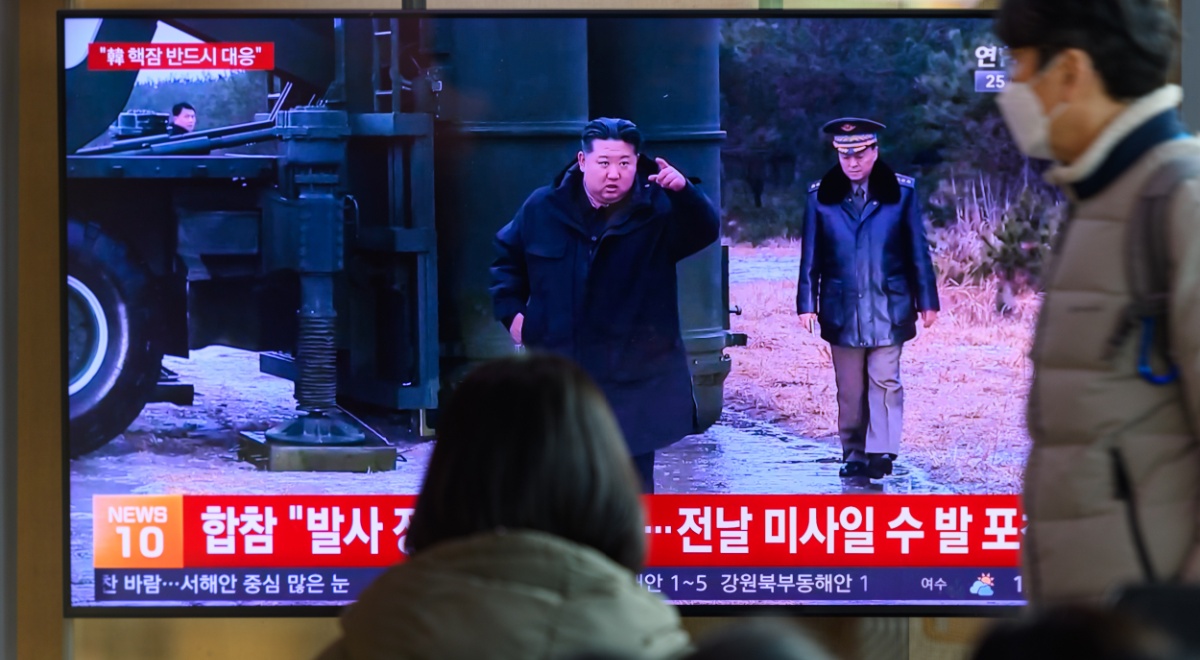
Kim Jong Un observes missile test, December 2025. Kim Jae-Hwan/SOPA Images/LightRocket/Getty

 Follow us
North Korea says it has successfully tested AI-guided missiles under the watchful eye of Kim Jong Un, marking Pyongyang’s latest attempt to modernize its military with emerging technologies already reshaping battlefields across the world.
State media this week released images of Kim overseeing weapons tests that reportedly involved AI-assisted missiles capable of striking targets up to 100 kilometers away.
The test marks a troubling escalation on the Korean Peninsula, as the missiles’ range puts Seoul within reach. But it also highlights that Pyongyang is scrambling to catch up with a global military trend that has already transformed the modern battlefield.

AI is rapidly changing warfare






North Korea is not the first country to experiment with AI-guided weapons. Be it the United States and China, or Russia and Ukraine, several countries have spent years developing increasingly autonomous missile systems, drone swarms, and machine vision-assisted targeting platforms.
The North Korean test signals that the country wants to present itself as part of the rapidly expanding AI arms race. However, it has not released technical details about how sophisticated its system actually is.
The Cybernews community is talking about this. Be a part of the conversation.
Technically speaking, though, military analysts caution that “AI-guided” can mean many things. In some systems, AI simply improves navigation accuracy or helps missiles recognize terrain and targets more efficiently. More advanced systems can process battlefield data in real time, identify threats, and adjust flight paths with limited human intervention, a capability heavily demonstrated during India's AI-enabled Operation Sindoor.
Several recent battlefield technologies have demonstrated how quickly autonomous capabilities are evolving. AI-assisted drone swarms can coordinate movements without constant human input, while computer vision systems now allow low-cost drones and missiles to track targets even in GPS-jammed environments.






The use of AI on the battlefield has fueled international debate, with advocates pushing for stricter global rules governing AI-powered military systems. They argue that machines should never make life-or-death decisions without human oversight.
So far, however, major military powers have shown little interest in slowing development. North Korea’s latest test underlines that reality. By launching its first AI-guided missiles, the country has made it clear that it has no intention of being left behind in the world's most dangerous tech race.
Unlock more exclusive Cybernews content on YouTube.