Volkswagen steps on the gas in the Chinese EV market by developing its own AI chip
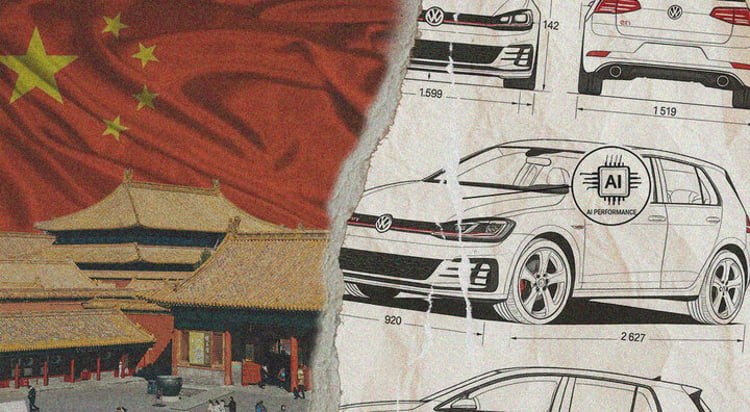
The German car maker is set to develop an artificial intelligence (AI) chip to strengthen its position in the world’s biggest car market. Or, as Volkswagen (VW) calls it, it’s “most important” market.

 Follow us
The German car maker is set to develop an artificial intelligence (AI) chip to strengthen its position in the world’s biggest car market. Or, as Volkswagen (VW) calls it, it’s “most important” market.
The chip will include the system-on-chip (SoC) technology, which is widely used in smartphones and vehicles that rely on driver-assistance and autonomous driving systems. Instead of using multiple chips to run different functions in the car, VW will now have a single chip, which will be able to:
- Process data from sensors, such as cameras
- Run advanced driver-assistance systems, which normally support features needed for a car to drive autonomously
- Reduce power consumption compared to using multiple separate chips
- Give VW more control over software and hardware
“Localized technology development grants the region more autonomy to further expand its position in the dynamic automotive market,” said Ralf Brandstätter, Member of the Management Board of Volkswagen AG for China.
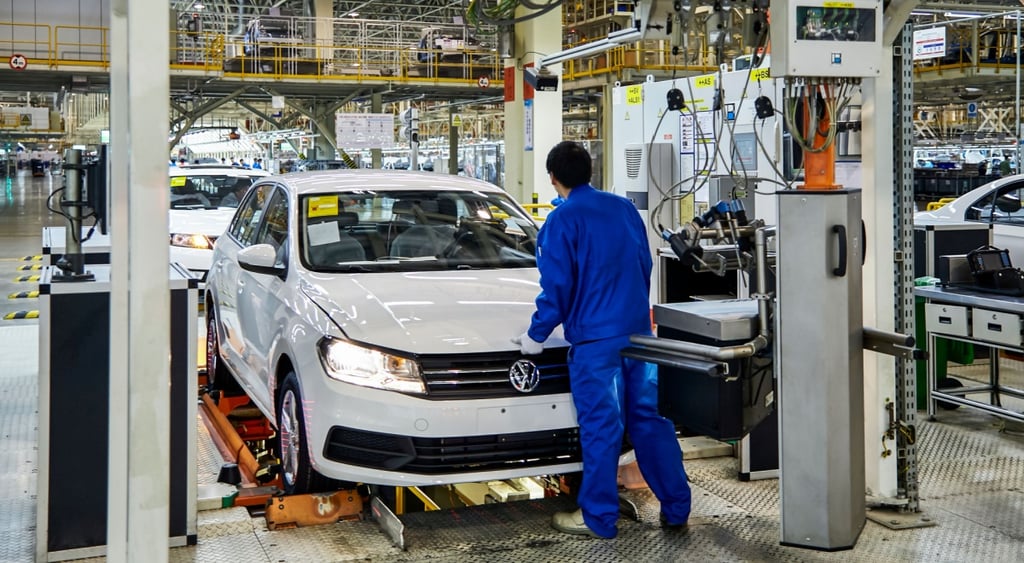






The chip, according to VW, is being designed through a joint venture between its software arm, Cariad, and Chinese smart-driving specialist Horizon Robotics, “in which CARIAD will hold a majority stake of 60%.”
For the company, it’s a big step forward as VW aims to localize more of its research and development in China. The goal is to launch approximately 30 electric vehicles in the country over the next five years. That is also the time when the first deliveries of the AI chip are expected.
This move also reflects the tension in the technology industry as China and the US continue to tighten trade tensions. Just this week, President Donald Trump announced his plans to keep Nvidia’s most advanced AI chips exclusive to the US, and keep them out of China and other countries.






This isn’t the first time Washington has discussed or actually imposed bans on other Nvidia chip exports. In response, Chinese tech giants such as Alibaba, Tencent, and Baidu are set to test alternative, “home-made” AI chip alternatives.
Another reason for VW to seek greater tech independence comes from the fact that the company has struggled to keep pace in the fast-growing electric vehicle (EV) sector, where Chinese domestic brands now account for nearly 70% of sales, reports the Financial Times.
VW’s competitors are ahead in the Chinese EV market. For instance, Toyota has announced its “Toyota Guardian” AI chip, and Ford is collaborating with Intel for ADAS and future autonomous features.
Unlock more exclusive Cybernews content on YouTube.