Best AI paraphrasing tool: avoid AI detection with 99% success
Being behind major reports like The Mother of All Breaches and RockYou2024, our in-house cybersecurity experts and journalists provide unbiased, real-world testing and in-depth analysis.
We maintain complete transparency by openly sharing our testing methodologies with our audience.
Learn more

Paraphrasing tools have existed for years, but today they use advanced language models to rephrase text more naturally than ever. These rewriting tools can improve text clarity and tone, help ESL writers edit their work, and inspire brainstorming sessions. However, while such tools enhance writing, AI detectors meant to detect machine-generated text are by no means perfect, as they frequently misidentify human writing or miss advanced rewrites.
For this reason, with the help of the Cybernews research team, I reviewed the 7 best AI rewriting tools, so you can make an informed decision on which tools produce natural, undetectable text outputs.
Top 5 best AI paraphrasing tools for 2026
- QuillBot – best AI paraphrasing tool for everyday use
- Wordtune – best for rewriting with tone control
- Grammarly – best for quick rephrasing and grammar fixes
- ProWritingAid – best for detailed editing and style improvement
- LanguageTool – best open-source option for multilingual rephrasing
How text rewriting tools work
I've found that AI-based paraphrasing tools are far more sophisticated than the word spinners I'm familiar with from years ago. When I submit a sloppy paragraph, the tool doesn't simply replace words with synonyms. Instead, it rebuilds the sentence to phrase it more naturally and clearly. Here's how the paraphrasing tool actually works when you input text:
- Text tokenization. The computer splits each sentence into tiny pieces (tokens) that can be analyzed.
- Pattern recognition. The tokens are being matched with large training datasets to learn about meaning and context.
- Reconstruction. The model foretells a new language with the meaning of the message retained.
- Style formatting. Depending on the mode selected, the tool shortens, extends, or shifts the tone.
Many tools also let you edit the output and have customization options. This helps you avoid plagiarism and bypasses most AI detection tools.
7 best AI paraphrasing tools based on my testing
Now, let’s get into the main part – the 7 best AI paraphrasing tools that the research team and I analyzed.
1. QuillBot – best AI paraphrasing tool in 2026

| Best for: | Everyday writing, students, and quick rephrasing |
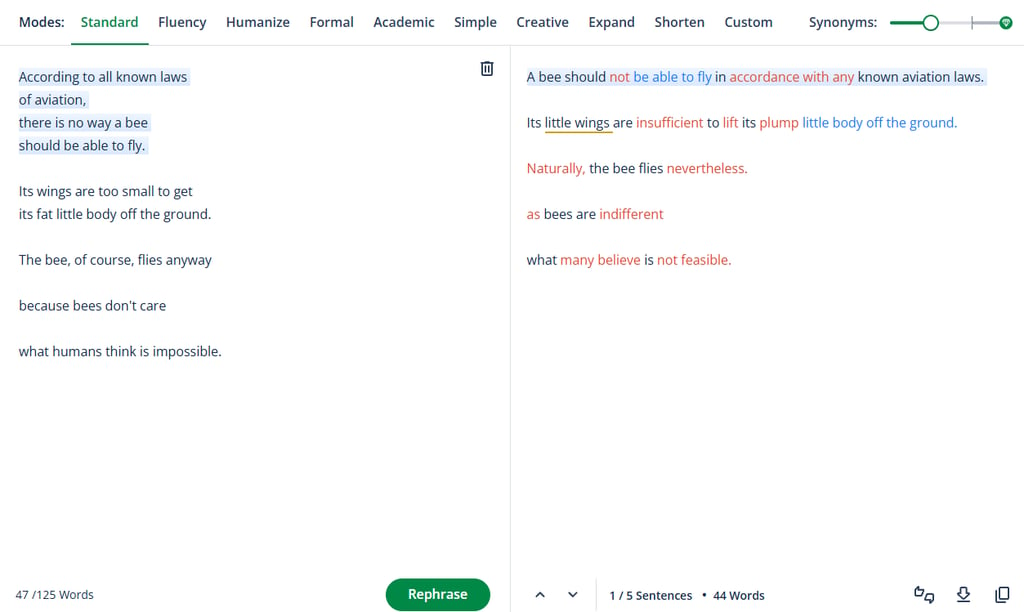
| Rewrite modes: | Standard, Fluency, Humanize, Formal, Academic, Simple, Creative, Expand, Shorten, Custom |
| Free version: | ✅ Yes (125 words per run, unlimited runs) |
| Starting price: | $8.33/month |
QuillBot is not only one of the best AI paraphrasing tools but also a versatile solution for writers. I’ve been using this tool since I was a student, and years later, it’s still #1 on the list, consistently delivering reliable results across multiple cases.
As discussed in our QuillBot review, the provider offers 10 rewrite modes: Standard, Fluency, Humanize, Formal, Academic, Simple, Creative, Expand, Shorten, and, yes, a Custom option. Personally, I found this versatility extremely useful when changing the tone from casual to collegiate or summarizing longer reports.
The free version can do up to 125 rewords per run – much more than competitors. In terms of AI detection, QuillBot passed as human writing in around 95% of the cases, which is a great result.
All in all, I’d recommend this tool for students, professionals, or anyone who needs to trade off speed vs quality.
2. Wordtune – best AI paraphrasing tool for tone control
| Best for: | Tone adjustments and professional communication (e.g., emails) |
| Rewrite modes: | Casual, Formal, Shorten, Expand, Rewrites |
| Free version: | ✅ Yes (10 rewrites/day) |
| Starting price: | $6.99/month |
I selected Wordtune for this list as it was the most impressive AI rewording tool in terms of tone flexibility.
Most rewording tools just rearrange synonyms, but Wordtune gave me elaborate rewords that felt like I had written them. For my test, I used its base modes: Casual, Formal, Shorten, Expand, and simple rewrite options, and found them particularly useful for polishing emails or essays where tone is important.
Its free plan only allows for 10 rewrites a day, which was limiting, but the quality of output redeemed it. However, this Wordtune paraphraser doesn’t have AI detection bypass capabilities.
Generally, Wordtune is best for professionals and students who require natural tone shifts.

3. Grammarly – best AI paraphrasing tool for quick fixes and grammar checks

| Best for: | Quick rephrases, grammar, and clarity improvements |
| Rewrite modes: | Clarity, Conciseness, Tone, Full rewrites |
| Free version: | ✅ Yes (basic free rephrasing) |
| Starting price: | $12.00/month |
Grammarly is one of the best AI paraphrasing tools out there for writers who want quick, lightweight rewrites built into their grammar checker.
Grammarly's rephrasing function helped me tidy up lengthy sentences and cut word count without changing the tone. Unlike QuillBot or Wordtune, Grammarly's paraphrasing is not its strength. It's rather an extra layer beyond grammar and spelling checks.
Grammarly’s rewrite modes are Clarity, Conciseness, Tone, or Full rewrites. In my tests, Grammarly did an excellent job of tightening up text and making it glow, which is perfect if you're a student or pro writing on the go.
As we noted in our Grammarly review, it’s not suited for AI detection bypass but rather for human-authored content refinement. It’s overall best for quick rewording combined with grammar and clarity improvements.
4. ProWritingAid – quality AI paraphrase for long-form editing
| Best for: | Long-form editing, reports, and style improvement |
| Rewrite modes: | Clarity, Grammar, Style, Thesaurus |
| Free version: | ✅ Yes (500 words/day) |
| Starting price: | $10.00/month |
I've selected ProWritingAid for this list as the best AI rewording tool for writers working with long texts that need more than just fast rewording.
I found its rewording feature less flashy than QuillBot's yet more contextually oriented (especially when coupled with its grammar and structure reports). It's excellent for simplifying complex sentences without sacrificing the meaning.
ProWritingAid has 4 main rewrite modes: Clarity, Grammar, Style, and Thesaurus. For essays or manuscripts, it came out consistently with all of my copies. However, when I checked ProWritingAid's outputs for AI detection, the rewrites would be flagged, so it won't work if you're trying to avoid detection.
I’d say ProWritingAid is best for students writing long essays and authors who need full-document editing support.
5. LanguageTool – budget-friendly AI paraphraser
| Best for: | Multilingual rephrasing, open-source fans |
| Rewrite modes: | Style, Clarity, Tone, Multilingual rewrites |
| Free version: | ✅ Yes (10,000 characters/day) |
| Starting price: | $5.83/month |
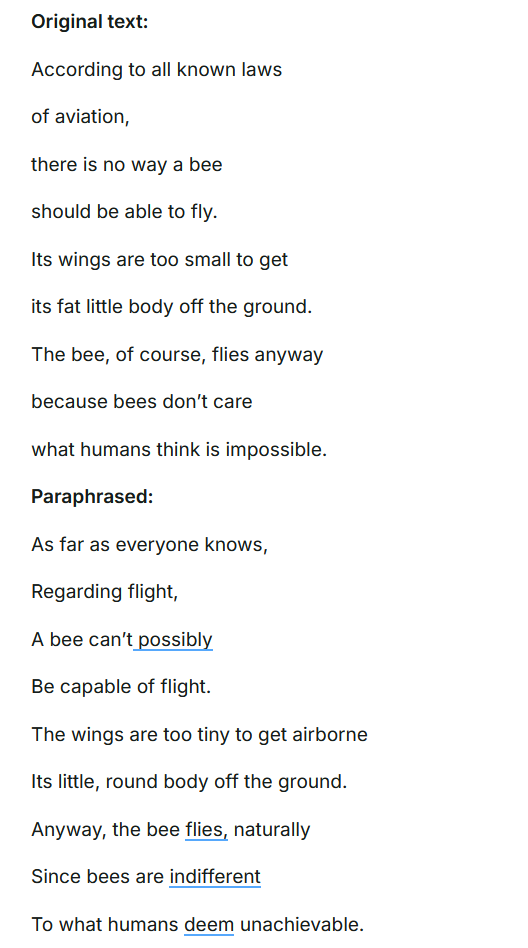
LanguageTool is the cheapest AI paraphrasing tool I've reviewed, making it an excellent option if you need rewording but don't want to pay extra for higher-end plans.
LanguageTool’s strong point is multilingual support (more than 30 languages supported). It’s a functionality that not many of its rivals implement as effectively. My analysis concluded that the rewriting itself is less complex than QuillBot or Wordtune, but adequate for creating quick clarity or tone adjustments.
The standout feature was the free plan, which offers 10,000 characters per day (far more generous than QuillBot or ProWritingAid). That said, when I put its rewrites through AI detectors, they were frequently flagged, so it's not a solution if detection is your top priority.
I’d say it’s best for multilingual users on a budget. It offers solid text refinements across many languages without the high price tag.

6. Jasper – premium paraphrasing tool with advanced AI tools

| Best for: | Marketing and branded content rewriting |
| Rewrite modes: | Tone, Length, Templates, Full rewrites |
| Free version: | ❌ No (7-day free trial only) |
| Starting price: | $59.00/month |
Jasper emerged as the most high-end paraphrasing tool with cutting-edge AI capabilities. And my tests revealed that Jasper is best for marketing departments, copywriters, and companies that need to produce refined content quickly.
While Jasper AI offers a broad set of functionalities, its paraphrasing features include tone control, length alterations, and paragraph-level rewording, all packaged in a workspace with ad, blog, and social media templates. This made Jasper less of a rephraser and more of a content platform.
Jasper’s price is significantly higher than most of the paraphrasers on my list. I also found that Jasper's outputs had a tendency to set off AI detectors, so it's not safe to use for evading them.
Overall, Jasper is best suited for teams creating large amounts of branded content. Its rich set of features makes it a valuable tool for professionals.
7. Smodin – easy-to-use AI rewording tool for academic tasks
| Best for: | Academic writing and fast rewrites |
| Rewrite modes: | Rewrite, Summarize, Expand, Tone |
| Free version: | ✅ Yes (3 rewrites/day, 1000 characters) |
| Starting price: | $9.00/month |
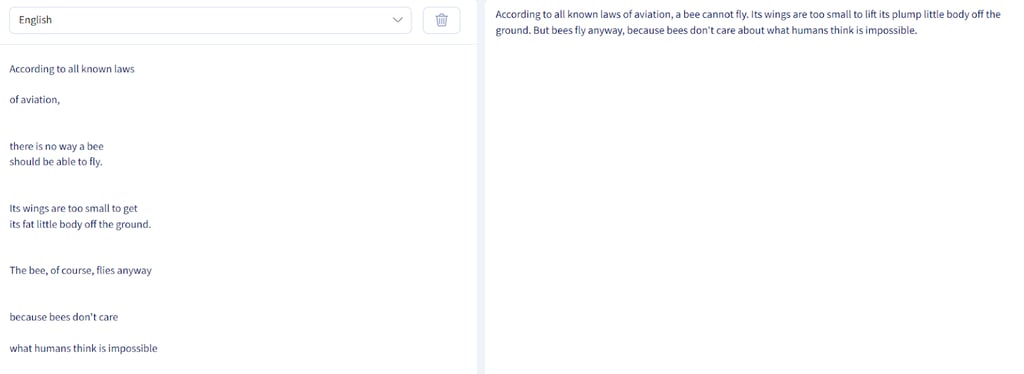
Smodin is the student-friendly AI paraphrasing tool I had reviewed. According to my research, it's designed with speed and simplicity in mind, which is excellent for essays, summaries, and academic summaries.
The Smodin rephraser has a minimalistic interface, and the rewrites I got were quite good at preserving the initial meaning. The rewrite modes include Rewrite, Summarize, Expand, and Tone, which proved to be quite effective when I applied them to study material.
The free version is very limited – you get only 3 rewrites/day up to 1000 characters. That’s pretty restrictive, so you'll need the paid version to unlock unlimited rewrites. I tested Smodin's outputs against detectors, and they were always caught, so it's not good at remaining undetected as an AI.
Smodin is mostly recommended for students who need quick, easy rewrites for studying.
Best AI paraphrasing tools in 2026: comparison
Take a glance at how best 2026 AI paraphrasers stack against each other:
| Tool | Best for | Starting monthly price | Rewrite modes | Free limits |
| QuillBot | Everyday writing, students | $8.33 | Standard, Fluency, Humanize, Formal, Academic, Simple, Creative, Expand, Shorten, Custom | 125 words/run, unlimited runs |
| Wordtune | Tone control, emails | $6.99 | Casual, Formal, Shorten, Expand, Rewrites | 10 rewrites/day |
| Grammarly | Quick rephrasing, grammar fixes | $12.00 | Clarity, Conciseness, Tone, Full rewrites | Basic free rephrasing |
| ProWritingAid | Long-form style, editing | $10.00 | Clarity, Grammar, Style, Thesaurus | 500 words/day |
| LanguageTool | Multilingual rephrasing, open-source fans | $5.83 | Style, Clarity, Tone, Multilingual rewrites | 10,000 characters/day |
| Jasper | Marketing, branded content rewriting | $59.00 | Tone, Length, Templates, Full rewrites | 7-day trial only |
| Smodin | Academic writing, fast rewrites | $9.00 | Rewrite, Summarize, Expand, Tone | 3 rewrites/day, 1000 characters |

Free vs premium options: what to expect
You’ll notice quite a distinction when you use free vs premium paraphraser tools. Usually, the free tiers suffice for quick and short rewrites, and you'll soon run into word limits, limited modes, and weaker privacy.
On the other hand, paid subscriptions will have no word caps and unlock more features and modes. You’ll also most likely have full document access, collaboration tools, and better privacy.
| Plan type | What you get |
| Free | Word or character caps, longer wait times, fewer rewrite modes |
| Premium | Unlimited runs, advanced tone, document-wide edits, and collaboration |
Avoiding false positives: common mistakes
While experimenting with paraphrasing tools, I've seen people fall into patterns that render their writing more AI-sounding. That’s why I outlined the most common mistakes (and quick fixes) you can have in mind when working with an AI paraphrase:
- Pattern-matching/mirroring original structure. Your text may sound too formulaic. To fix this, randomize syntax and rephrase sentences.
- Identical sentence length. AI detectors usually flag overly uniform patterns. To fix this, alternate short and long sentences for a natural rhythm.
- Generic filler and unsupported statements. With this, you just lose credibility. To fix it, add specific facts and fact-check material.
- Missing citations. This makes your text seem incomplete or suspicious. To improve it, quote legitimate sources where necessary.
- Loss of voice. Rewrites will likely remove your tone, making it sound generic. To fix this, you’ll need to restore your personal tone or wording.
- Privacy leaks. Sensitive data gets copied by the tools. Where possible, sanitize inputs before copying text.
How AI content detection works (high-level)
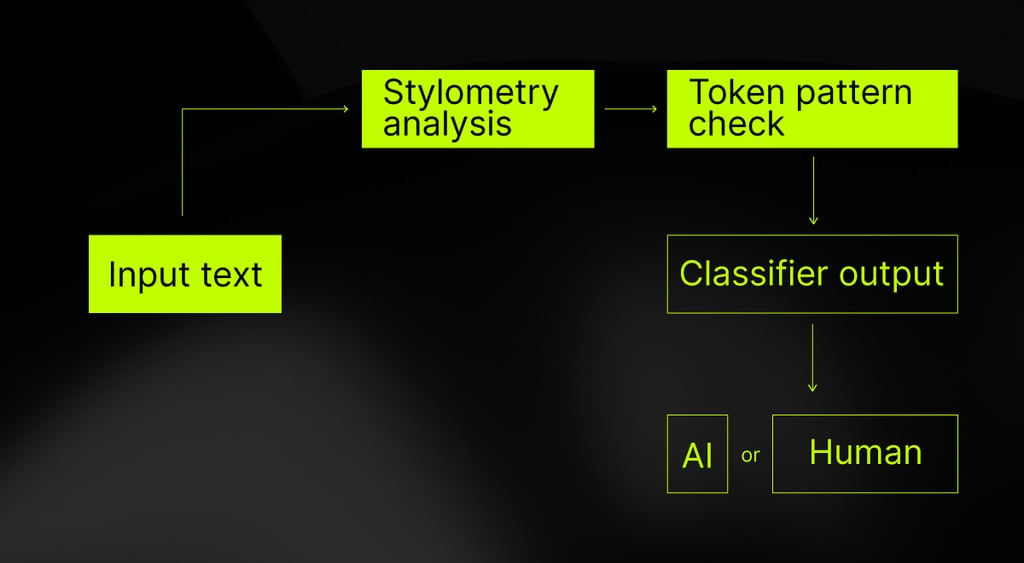
To test the best AI paraphrasing tools, I used widely available AI detectors (Turnitin, GPTZero) to see how the text was being assessed. But how exactly does that detection work? Generally, the tools rely on 3 fundamental approaches.
- First, there's stylometry (the study of writing style), which measures features like sentence length, rhythm, and word choice. Computer-generated writing has uniformity, which can be identified.
- Second, they analyze token patterns, looking for statistical clues in the way words are put together. Because large language models generate text token by token, they leave subtle fingerprints on the end product.
- Finally, machine-learning classifiers are learned on human and AI text sets and make predictions about which class a particular sample falls under.
However, during my testing, I noticed false positives (human writing labeled as AI) and false negatives (AI writing misidentified as human). This often happens because the tools are highly domain-sensitive. For example, scientific papers usually look too uniform and get unfairly flagged. Over time, the detection accuracy can weaken, as writing styles and AI models shift. That's why all outputs must always be interpreted individually.
Why authenticity and transparency matter
It's not so much about preventing false positives as it is about being truthful with readers, students, or clients and adhering to requirements where you need to. Some institutions (schools, universities) and platforms (Instagram, YouTube, TikTok) demand disclosure if AI was used, and failure to do so can be detrimental to credibility.
Automatic detectors aren't foolproof, and this is why human proofreading always needs to be paired with computer scans, particularly where accuracy and context are two main components.
For example, as a student, I experienced a situation when the detector wrongly flagged my original essay. The same way companies risk trust if marketing copy sounds too automated. A simple disclosure note like this can build fairness and transparency:
This content was generated with the help of AI and reviewed by a human editor for accuracy.
So, while authenticity is not only compliance with policy, it's definitely a signal of trust.
Future of AI paraphrasing and detection
There’s no doubt that in the years to come, paraphrasing tools and AI detection tech will keep up with each other. Writing models are becoming smarter – besides rewording, they now offer context-sensitive editing that’s closer to human-like touch. At the same time, AI detectors get tougher, newer models are being trained on larger data sets, and guidelines by platforms like YouTube, TikTok, and Meta are calling for clear labeling of AI-generated content.
Current rewording tools can assist with accessibility, ESL learning, and efficiency, while detection tools protect against misuse. There are still risks, though, as false positives can unfairly punish students or writers, and constant policy fine-tuning means users must adapt.
My recommendation is to keep workflows agile: paraphrase responsibly, stay up to date with current AI disclosure standards, and always use a human pair of eyes before publishing. Ultimately, transparency and editorial oversight will outlive any algorithm.
FAQ
What is the best AI paraphrasing tool?
QuillBot is the best AI paraphrasing tool on my list. It strikes a balance between accuracy, multiple rewriting options, and a comprehensive free plan, so it’s reliable for both everyday work and academic writing projects. It’s also considered one of the best writing solutions.
Is ChatGPT a good paraphrasing tool?
Yes, ChatGPT can rewrite text effectively, but it's not meant to consistently avoid AI detection. Detectors during my testing frequently caught its rewrites, so choosing a dedicated rephraser for that reason would be better.
Are AI paraphrasers accurate?
It depends on what paraphraser you use and what you use it for. They’re generally accurate, with some preserving meaning better than others. However, some free paraphrasers oversimplify or misinterpret the original meaning to some extent.