Xiaomi YU7 GT sets world’s first autonomous Nürburgring lap record
Can AI drive faster than humans? Not yet, but Xiaomi’s YU7 GT Nürburgring autonomous lap shows that we’re getting closer.
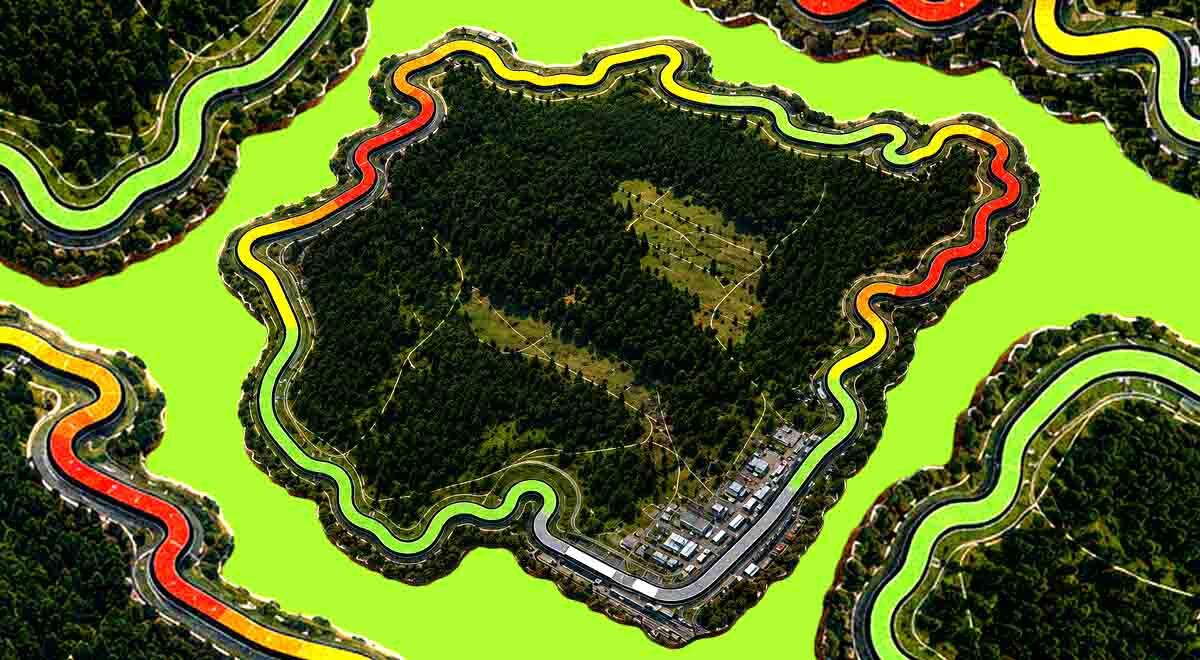
Nürburgring circuit. Image by Cybernews.

 Follow us
Can AI drive faster than humans? Not yet, but Xiaomi’s YU7 GT Nürburgring autonomous lap shows that we’re getting closer.
- Xiaomi's YU7 GT completed the first-ever fully driverless lap of the notoriously difficult Nürburgring circuit.
- The AI's time (10m 29s) was over 3 minutes slower than a human driver, showing a lingering gap in performance.
- EV makers are increasingly using high-speed tracks to push autonomous software to its absolute limits.
Xiaomi’s YU7 GT has become the first vehicle to complete an official driverless Nürburgring Nordschleife lap, a legendary motorsports complex located in Germany’s Eifel mountains. It is also known as a punishing track with over 70 bends.
Autonomous software guided the SUV around the 20.8 km circuit without human intervention, with an official automated lap time of 10 minutes and 29.483 seconds.
However, the run was 3 minutes and 7 seconds slower than a human-driven lap, highlighting that AI systems are still some way behind humans.






Why this matters
Xiaomi’s impressive lap time isn’t an isolated feat, more so a work-in-progress that’s been gathering momentum over the last couple of decades.
In 2004, the DARPA Grand Challenge (an autonomous driving competition) was held, whereby robotic cars attempted to navigate the harsh conditions of the Mojave Desert in the United States. However, the failure rate was high, with none of the competitors completing its gargantuan 241 km (150-mile) route – the furthest anyone reached was 11.7 km (7.32 miles).
Over the current decade, researchers have maneuvered EV (electric vehicles) from the public road onto the racetrack, largely because racetracks allow developers to push the vehicle to its limits – especially on a track like the Nürburgring – but still in a controlled environment.
Competitions like the Indy Autonomous Challenge (IAC) show both the thrill of success and the agony of defeat, especially as AI cars struggle to adapt to human-programmed high-speed prompts, as encapsulated in a 2022 video showing one vehicle crashing around a hairpin turn at 130 mph.
Xiaomi has joined the autonomous elite, alongside Tesla, Porsche, NIO, and BYD, in using the Nürburgring as a testing ground.
And as the competition becomes increasingly fierce, time will tell if the Nürburgring lap time becomes the litmus test across the EV industry.