Data centers are surveillance facilities, aren’t they?
Forget the energy bills, what if the true cost of data centers is the mass surveillance infrastructure they power?
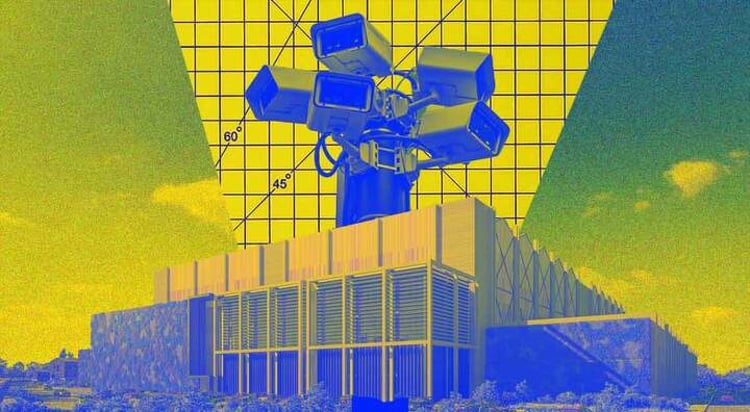
Data centres and surveillance cameras. Image by Cybernews.

 Follow us
Forget the energy bills, what if the true cost of data centers is the mass surveillance infrastructure they power?
- Data centers are the critical infrastructure that allows vast amounts of personal data to be collected, stored, and analyzed by AI systems at unprecedented scale.
- While information about individuals is currently spread across many organizations, advances in AI and data integration are raising concerns about the creation of comprehensive digital profiles of citizens.
- Supporters argue these technologies can improve security, public services, and threat detection, but critics warn they could enable mass surveillance, behavioral profiling, and predictive policing.
- The debate is increasingly shifting away from the environmental impact of data centers toward questions about privacy, oversight, accountability, and who controls the data powering AI systems.
Key Takeaways by nexos.ai, reviewed by Cybernews staff.
Data centers are the backbone of the digital economy, powering everything in modern society.
As our insatiable appetite for all things AI increases, there are many well-documented examples of communities protesting after being hit by rising electricity costs. But what if the real costs were not environmental or energy bills, but the real price is mass surveillance that you are paying for?
There are many ways data centers impact communities, but in the wrong hands, they become the infrastructure that enables modern surveillance. They store, process, and move the huge volumes of data needed for AI systems, cameras, phones, apps, and government databases to be linked together into a single picture of a person's life.






Surveillance has evolved from discussions about how many street cameras are in your city. On a much grander scale, back-end systems collect location data, search history, financial activity, biometric data, and other personal information. AI then analyzes the information stored in data centers and can be used to predict behavior and flag anyone it deems suspicious for further investigation.
Governments, platforms, or contractors using data centers to centralize their citizens' personal data should be seen as a big red flag.
Despite privacy advocates continuously warning users about the dangers of mass data collection, weak oversight, and opaque AI, many users are guilty of naively continuing on the path of least resistance in the name of convenience.
Once the infrastructure exists, the temptation to use it for monitoring, profiling, and control is much more a human problem than a technical issue.
Our digital lives are scattered across hundreds of organizations. Your bank can see your spending habits and even calculate your carbon footprint without you asking. Elsewhere, our employer knows your work history, your phone tracks your location, streaming services know what you watch, social media platforms record your interests, and retailers understand your shopping patterns.
The good news is that there isn't one digital record that currently has access to the complete picture of you. This separation creates natural barriers that limit what any government, company, or institution can learn about an individual without legal processes or coordination across multiple fragmented systems.
What happens when all our data is connected?
Now imagine a world where every search, purchase, message, location check-in, social media interaction, facial recognition scan, health record, and connected device is fed into a single AI system accessible to the government via a shady agency with many lucrative contracts.






Instead of separate pieces of information, if a company could solve the fragmented data problem, AI could easily build a living profile of every citizen, identifying relationships, predicting behavior, spotting mood changes, detecting financial stress, tracking movement, and even estimating future actions.
A system like this wouldn't require people to watch screens around the clock. Best of all, the data stored in data centers could be used to autonomously flag individuals, rank perceived risks, identify unusual behavior, and generate conclusions at a scale that would be impossible for human analysts alone.
The promise of safety and the risk of control
Using the combination of data and AI to keep everyone safe by preventing crime, identifying threats, improving public services, and responding faster during emergencies is an easy sell. But could the same technology also create a society where anonymity effectively disappears, and predictions, rather than actions, carry a heavy price?
Sci-fi Movies like The Minority Report and the Westworld TV show warned how this approach could lead to predictive policing and pre-crime algorithms.
The conversation on this topic is live. Join in the discussion.
Many government initiatives are launched with the best intentions. However, we seldom ask what would happen if a future leader or government used the same tech for nefarious purposes or in the name of the greater good.
A scroll down our newsfeeds reveals that technology is already being used for mass surveillance, crowd control, behavior prediction, and automated warfare, where drones are killing human soldiers. Many are also flattening their own voices or self-censoring to avoid being flagged by authorities.
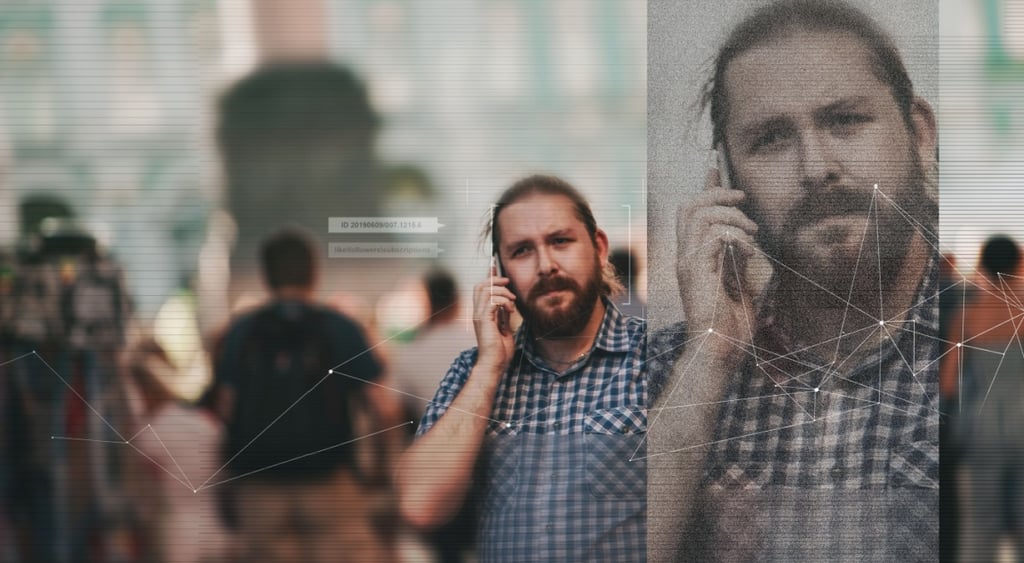
If you are questioning whether you should attend a protest, visit a location you want to keep private, or express an unpopular opinion online, your data is already curbing your behavior. This is what happens when everything you do and who you spend time with becomes part of a permanent digital record that AI continuously monitors and evaluates.
There are already many recent examples. With the World Cup underway, many football fans found out at the last minute that previously "approved" ESTA requirements to enter the US had changed to "travel not authorized." Even a referee was turned away, with many online speculating about Palantir's involvement.
"Arguing that you don't care about the right to privacy because you have nothing to hide is no different than saying you don't care about free speech because you have nothing to say." – Edward Snowden.
Polarized societies are beginning to question how we allowed companies unlimited access to all our data. At the same time, those who made it possible will inevitably defend their actions by saying no one could have foreseen this.
The illusion of free will
Data centers are not the bad guys here, but in the wrong hands, they could be. Many already have a device in their pocket that has been caught listening to them and uses their behavior to serve up targeted advertisements. Imagine this on a grander scale, where every element of your digital footprint is hoovered up by AI, offering your government insights into who you are and what you get up to behind closed doors.
The biggest shift over the last decade is that governments are moving from understanding what citizens have done to trying to predict what they might do next or how to sway their opinions, while giving the illusion of free will. Our own data is creating a level of insight and influence over daily life without many realizing it.
Data centers have arguably become the ultimate digital curtain, quietly observing, analyzing, and shaping society from behind the scenes. The great Wizard of Oz famously said, "Pay no attention to the man behind the curtain," which is exactly why we should be paying very close attention to what is happening behind the digital curtain and who is controlling it.
Unlock more exclusive Cybernews content on YouTube.