New campaign “Keep Android Open” fights Google’s centralized app control
Google’s push towards a centrally vetted Android app ecosystem is facing fresh resistance. A new campaign, “Keep Android Open,” has popped up online, encouraging users to alert regulators in multiple countries. F-Droid, a popular alternative app store, has challenged the tech giant’s claims in a new post.

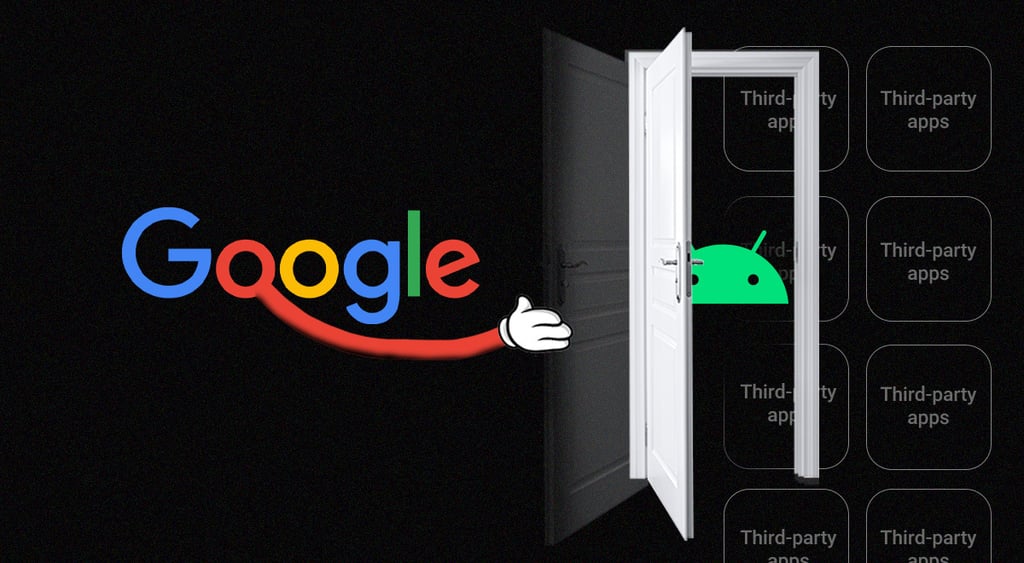
Image by Cybernews.

 Follow us
Google’s push towards a centrally vetted Android app ecosystem is facing fresh resistance. A new campaign, “Keep Android Open,” has popped up online, encouraging users to alert regulators in multiple countries. F-Droid, a popular alternative app store, has challenged the tech giant’s claims in a new post.
Google recently announced that from September 2026 onward, only apps from verified developers will be allowed to install on Google-certified Android devices, even when sideloading from alternative sources to the Google Play Store.
This change sparked some public outrage. F‑Droid warned that Google’s developer registration “decree” means the end for alternative app stores. Some users used this excuse to jump to the iPhone.
Google responded by posting assurances that sideloading will survive and that the change will add an extra layer of security.
However, this didn’t calm the Reddit drama.












Some devs don’t want to be ID’d by Google
A new website, “Keep Android Open” (keepandroidopen.org), advocates against new developer registration requirements in the Android ecosystem.
In line with privacy advocates’ commitment to anonymity, the website does not disclose its creator, and its domain registration information is anonymized, intentionally keeping the owner’s identity hidden.
Still, it is gaining considerable attention in the developer community, with hundreds of points and over a hundred responses on Hacker News, a widely followed tech forum where software engineers and other enthusiasts discuss emerging trends and issues.
“We, the undersigned organizations representing civil society, nonprofit institutions, and government agencies, write to express our strong opposition to Google's announced policy requiring all Android app developers to register centrally with Google,” a draft open letter to the tech giant reads.
The call to action urges Google to immediately withdraw the mandatory developer registration, engage in transparent dialogue with civil society, developers, and regulators, commit to platform neutrality, and provide a clear justification for the announced policy, “including evidence that existing security mechanisms are insufficient.”
The campaign not only expects signatures but also invites users to file reports with regulators in the EU, US, UK, Brazil, and other international institutions.
The website also has a long list of previous publications and public discussions supporting its call to preserve Android’s openness. Many tech reviewers and influencers, from Louis Rossman to Linus Media Group, have expressed disappointment in Google’s decision, which might limit app freedom.
The site warns that the new Google requirements “will involve” the following:
- Paying a fee to Google
- Agreeing to Google’s Terms and Conditions
- Providing government identification
- Uploading evidence of an app’s private signing key
- Listing all current and future application identifiers
On Hacker News' discussion thread, many users share concerns that mobile devices’ hardware and software freedom are shrinking.
“Imagine if your car was locked to certain manufacturer-permitted destinations,” one of the users posted.
F-Droid disputes Google’s claim that sideloading will remain
F-Droid, a popular third-party app store that previously warned that Google’s move would break free app distribution, released a response to Google’s claims that sideloading is here to stay.
“Google’s message that ‘sideloading is not going away’ is clear, concise, and false,” the post reads.
“The developer verification decree effectively ends the ability for individuals to choose what software they run on the devices they own.”
F-Droid questions “sideloading” itself as a made-up term – users should be free to “install” software, regardless of whether that computer is in your pocket or on your desk.”
“The term ‘sideload’ was coined to insinuate that there is something dark and sinister about the process, as if the user were making an end-run around safeguards that are designed to keep you protected and secure,” the app store said.
Google will approve app sources, and app developers must register and meet the vendor's requirements. Consumers who bought an Android device believing it was an open computing platform, capable of running any software, will lose this right starting next year.
“Regardless of whether the device owner prefers to use a competing app store like the Samsung Galaxy Store or the Epic Games Store, or a free and open-source app repository like F-Droid, they will be captive to the overarching policies unilaterally dictated by a competing corporate entity,” F-Droid said.
F-Droid directs users to visit the campaign keepandroidopen.org to contact regulatory agencies and advocate for an open Android ecosystem.
“If you are an app developer, we recommend against signing yourself up for Google’s developer registration program at this time. We unequivocally reject their attempt to force this program upon the world,” F-Droid said.
Cybernews has reached out to Google for a comment and will include its response.
Unlock more exclusive Cybernews content on YouTube.