“Android is not open source anymore,” users say as they consider jumping to iPhone
“Android is no longer open source,” users are saying after Google required app developers to verify their identities, stirring discussions of whether to drop Android for iPhone altogether.

Image by Cybernews

 Follow us
“Android is no longer open source,” users are saying after Google required app developers to verify their identities, stirring discussions of whether to drop Android for iPhone altogether.
Android’s edge over iOS often comes down to flexibility, which won the hearts of users. One of those beloved custom features is sideloading, which enables users to download and install apps on Android from outside the Google Play Store.
For years, it’s been a workaround for accessing apps locked in specific regions, testing betas, or running software that doesn’t meet Google’s strict Play Store rules. But that freedom is about to shrink.
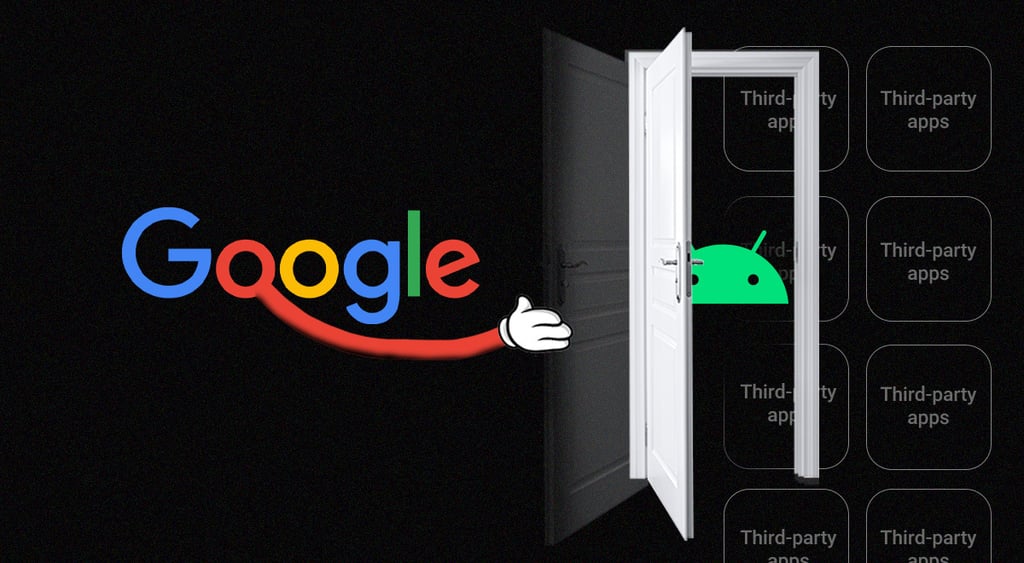
Google recently announced it will end anonymous sideloading, requiring developers to undergo verification before their apps can be installed.
The tech giant has cited security as the main reason for the change. According to the company, internet-sideloaded apps are responsible for over 50 times more malware than apps from the Google Play store.




Android users, however, aren’t buying it. Frustrated posts are piling up on Reddit, with many accusing Google of quietly eroding the open-source spirit that once set Android apart.
What are the dangers of Android sideloading?
Sideloading is a useful tool for developers and advanced users as it provides flexibility. Instead of downloading apps through Google’s marketplace, users can download APK (Android Package Kit) files directly, whether from a developer’s website, a third-party app store, or by transferring the file from another device.
However, for a beginner or an average user, apps installed this way might become a death trap.
Apps from the internet do not undergo Google’s security screening, and malicious code or intrusive permissions are harder to detect. Also, updates to such apps aren’t delivered automatically, leaving users responsible for managing security patches themselves.
Interference with the open source idea
For many Android fans, Google’s decision to restrict sideloading is unacceptable as it limits the freedom that users enjoy. One Redditor called it “one of the most devastating news I’ve heard in a while,” arguing that by limiting the feature to verified developers, Google is effectively making it the same as the Play Store.
“The only thing that makes Android unique is now getting removed,” they wrote, adding that they hoped falling sales numbers would eventually force Google to rethink.
Others see the change as an attack on user freedom at its core.
“There is no reasonable case for an operating system developer having a say over what programs you run on your hardware,”one commenter argued.
That sense of betrayal runs deep among open-source advocates. Several users said they rely on sideloading to use free and open-source software (FOSS) for basic apps like dialers, calendars, or file managers.
“This single change can ruin all of them,” one person warned.
They also raised fears that Google could extend restrictions further under the guise of “safety,” cutting off more independent apps over time.
Users threaten to ditch Android for iPhone
With freedom at stake, some Redditors are looking for radical solutions, such as ditching Android altogether. One Redditor was blunt: “Yeah, if I can't do what I want with the phone I purchased, why not just buy an Apple phone. Having owned both, freedom is the only reason why I buy Android.”
“If I have to give up then Apple is 10x better (even with all the issues) compared to Google,” said another.




Still, not everyone is ready to abandon ship. One Android loyalist admitted the move was “absolute bullshit,” but said they still couldn’t switch to iOS. “iOS is suffocating. It's so restrictive. I lived with it for two months before going back to Android.”
Commenters even floated the idea of new challengers stepping in.
“I hope Chinese brands take advantage of this and create their own OS which is open source and open to sideload, it would boost sales if that happened,” one wrote.
Some suggested Google might be setting itself up for legal trouble.
“Time for another monopoly lawsuit, perhaps?”one Redditor commented.
“I hate this duopoly of evil corporations,” responded another.
For now, the rollout is set to begin in September 2026 in Brazil, Indonesia, Singapore, and Thailand. Some Redditors see that choice as strategic: a way to avoid the scrutiny Google would face in Europe, where Apple was recently forced to open up sideloading.
As one user put it, “EU forced Apple to open sideloading – imagine what they will do to Google.”
Some Android users are dismissing the outrage as overblown.
“Out of billions of people with Android devices, a very small percentage even know what sideloading is, and an even smaller percentage knows enough about it to care,” one commenter pointed out. “Most people aren't making their own programs and only use a handful of the most popular apps in the world.”