Cookie banners were on the way out, but France and Germany stepped in
The European Commission has been trying to get rid of cookie banners for a long time. Thanks to the Digital Omnibus, the abolition of these banners was at hand. However, a few EU member states are now standing in the way of accomplishing this.
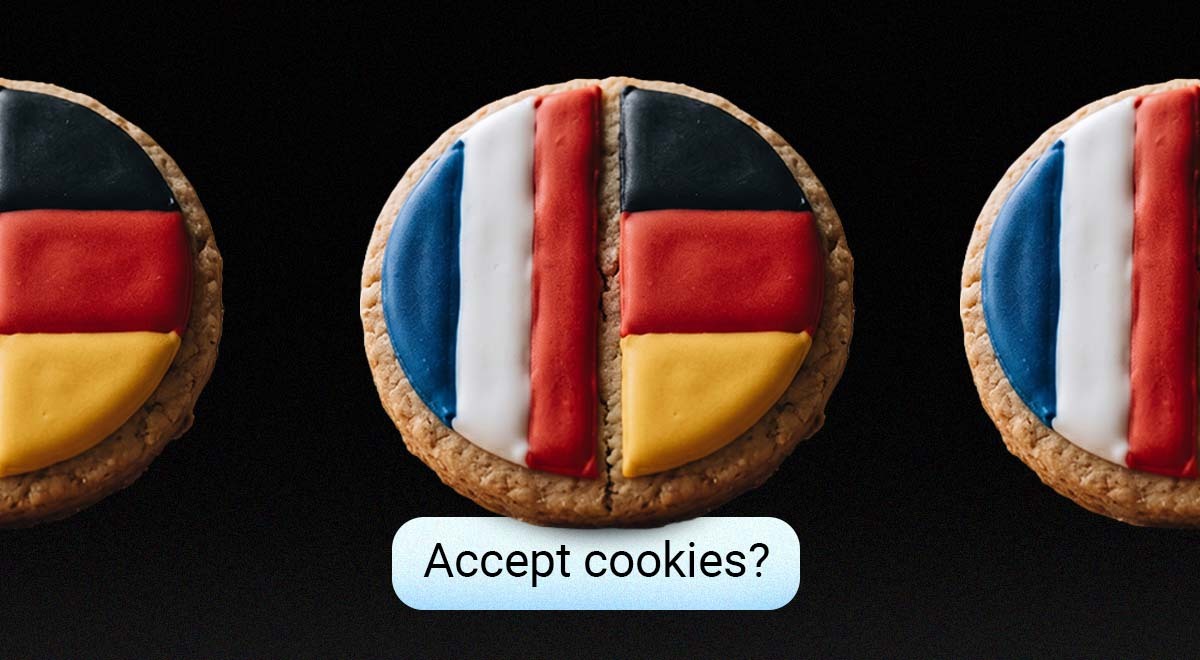
Cookie with France and German flag. Image by Cybernews.

 Follow us
The European Commission has been trying to get rid of cookie banners for a long time. Thanks to the Digital Omnibus, the abolition of these banners was at hand. However, a few EU member states are now standing in the way of accomplishing this.
- The European Commission proposed replacing cookie pop-ups with an automated consent signal shared between users' devices and websites.
- According to privacy group noyb, Google has lobbied against the proposal, arguing it would harm online advertising.
- The three countries have backed removing the proposal from the Digital Omnibus, delaying plans to scrap cookie banners.
- Noyb argues cookie banners mainly exist to maximize user consent for online tracking and that removing them would make it easier for people to refuse tracking by default.
Key Takeaways by nexos.ai, reviewed by Cybernews staff.
To collect personal information, track people online, and share their data with data brokers, online platforms need each user's consent. That’s the very reason cookie banners have been around for years, so people have the option to consent or reject online tracking.
Sounds like the perfect solution, right? For most netizens, however, these cookie banners have been the bane of their existence. This is largely due to the industry's use of so-called “dark patterns,” which are design choices in the interface that intentionally mislead users into making choices they would normally not make.
Making the “Accept all cookies” button more prominent than the “Reject all cookies” button is an example of a dark pattern. Or deceptive color usage with the accept and reject buttons, hiding the reject option, or making it harder to withdraw consent than it was to give it.






According to Max Schrems, chairman of the Austrian privacy advocacy group noyb, cookie banners aren’t a matter of data protection, but a means for the tech industry to track people online. That’s why Google and the rest of the tracking industry are currently lobbying to keep cookie banners alive.
“Clearly, they want to retain the ability to directly manipulate users’ choices,” Schrems argues.
The EU, on the other hand, wants to replace cookie banners with an automated signal that would communicate cookie consent preferences between the device, the user, and websites.
But according to noyb, Google has secretly been lobbying to undermine the European Commission’s proposal to take cookie banners out of place. The Mountain View-based tech company claims that without cookie banners, all online advertising would come to a standstill. It also argues that major media sites would be affected by the plan.






The latter is actually incorrect because the European Commission has made an exception for these types of websites, meaning users can still allow tracking for these sites while refusing it for Google.
However, France, Germany, and Poland have yielded to Google’s lobbying efforts, as the proposal to replace cookie banners has been completely removed from the Digital Omnibus.
“You really have to let that sink in: the European Commission finally wants to get rid of cookie banners, but Google and some EU member states are now determined to keep them. For decades, people have been complaining about EU bureaucracy. But in reality, the tracking industry is so terrified of consumers being able to simply say ‘no’ that, after a bit of lobbying, everyone gives in. It really does raise the question of whether some Member States are primarily representing their voters or the lobbyists,” Schrems states.
Neither the Council of the European Union nor the European Parliament has formally taken a position on keeping or removing cookie banners. Eventually, both institutions have to reach a compromise.

Check if your data was exposed
Find out if your email and related personal information have appeared in known data breaches.
Noyb Chairman Schrems, however, says it remains to be seen what will happen.
“In a democracy, what the majority of people want should actually happen, in this case, getting rid of cookie banners. If decision-makers prefer to follow the will of the tech lobby rather than that of their voters, then something is very, very wrong here,” he concludes.
Unlock more exclusive Cybernews content on YouTube.