Gradio
Last updated: 18 December 2025
What is Gradio?
Gradio is a user-friendly Python library that streamlines the process of creating interactive interfaces for machine learning models, functions, or data science workflows. With Gradio, users can rapidly generate shareable web apps, making it easier to present, test, and collect feedback on models directly in a browser.
Whether you are a data scientist wanting to showcase model performance, a researcher conducting user studies, or an educator explaining ML concepts, Gradio minimizes complexity and coding overhead. Developed by Hugging Face and backed by a strong open-source community, it fosters accessible AI development and collaboration.
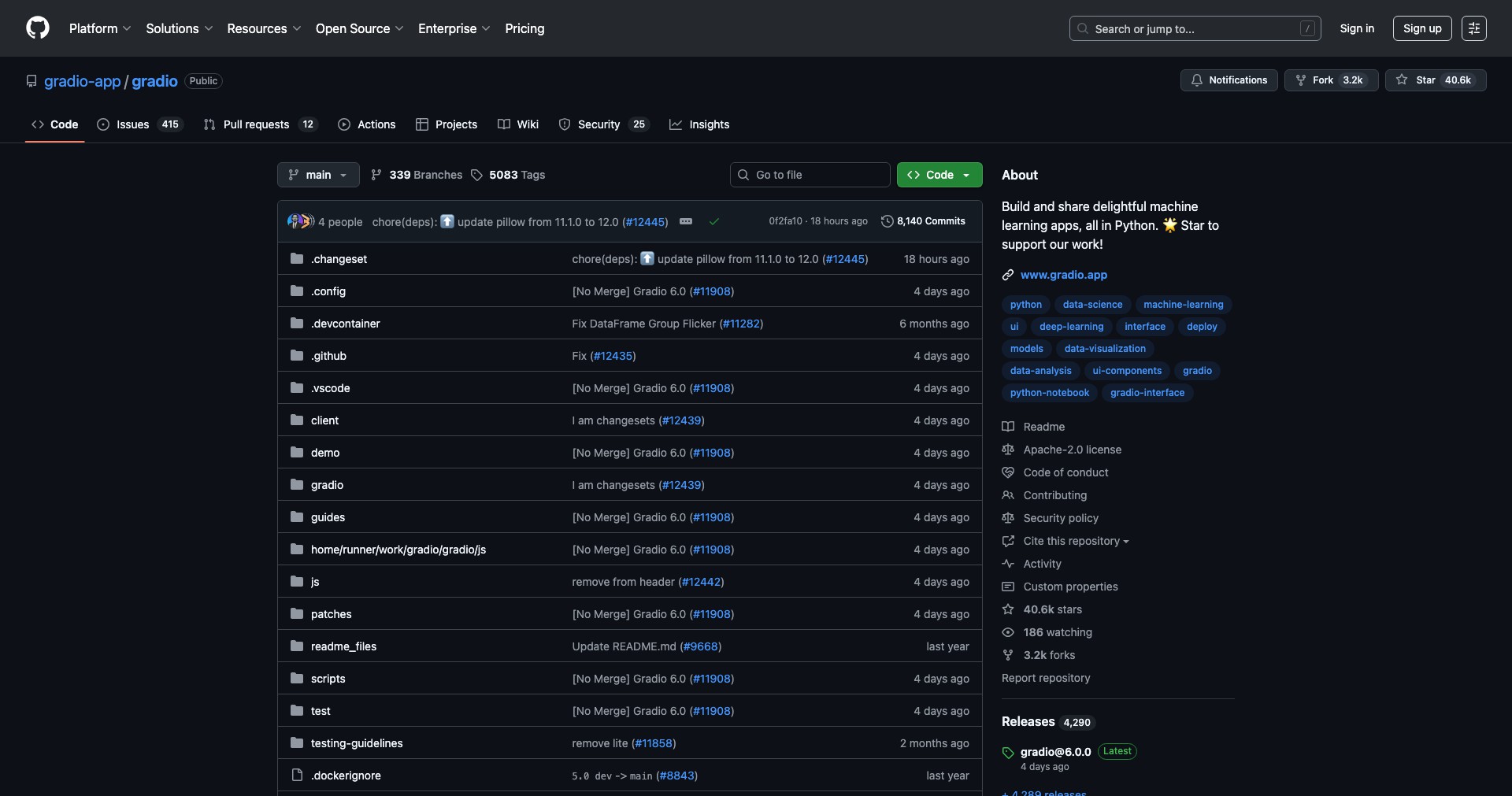
Key Features:
-
No-Code Interface Building:
Offers simple Python decorators and components to build interactive UIs without needing extensive front-end knowledge. Users can convert functions or models into web apps with just a few lines of code. -
Model Integration:
Supports integration with popular machine learning and deep learning frameworks (TensorFlow, PyTorch, scikit-learn, etc.). This flexibility lets users demo virtually any model, including custom pipelines. -
Instant Sharing:
Automatically generates sharable links and public/live URLs for demos, allowing seamless collaboration or user testing. This eliminates deployment friction and accelerates user feedback. -
Customizable Demos:
Enables detailed customization of inputs, outputs, and interface layouts. Developers can tailor the UI for specific data types (like images, text, audio) or use cases, enhancing clarity and engagement. -
Data Capture and Analytics:
Allows collection of user inputs and results in real time, facilitating user studies or internal analytics. Collected data can be exported for further analysis or model refinement.
What makes Gradio unique?
Gradio stands out because of its extreme simplicity and speed in building highly interactive UIs for machine learning models, requiring minimal coding or web development experience. Unlike traditional frameworks that demand extensive configuration or web skills, Gradio lets users focus on the model, not the interface.
Its tight integration with the Hugging Face ecosystem and support for rapid, live deployment make it especially attractive for both prototyping and public-facing demos. The open-source nature ensures a vibrant community that updates features, provides support, and extends compatibility, keeping Gradio adaptable and cutting-edge.
Pros and Cons
Who is using Gradio?
Machine Learning Practitioners: Data scientists and ML engineers can rapidly prototype, test, and demo models for stakeholders or clients. Gradio minimizes deployment friction so they can focus on model development and feedback.
Researchers: Academic and industrial researchers benefit from interactive interfaces to conduct user studies, compare model outputs, or disseminate reproducible model demos with minimal overhead.
Educators and Students: Teachers and learners of AI and data science can use Gradio to create hands-on, visual explanations of ML concepts, facilitating deeper understanding through real-time experimentation.
Evolution and Improvements
Since its launch, Gradio has evolved from a simple demoing tool to a robust platform for building interactive apps around almost any Python function or ML model. Early versions focused on core demoing capabilities, while subsequent updates brought richer customization and UI options.
With Hugging Face's acquisition and ongoing contributions, Gradio gained seamless integration with the Hugging Face Hub, making it easier to create and share demos for models in the global AI community. Support for additional libraries, improved security options, and analytics features have also been introduced.
The roadmap now includes more collaborative capabilities, deeper cloud integration, and expanded input/output components. Community feedback continues to guide feature updates, cementing Gradio’s role as a central player in accessible AI sharing.
Pricing
| Plan | Price | About |
| Open Source | $0 | Completely free for all users, including commercial use, under the Apache 2.0 license. |
Verdict
Gradio is an excellent choice for anyone seeking to quickly create, share, and test machine learning models or data science functions with interactive web apps. Its ease of use, integration with leading ML frameworks, and capacity for rapid prototyping significantly lower the barrier for AI deployment, particularly in demonstration and educational settings.
While it may not replace custom, large-scale web applications for advanced production requirements, it fills a critical gap for prototyping, research, and outreach. For ML practitioners, researchers, and educators alike, Gradio is a versatile, well-supported, and innovative tool that adds immediate value to the model deployment lifecycle.


