Jochem
Last updated: 18 December 2025
What is Jochem?
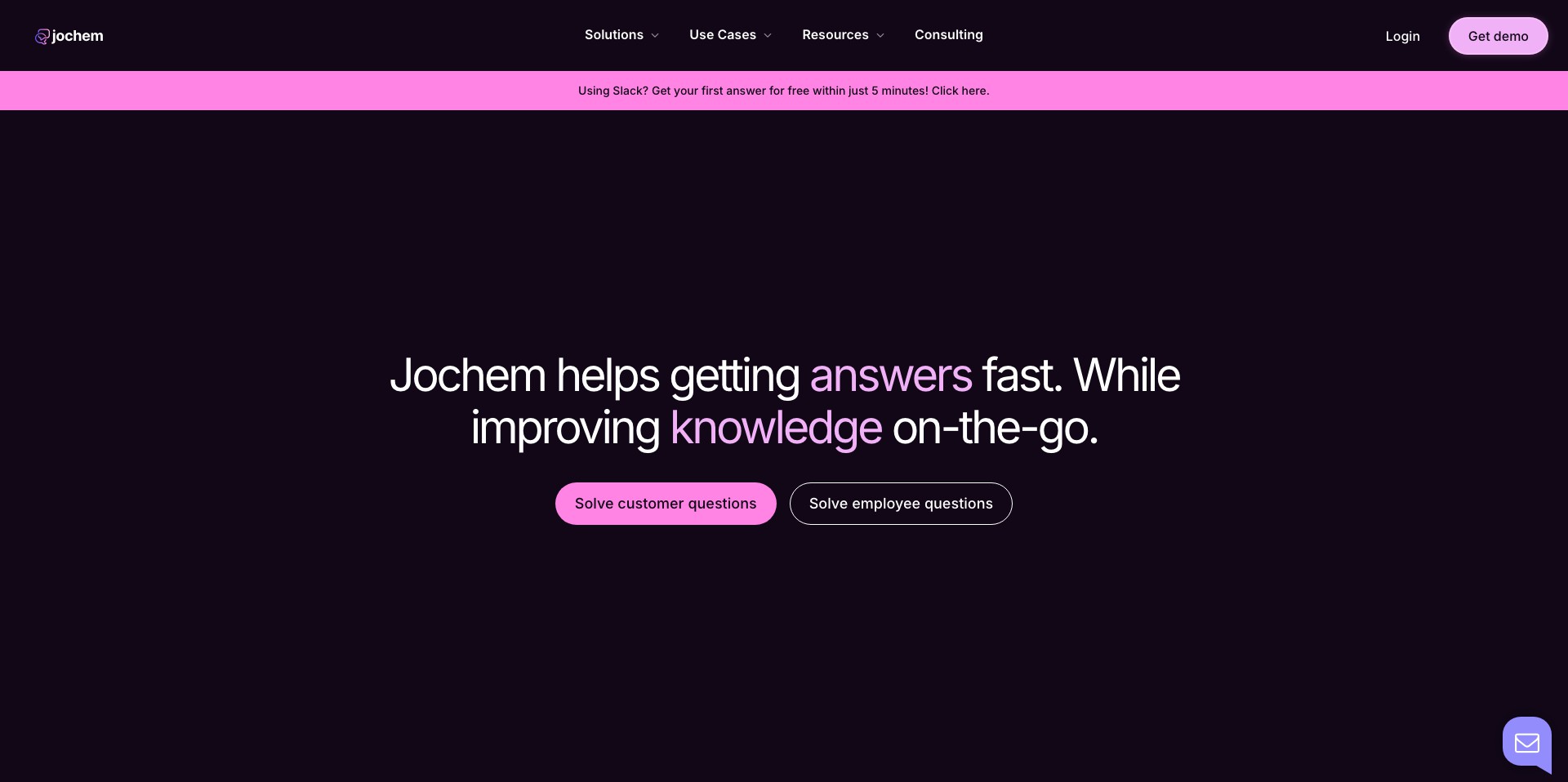
Jochem is an advanced AI-driven productivity platform engineered to revolutionize the way businesses and teams manage tasks, projects, and internal communications. With cutting-edge automation and real-time insights, Jochem empowers organizations to minimize repetitive labor and focus on high-impact activities.
Tailored for enterprises intent on streamlining operations, Jochem delivers a suite of tools that adapt to a company’s unique needs. Whether orchestrating workflows or providing decision-support analytics, it stands as a flexible, smart companion for workplace transformation.
Key Features:
-
Smart Task Automation:
Jochem uses AI to automate routine tasks, such as data entry, scheduling, and reminders, freeing up time for more critical thinking and creativity within teams. -
Customizable Workflow Builder:
The platform allows users to design, modify, and scale workflows to suit specific organizational processes, ensuring operational flexibility and continuous improvement. -
Real-Time Insights & Analytics:
Jochem’s integrated analytics dashboard provides up-to-the-minute data on productivity, bottlenecks, and team performance, supporting data-driven decision-making. -
Seamless Integrations:
The system connects easily with popular project management, communication, and cloud storage tools, enabling fluid data exchange and enhancing collaboration across platforms. -
Automated Reporting:
Jochem generates periodic reports customized to organizational KPIs, reducing manual effort and ensuring leadership stays informed with actionable intelligence.
What makes Jochem unique?
What sets Jochem apart is its deep flexibility and adaptive AI engine, which learns from user behaviors to optimize workflow recommendations over time. Unlike competitors with rigid automation structures, Jochem evolves with organizations’ changing needs, minimizing disruption and maximizing ROI.
Additionally, Jochem’s emphasis on seamless, low-code customization means both technical and non-technical users can tailor the platform’s features without significant training or IT interventions, making it accessible to a wide range of businesses.
Pros and Cons
Who is using Jochem?
Enterprise Teams: Large teams or departments that need to coordinate complex, cross-functional projects will benefit from Jochem’s robust automation and reporting functionalities, which improve collaboration and efficiency.
Small Business Owners: Businesses seeking to reduce manual workloads and improve operational consistency will find value in Jochem’s customizable workflows and seamless integrations.
Project Managers & Analysts: Professionals focused on optimizing processes and tracking performance can leverage Jochem’s analytics dashboard and automated reporting for better decision making.
Product Evolution
Since its introduction, Jochem has expanded from simple task automation to offering a comprehensive suite of tools for workflow customization, advanced analytics, and broad integrations with third-party platforms.
Recent updates have focused on enhancing low-code customization options, making it easier for non-technical users to adapt workflows and reporting to suit evolving business needs.
Ongoing investment in AI learning capabilities now allows Jochem to recommend improvements proactively, ensuring clients always benefit from the latest productivity advancements.
Pricing
| Plan | Price | About |
| Starter Plan | $29/month | Ideal for small teams looking to automate basic workflows and tasks. |
| Business Plan | $79/month | Adds advanced analytics and reporting, as well as increased integrations and customization options. |
| Enterprise Plan | Custom pricing | Fully tailored features with dedicated support, suitable for complex enterprise needs. |
Verdict
Jochem is a powerful, versatile AI platform tailored for businesses aiming to boost productivity and streamline operations. Its unique combination of adaptive automation, robust analytics, and user-friendly customization sets it apart in the workplace automation market.
While it may require an upfront investment of time and resources—especially for smaller organizations—the long-term benefits of improved efficiency, better data visibility, and scalable automation make it an attractive choice for a broad spectrum of industries.


