Novacene
Last updated: 18 December 2025
What is Novacene?
Novacene is an advanced AI research assistant that streamlines the process of literature review and knowledge synthesis. Built by NovaceneAI, the platform leverages state-of-the-art natural language processing to help researchers and professionals find, summarize, and analyze scientific content across a wide range of disciplines.
By automating time-consuming research tasks, Novacene empowers users to focus on critical thinking and decision-making rather than the manual collection and review of articles, papers, and data. Whether you're conducting a systematic review or diving deep into a new field, Novacene simplifies the research workflow with intelligent recommendations and structured synthesis.
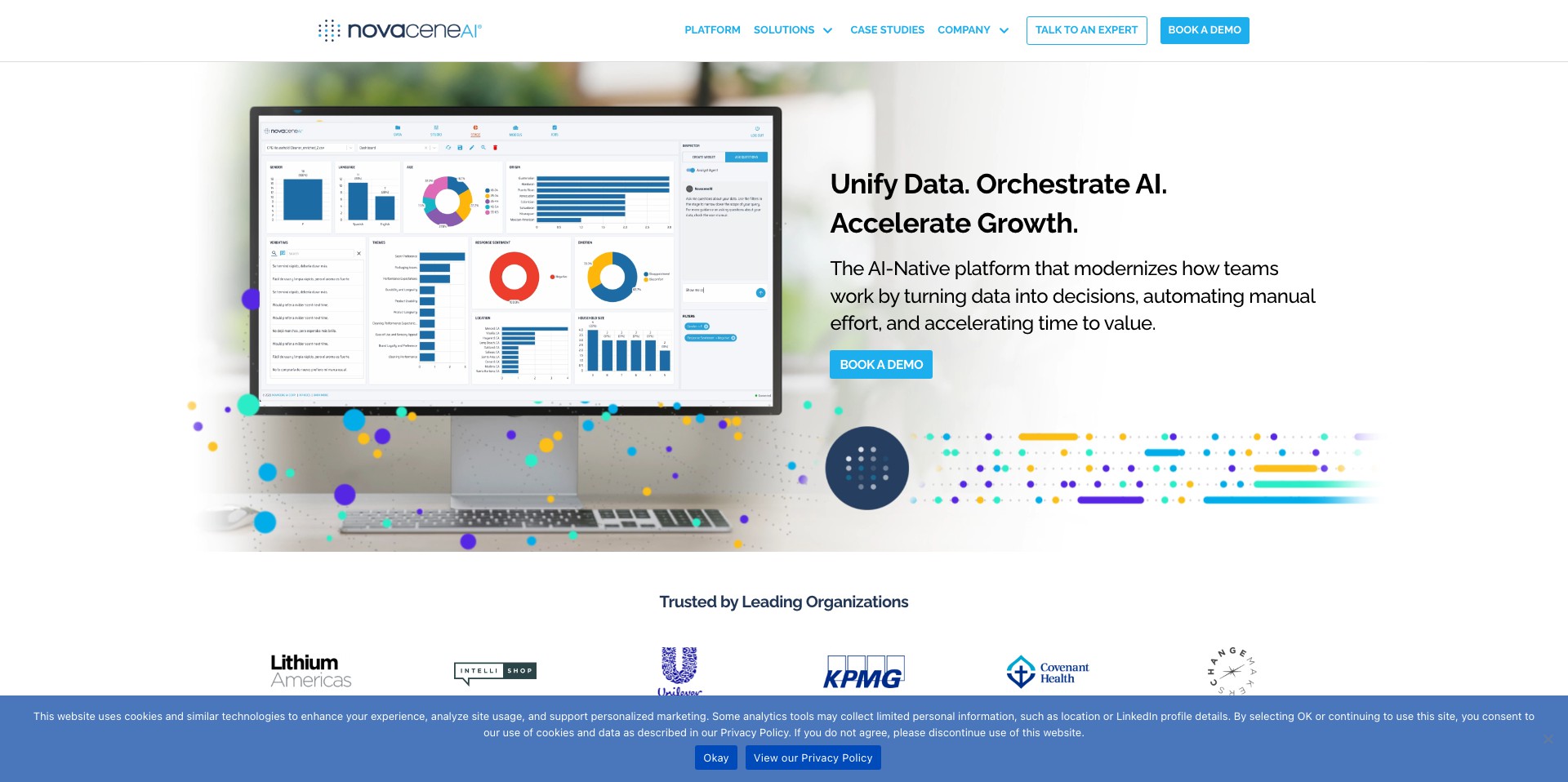
Key Features:
-
Automated Literature Review:
Novacene’s AI scans vast repositories of scientific literature and generates concise, insightful summaries tailored to the user's interests, saving hours of manual review. -
Structured Knowledge Synthesis:
The platform organizes extracted information into easy-to-navigate topic maps, allowing users to visualize relationships, spot trends, and gain deeper understanding of complex subjects. -
Intelligent Citation Management:
Novacene automatically tracks and structures citations during the knowledge extraction process, making it seamless to attribute and include references in your own work. -
Custom Query Capabilities:
Users can pose specific research questions in natural language, and Novacene will surface the most relevant sources, summaries, and insights to address them directly. -
Collaboration and Export Tools:
Collaborative workspaces, shared projects, and export features make it easy for teams to work together, organize findings, and integrate outputs into reports or presentations.
What makes Novacene unique?
What sets Novacene apart from competing research assistants is its focus on structured knowledge synthesis and visualization. Rather than merely returning search results or basic summaries, Novacene builds interconnected maps of ideas, papers, and supporting evidence, delivering a holistic view of the research landscape.
Additionally, Novacene incorporates advanced citation management and collaborative functionality, making it well-suited for academic groups or research teams who need to coordinate efforts and ensure accuracy in references.
Pros and Cons
Who is using Novacene?
Academic Researchers: Professors, graduate students, and scholars in universities can leverage Novacene to automate literature reviews and facilitate rigorous, up-to-date research outputs.
Industry Professionals: Analysts, consultants, and R&D specialists use Novacene to quickly synthesize new findings, stay ahead of industry trends, and inform strategic decision-making.
Students and Educators: Undergraduates and high school students, as well as educators guiding coursework, benefit from Novacene’s clear summaries and citation tools, making research faster and more accurate.
Evolving Research Assistant
Since its launch, Novacene has evolved from a basic semantic search tool into a comprehensive research assistant, integrating powerful natural language processing for deeper understanding of queries.
Frequent updates have expanded its coverage across scientific fields and improved the quality of knowledge maps produced, making the tool increasingly valuable for interdisciplinary research.
Recent improvements emphasized team collaboration features and export options, reflecting growing demand from academic groups and corporate research teams for seamless workflow integration.
Pricing
| Plan | Price | About |
| Free Trial | Free | Limited access to features for new users to evaluate the platform. |
| Pro Subscription | From $15/month | Full access to all features, including collaboration tools and comprehensive literature coverage. |
Verdict
Novacene stands out as a modern, efficient research companion, particularly well-suited for advanced users seeking to automate and organize complex reviews. Its powerful synthesis and visualization tools save time and foster deeper insight, while collaborative features enhance team workflows.
Some limitations exist regarding data coverage and the need for a paid plan to fully unlock its potential, but these are outweighed by the productivity gains for researchers, professionals, and students conducting rigorous literature work.


