New low: prompt pros now cry about other people “stealing” their AI queries
In what could only be described as the AI Slopper Paradox of the highest order, some power users of generative AI are now complaining about other people “stealing” specific prompts they use to churn out content.
Image by Cybernews.

 Follow us
In what could only be described as the AI Slopper Paradox of the highest order, some power users of generative AI are now complaining about other people “stealing” specific prompts they use to churn out content.
The entire technology is, of course, trained on works, messages, and pure ramblings of humans that are being gobbled up by AI companies, most often without their consent. Thus, illegally.
But that didn’t stop Amira Zairi, a self-professed AI educator (whatever that means), from ranting on X last week about other people “plagiarizing” her unique prompts.
“I’m honestly fed up. Changing a few words, renaming the prompt, or slightly rephrasing it doesn’t make it yours. The idea is still the same, the vibe is the same, and the results are obviously similar,” Zairi seethed.
“And no, this isn’t about one or two people, and it didn't happen once!!!! I’m not mentioning names because I don’t want to hurt anyone, but please… stop. Creating your own prompts is actually easier than copying someone else’s work! Try it.”



“Make your own prompts” isn’t advice. It’s basic integrity.
undefined Amira Zairi (@azed_ai) January 6, 2026
I’m honestly fed up.
Changing a few words, renaming the prompt, or slightly rephrasing it doesn’t make it yours, the idea is still the same, the vibe is the same, and the results are obviously similar.
And no, this…
Zairi certainly isn’t the first one to spout complaints of this kind. Another poster, also demonstrating zero self-awareness, said on Threads they were “tired of the Prompt Thieves in the AI art community.”
Technically, those who use AI do have to put some effort in order to get something from it. A vague prompt often results in bizarre details like too many fingers, so refining the prompt until the bot generates a decent image can take minutes or even hours.
Curious what others think about this story? Contribute your thoughts to the debate below.
Still, the fact of the matter is that these AI tools, especially the image generators, were all trained on human-made art and media – again, mostly without permission.
To create Gen AI models, tech companies scrape copyrighted art from the web without consent, proper licensing, or compensating the artists.






This data is then used to train the AI models that synthesize and generate derivative images. Some ethicists argue the process amounts to labor exploitation, and already, business leaders have begun replacing human artistic labour with AI-generated images.
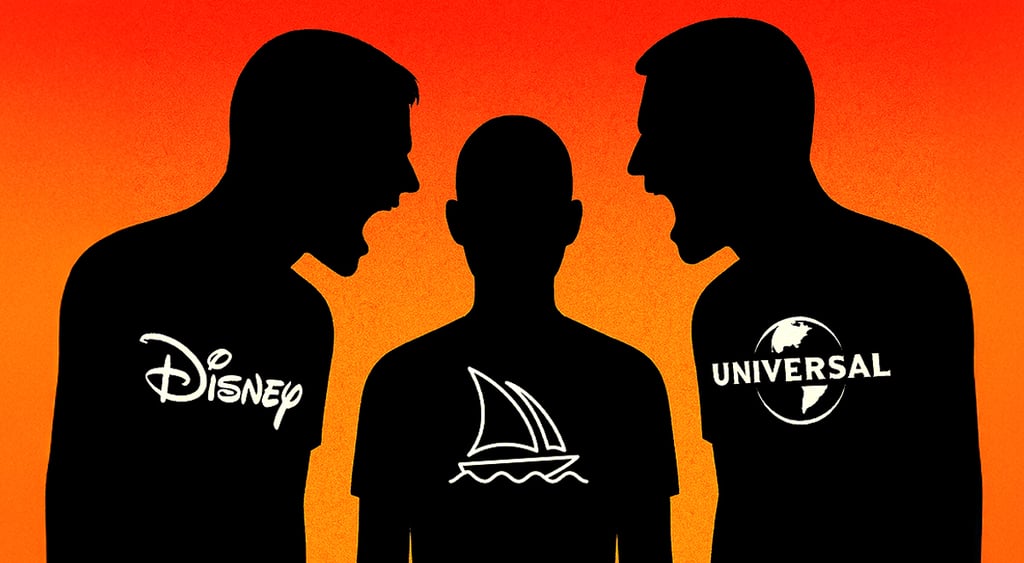
In June 2025, Disney and Universal sued Midjourney, an AI photo generation company, for violation of copyrighted material, calling it “a bottomless pit of plagiarism” and “a virtual vending machine.”
The claims by the AI prompt queen Zairi and others were naturally noticed by human artists. To them, it’s all a little ironic, and some are even jokingly inviting the AI sloppers to contact copyright attorneys immediately.
“What you are describing and complaining about is the fundamental function of the tech you’re advocating for, inextricable from it. Hope that helps,” digital artist Rory Blank replied under Zairi’s post.
Geoffrey Miller, an evolutionary psychologist, also wrote: “Generative AI is built entirely on a foundation of contempt for intellectual property law, and a delight in strip-mining all of culture to provide ‘training data.’ Now you're complaining that people aren’t respecting your prompts as IP? Colossal hypocrisy.”
Unlock exclusive Cybernews content on YouTube.