Community in Chile fires up chatbot powered entirely by humans: why?
The community of Quilicura, located in one of Chile’s most water-stressed regions, took on an unusual challenge last week. They replaced AI with human intelligence for one day to highlight the environmental toll of the data centers in the area.

Image by Cybernews.

 Follow us
The community of Quilicura, located in one of Chile’s most water-stressed regions, took on an unusual challenge last week. They replaced AI with human intelligence for one day to highlight the environmental toll of the data centers in the area.
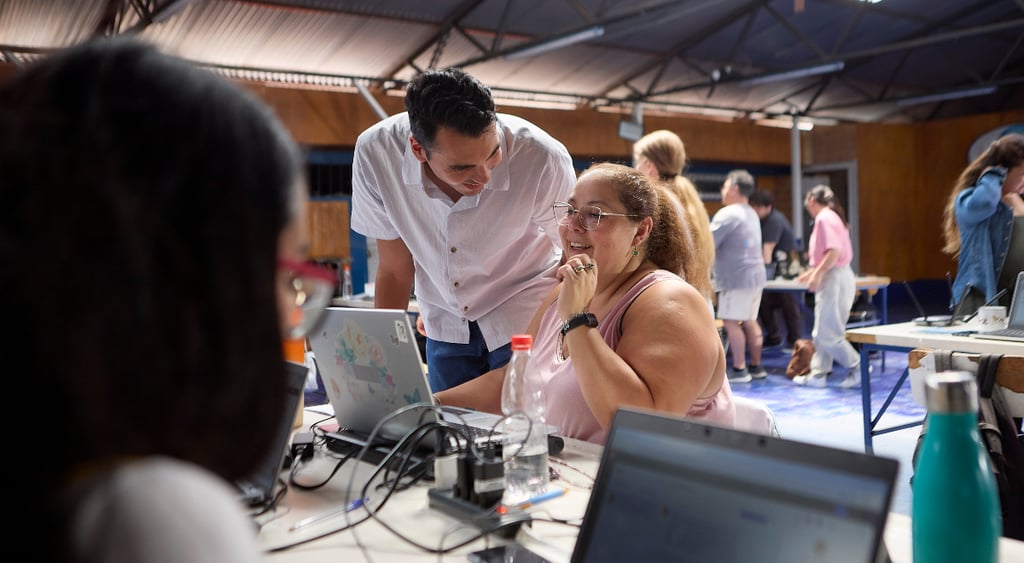
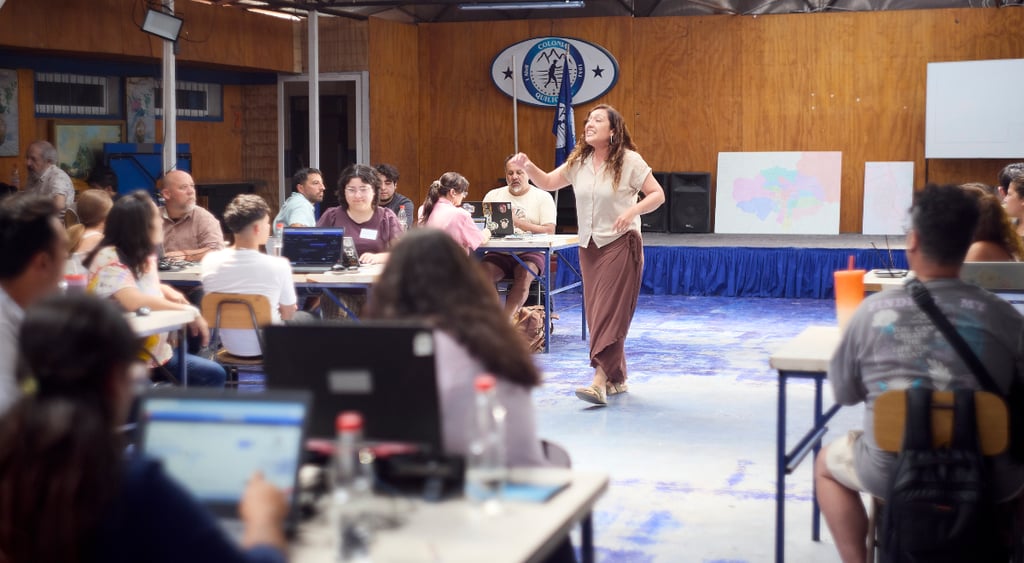
About 50 community residents, based just outside Chile’s capital Santiago, gathered in a hall last Saturday and spent all day powering an entirely human-operated chatbot – answering deep and silly questions, and even drawing cute little pictures on command.
The project is called Quili.AI, a human-powered alternative to AI that invited people around the world to submit the everyday questions they would normally ask a machine.






Instead of being routed through energy-intensive data centers, each prompt was answered directly by Quilicura residents – drawing on lived experience, cultural knowledge, and human judgment.






Every AI interaction consumes water
For 24 hours, no servers, no cloud computing, and no cooling systems were used: in other words, if any water was consumed, it was bottled, and not for AI needs. In Quilicura, water is a huge issue.
Starting in the early 2010s, Quilicura began to host one of the highest concentrations of data centers dedicated to AI.
These data centers use the region’s water, and Quilicura sits in the Maipo River Basin, one of Chile’s most water-stressed regions.
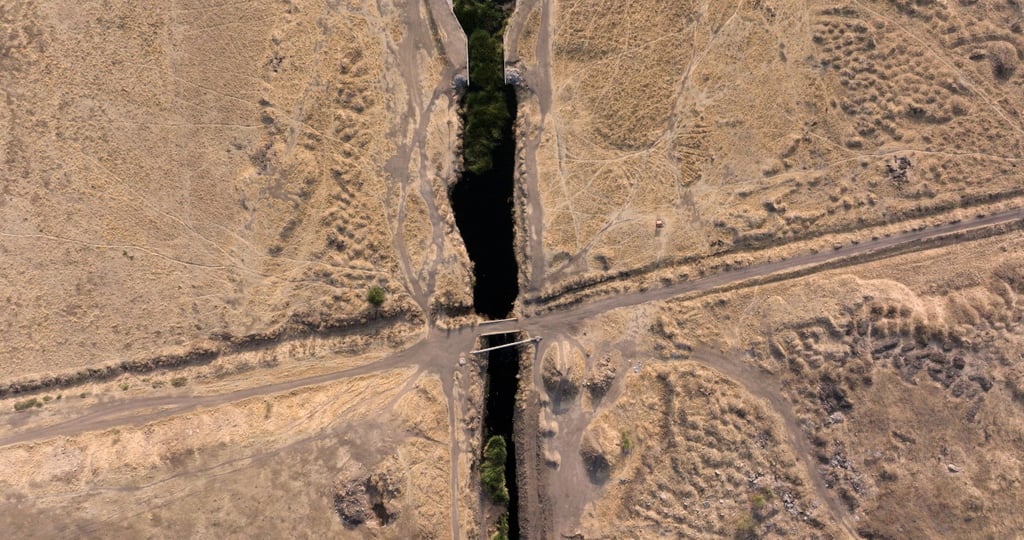
This is, of course, a global problem as AI development is already very costly to Mother Earth. Harms to the climate – already under a lot of strain – could wipe out years of progress on emissions reductions.
In October, the United Nations’ special rapporteur on the human right to safe drinking water called for a moratorium on the development of new data centers.
There are various reasons why Chile is in the midst of its longest and most intense megadrought, expected to last until 2040. But AI data centers are certainly part of the issue.
Cloud computing giants Amazon, Google, and Microsoft are among the tech companies that have built or planned data centers in the Santiago region.
One global wave of AI-generated self-portraits was estimated to consume over 200 million liters of water in under a week, and that’s roughly the monthly water usage of a small city.
Here are some basics: every AI interaction consumes water, indirectly but measurably, through data-center cooling. While invisible to users, the impact is significant.
In Chile, a single large data center can require 1–3 million liters of water per day under traditional cooling systems. Globally, AI-related water use is projected to reach billions of cubic meters annually within the next few years.
Casual prompting is especially wasteful, as in recent years, large-scale viral AI trends have shown how much energy and water they use. One global wave of AI-generated self-portraits was estimated to consume over 200 million liters of water in under a week, and that’s roughly the monthly water usage of a small city.
Let’s slow down and reflect
Organizers – the environmental group Corporación NGEN that says it built the platform as a way to turn abstract infrastructure into something human and local – claim the 12-hour project fielded more than 25,000 requests from around the world.
Participants from 67 countries asked the human chatbot thousands of questions. Someone wanted to know, for example, “the meaning of life” and was matched with a local philosophy professor.
Three local artists spent the day creating hand-drawn “image generations,” including a dog smoking a pipe, a turkey high-fiving a cat, and a French bulldog with wings.

Prompts ranged from “Are you really a human?” to “I have a date in 20 minutes, and I’m nervous – what advice do you have?” A rotating crew of volunteers working on laptops in a community center promptly answered them.
When the volunteers – locals – didn’t know the answer, they walked around the room to see if someone else did.
“This is not at all an anti-AI initiative. AI is an incredibly valuable tool with endless positive applications,” said organizer Lorena Antiman of Corporación NGEN.
“Quili.AI is about awareness – specifically around casual prompting – and creating space for a broader conversation about how these systems scale responsibly in water-stressed regions.”
According to Antiman, if people pause and think before casually prompting AI – or begin asking how and where these systems operate – that will translate to meaningful progress.
“Quili.AI isn’t a proposal for how AI should function permanently. It’s a temporary experiment designed to slow things down and make the infrastructure behind speed visible. The contrast between instant answers and thoughtful human responses is what invites reflection,” said Antiman.
Unlock exclusive Cybernews content on YouTube.