Trump signs quantum order as US races to secure future encryption
US President Donald Trump signed an executive order on Monday to overhaul the National Quantum Strategy – a directive to “supercharge” US quantum innovation and strengthen efforts to protect future encryption from emerging cyber threats.
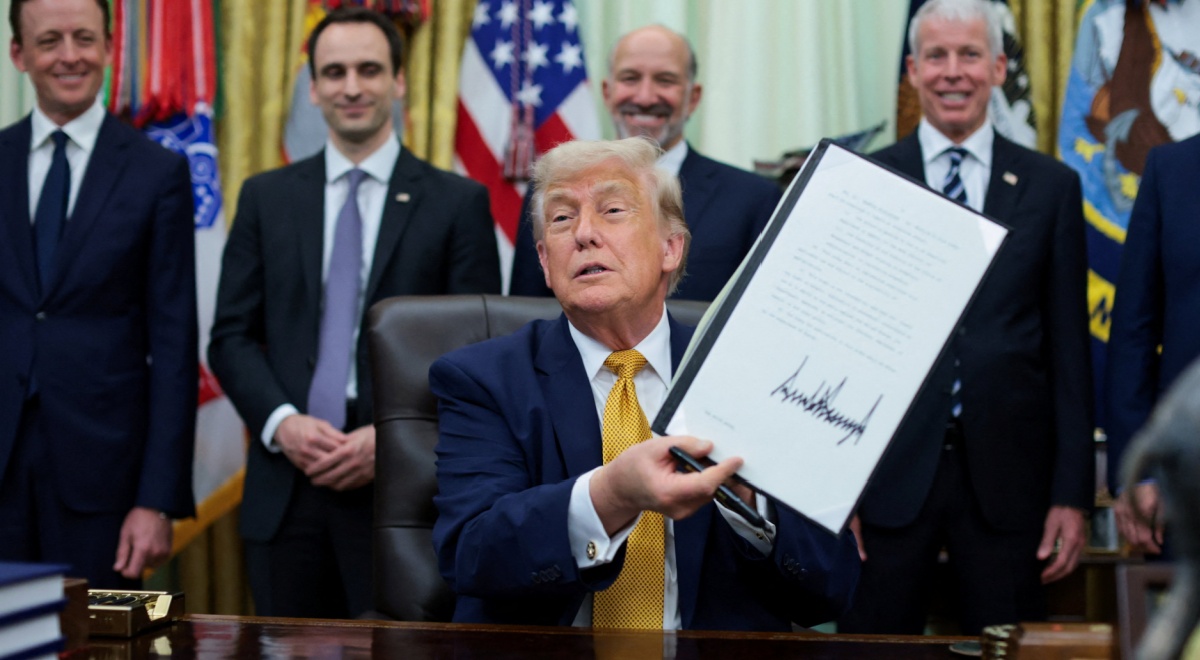
Trump displays a signed quantum executive order. Image by Jonathan Ernst | Reuters

 Follow us
US President Donald Trump signed an executive order on Monday to overhaul the National Quantum Strategy – a directive to “supercharge” US quantum innovation and strengthen efforts to protect future encryption from emerging cyber threats.
- President Donald Trump signed an executive order to accelerate US quantum computing and build a powerful quantum computer by 2028.
- Experts warn future quantum computers could eventually break today's encryption standards, putting sensitive government and corporate data at risk.
- Governments and businesses are racing to adopt post-quantum security because replacing vulnerable encryption systems could take more than a decade.
Key Takeaways by nexos.ai, reviewed by Cybernews staff.
“America stands at the cusp of a quantum revolution,” Trump states in the introduction of Executive Order 14411: Ushering in the next Frontier of Quantum Innovation.
Signed in the Oval Office with department heads flanking the president on Monday, the directive pushes the field of quantum information science and technology (QIST) to “provide transformational capabilities that will drive American innovation, power economic growth, generate high-paying jobs, and bolster national security.”






The race to beat Q-day
The move comes as quantum experts continue to bang the drum of a potential “post-quantum apocalypse” or Q-day – when quantum computers, and the hackers using them, could eventually break current encryption algorithms.
This includes RSA-2048, considered one of the most secure and widely deployed public-key cryptography algorithms in use today.






The driving fear is that nation-state adversaries, as well as common cybercriminals, have already been hoarding sensitive stolen data for years in anticipation of that moment – a strategy known as “harvest now, decrypt later” – putting national security at grave risk.
While experts disagree on when a cryptographically relevant quantum computer will arrive, tech giants like IBM, Google, and Gartner say that time could be as soon as 2029, just 3 years away.
By contrast, experts also predict that the post-quantum encryption (PQC) changeover, especially for major companies, could take on average at least 12 years.

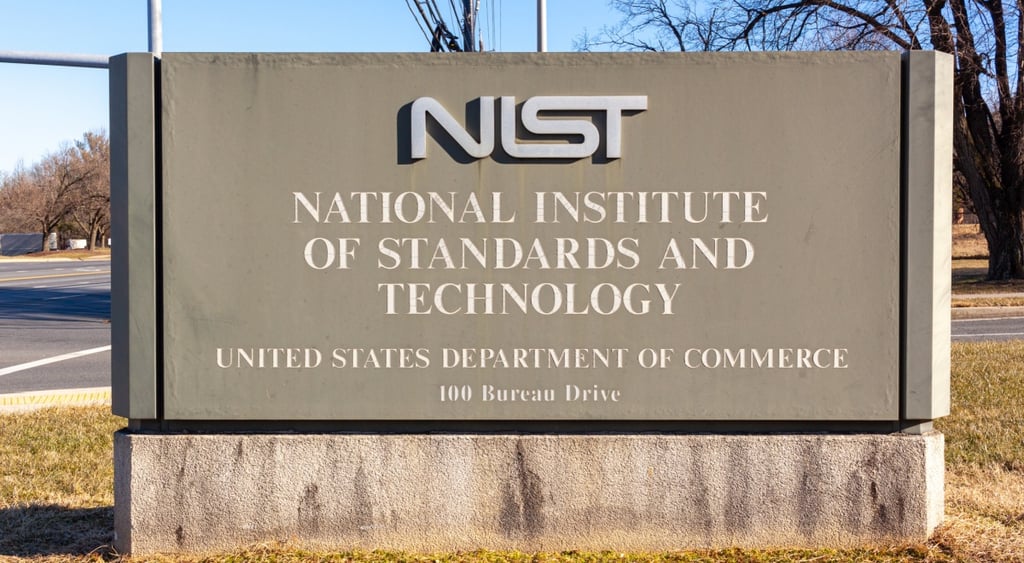
And although new post-quantum encryption standards were released by the US National Institute of Standards and Technology (NIST) back in 2024, the Diffie-Hellman encryption algorithm, invented in 1976, is said to still power most of the internet.
“We must act to solidify the Nation’s position as the world’s QIST superpower and deliver the commercial and research benefits of quantum innovation to the American people. Equally important, we must protect sensitive technologies and work with allies to ensure adversaries cannot use QIST to undermine national security, “ Trump states.
Quantum-safe deadline moves to 2031
Trump’s EO also pushes up the government's timeline to make federal security systems fully quantum-resistant by December 2031 – three years earlier than the 2035 deadline previously on the books.
This has some security insiders praising the administration for “moving the industry beyond planning and into execution.”

Check if your data was exposed
Find out if your email and related personal information have appeared in known data breaches.
“The directive signals a decisive shift towards achieving a Quantum Safe state. It turns post-quantum readiness into a governed, time-bound enterprise program with clear accountability, procurement impact, and regulatory expectations,” says Robert Hann, Global VP of Technical Solutions & Centre of Excellence at Entrust.
Hann also believes that although the EO applies directly to US federal systems, its influence will extend beyond government – shaping standards, regulatory expectations and industry best practices.
“Organizations that act early will reduce risk, remain competitive and maintain trust, while those that delay may face tighter deadlines and greater exposure as quantum capabilities advance,” he says.

Dan Wilbricht, President of Optiv + ClearShark, also praises the administration’s sense of urgency, “forcing critical infrastructure operators, space systems via NASA, and defense agencies to field quantum-enabled sensors and networks within five years.”
However, Wilbricht also believes the new framework leaves significant operational gaps in localized supply chains and unfunded compliance mandates.
“While the orders establish National Quantum Workforce Development Institutes and call for domestic manufacturing plans, they fall short of providing immediate capital injection mechanisms for the mid-tier defense and tech vendors tasked with implementing these overhauls, “ he says.
Wilbricht points out that for the broader cybersecurity sector, this means “a massive, compressed demand for NIST-approved PQC solutions” that will force many tech firms to pivot from “a decade-long modernization roadmap into a high-stakes, five-year sprint” they might not be prepared to undertake.
A powerful quantum computer by 2028
The order will not only encourage partnerships with the US industry to “bolster quantum research and IP security” led by the FBI but also expand quantum computing system capabilities to commercial applications.
Calling it an ambitious agenda, Science and Technology Advisor to the President, Director Michael Kratsios says the US plans to build “the first quantum computer powerful enough for scientific discovery by 2028.”
The US Departments of Energy, War, Commerce, and the national intelligence agencies, alongside US industry and research leaders, will be tasked with deploying quantum sensors and networks in the next 5 years, Kratsios said in a post on X.
“There's been a big leap in the investment the private sector has made in this particular domain. We're now at the moment where a lot of that research is starting to pay off into commercial applications – and what this Executive Order will do will turbocharge that," the White House Office of Science and Technology Policy Director said.
Furthermore, the Department of Labor and the US National Science Foundation will be in charge of developing a quantum-ready workforce and creating training, credentialing, and apprenticeship programs for Americans through a newly formed National Quantum Workforce Development Institute.
Not to be left out, the US Commerce Department will also be tasked with strengthening domestic supply chains and manufacturing for quantum technologies, as well as securing the cash to fund it, the announcement said.
Unlock more exclusive Cybernews content on YouTube.