Digital Jumanji: enter the game, pay the price
Now is the time to set boundaries and establish some basic rules for how we want AI to be used. As a society, we’re generally against cloning human DNA in a lab. So perhaps we should also be against allowing AI to clone the human brain and centuries of creative legacy?

By Cybernews

 Follow us
Now is the time to set boundaries and establish some basic rules for how we want AI to be used. As a society, we’re generally against cloning human DNA in a lab. So perhaps we should also be against allowing AI to clone the human brain and centuries of creative legacy?
It’s time to set the rules for how we use disruptive technologies such as AI.
Is distributing AI-generated child sexual abuse material as harmful as spreading videos of real children?
Are we comfortable with AI consuming centuries of human ingenuity just so it can outdo us in the end?
Should we date AI, or should we recognize loneliness as a pressing problem and address it in more conventional ways?






There’s only one thing I’m certain of these days – I can’t assume anything about anything or anyone. Things I find disturbing or even immoral seem perfectly acceptable to others. But for the sake of our species’ survival, I believe we need to establish some basic rules.
Follow us on LinkedIn for the full experience.
Holey holy AI
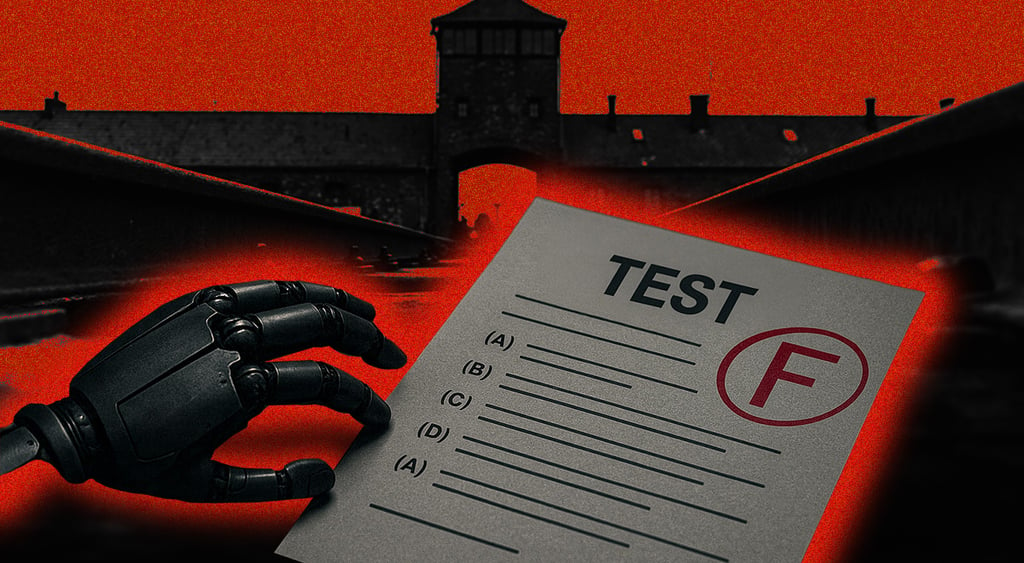
How long will it take before every AI evangelist at work realizes that AI is no silver bullet for productivity or creativity problems? If we let its development go any further, AI may already be the solution by the time they do.
For now, AI is a liar. For example, Google’s AI-powered search was confused when asked whether Elon Musk’s Department of Government Efficiency (DOGE) ever existed.
ChatGPT has recently failed the Holocaust test, or at least that’s how historians see it. A historian from Cornell, Jan Burzlaff, fed ChatGPT Holocaust survivor testimonies and asked it to retell them. While it seemingly got the facts straight, the answers it produced were too tidy, with horrifying details omitted and everything overly clarified. And by clarifying things and omitting emotions, historians reckon, AI distorts history.
It’s on us to help LLM developers fix the underlying issues. In some cases, there’s nothing to fix – it’s more about setting limits on how and for what an AI model can be used. In other cases, only a lawsuit can set the precedent for what happens next.
Here’s one recent example. Britannica Group, the company behind the 250-year-old Encyclopedia Britannica and Merriam-Webster, accused Perplexity AI of copyright infringement. They said the AI tool attributes hallucinations to Britannica, which can confuse and deceive users.




GPT-in-chief

Some therapists are using AI during remote therapy sessions, and patients don’t like it. In other professions, such as programming, automating processes is perfectly acceptable and even encouraged.
In journalism, the profession I know inside and out, opinions vary widely. Currently, I lead a more experienced newsroom where people, while open to innovation, are mostly set in their ways. This means we’re very cautious when it comes to AI usage.
Last week, we went on a long rant when an outsider – a colleague from another department – offered to cover a story and suggested a few potential angles. Why? Because his proposal was written using ChatGPT. While we use AI for some minor tasks and always review the outcomes, we never trust it with text or creative ideas. Most newsrooms, including ours, have some form of AI guidelines.
I think every industry should have its own version of the Hippocratic Oath, and it should include how we use AI.
Do no harm.
Lonely people
All the lonely people
Where do they all belong?
Your love life is no one’s business. And it’s no one’s business if you have no love life. Therefore, if you were to marry an AI girlfriend, no one can judge you.
And yet, if we agree that gaming is an addiction, maybe we can also agree that dating an algorithm isn’t good for you?
Just as we agree that childlike sex dolls, which were briefly sold through Facebook, are not okay.
NSFW bots are becoming increasingly popular – part of their allure is that an AI chatbot never judges or rejects you. It also borders on the line of personalized porn. And we generally agree that watching too much porn can negatively affect real-life intimacy.
Dating an AI because it’s cheaper than taking a real person out on a date is a poor excuse. I remain unconvinced that a machine can replace the feeling when a person stares deeply into your eyes as you talk, with an unfiltered desire to lay their lips on you. And the way your toes tingle when they finally do.
For some reason lyrics from the Hanging Tree song, popularized by the Hunger Games franchise, come to mind.
Are you, are you
Coming to the tree?
Where I told you to run
So we'd both be free
In other news:
- Can there be a cyber or AI-Zapad 2025? It’s long been said that a hypothetical World War III would be vastly different from the two previous world wars, mainly due to technological advancement. In addition to fighting with guns, bombs, and artillery, a cyber and AI war will remain an always-open second front. Has Russia already opened it?
- Popular AI chatbots leaking data: millions of users could be affected. A server belonging to one of the big names in generative AI just spilled sensitive user data, including private prompts and authentication tokens, potentially exposing millions of people.
- Congress UFO hearing over Hellfire missile video raises questions about military safety and government secrecy. A Hellfire missile video stunned lawmakers, sparking new alarms over military safety and secret UAP footage.
- The latest Apple event was the most geriatric yet, and I never felt so old. Man, you’re falling apart. Sounds are fading, and what are those noises your heart makes? Don’t wander too far, you’ll get lost. But don’t worry! Apple devices will help you hold yourself together until the inevitable catches up.
- Gym bros exposed by Hello Gym phone service: 1.6 million audio recordings leaked. No encryption, no password – a giant stash with over 1.6 million calls and voicemails, including gym members’ names, phone numbers, and other sensitive information, was found to be publicly exposed.