NordLayer Intelligence by NordStellar review 2026
Being behind major reports like The Mother of All Breaches and RockYou2024, our in-house cybersecurity experts and journalists provide unbiased, real-world testing and in-depth analysis.
We maintain complete transparency by openly sharing our testing methodologies with our audience.
Learn more
Cybersecurity risks don’t always start inside a company’s network. Exposed services, leaked employee credentials, stolen session cookies, and fake websites impersonating a business can all create opportunities for attackers, sometimes before a security team knows there’s a problem.
NordLayer Intelligence by NordStellar is a threat intelligence and exposure management platform designed to help organizations identify these risks and prioritize potential threats. It brings external attack surface monitoring, leaked-data detection, dark web intelligence, and brand protection into one place, helping security teams understand what’s exposed and decide what needs attention.




The Cybernews team consists of professional and highly skilled writers and an in-house research team. They’re the core of all our reviews, bringing the performance of each tool closer to you. Additionally, we stick to a transparent testing process, which includes investigating various services, their features, and disclosing our testing methodology with everyone. Discover more about our testing process.
NordLayer Intelligence: quick overview
NordLayer Intelligence is designed for organizations that want to strengthen their security without relying on separate tools for each external threat. Its value depends on how much visibility a business needs, which security tools it already uses, and whether its team has the resources to investigate and act on findings.
- Best for: Organizations that need visibility into exposed assets, leaked credentials, and threats targeting their business from outside their network.
- Main capabilities: Dark Web Search, data breach monitoring, external attack surface management, malware-related exposure detection, and optional brand protection.
- Starting price: $4,500 per year for the Security Console, with final pricing based on the number of monitored assets.
- Deployment: Cloud-based platform with asset setup, monitoring configuration, and alerting options.
Why advanced cybersecurity like NordLayer Intelligence matters in 2026
Organizations face security risks beyond the systems inside their networks. Internet-facing assets, exposed employee credentials, and domains impersonating a legitimate business can all create opportunities for attackers. Identifying these exposures early can help security teams understand where risks exist and which issues may need further investigation.
Threat exposure management helps organizations discover external assets, assess potential weaknesses, and prioritize findings based on their risk. NordLayer Intelligence brings these capabilities together with Dark Web Search and leaked data monitoring, giving security teams a centralized view of potential threats to their organization. Its dashboards and event-tracking workflows help teams investigate findings and track their status through remediation, while the required response depends on the nature of each exposure and the organization's existing security controls.
With cybersecurity threats on the rise, finding the right tools to protect your business has never been more important. NordLayer Intelligence offers advanced features to keep your data safe and secure. Curious about how it all comes together? Here’s a closer look at how it works to safeguard your company from day one.
NordLayer Intelligence pricing
NordLayer Intelligence does not use a traditional set of public feature tiers. Its Security Console starts at $4,500 per year, with the final price determined by the number of assets being monitored. The plan includes unlimited users and the core Security Console features.
Two offerings are priced separately:
- Brand Protection: An add-on for identifying brand impersonation, managing takedowns, and addressing related threats, with pricing available from sales.
- Dark Web API: A separately priced option for integrating dark web intelligence into other products and security systems.
This pricing model may suit organizations that need to monitor a defined set of assets across a security team. Smaller businesses should consider whether they need continuous monitoring and centralized threat intelligence at this price, or whether a narrower tool would cover their immediate requirements.
For an accurate quote, organizations should audit which assets they need to monitor, which features are included in their proposed setup, and whether add-ons or integrations will incur additional costs.
How does NordLayer Intelligence work?
NordLayer Intelligence gives security teams a centralized view of their organization's external digital risks. After configuring the platform, users can review discovered assets, search for exposed data, investigate security events, and track vulnerabilities from a single interface.
The platform organizes findings into dashboards and filterable tables, with details such as affected assets, event types, severity levels, and resolution status. This helps teams investigate potential threats, prioritize issues, and keep track of remediation.
Getting started with NordLayer Intelligence
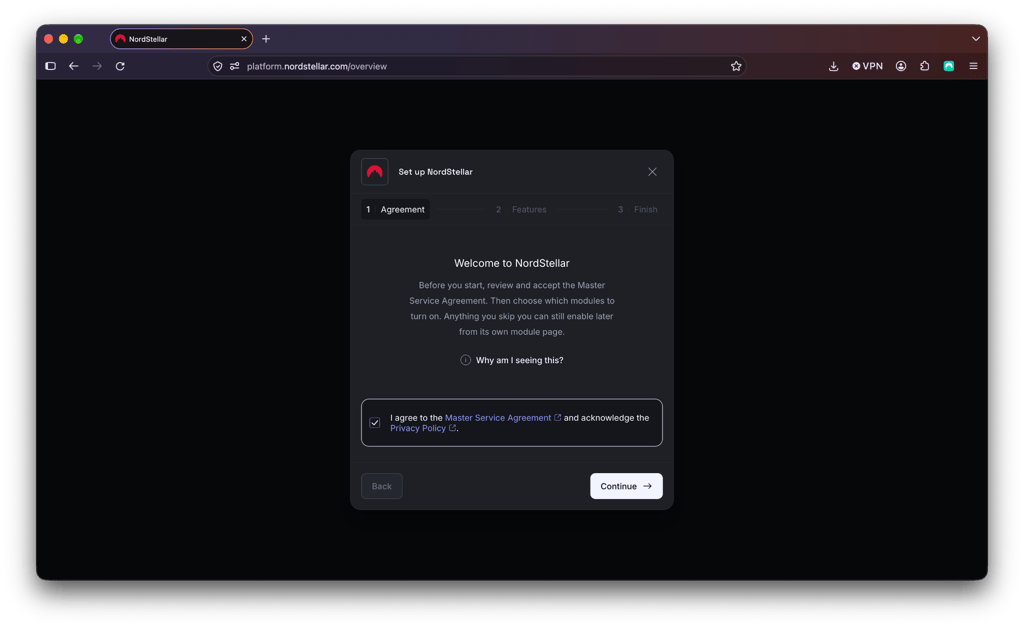
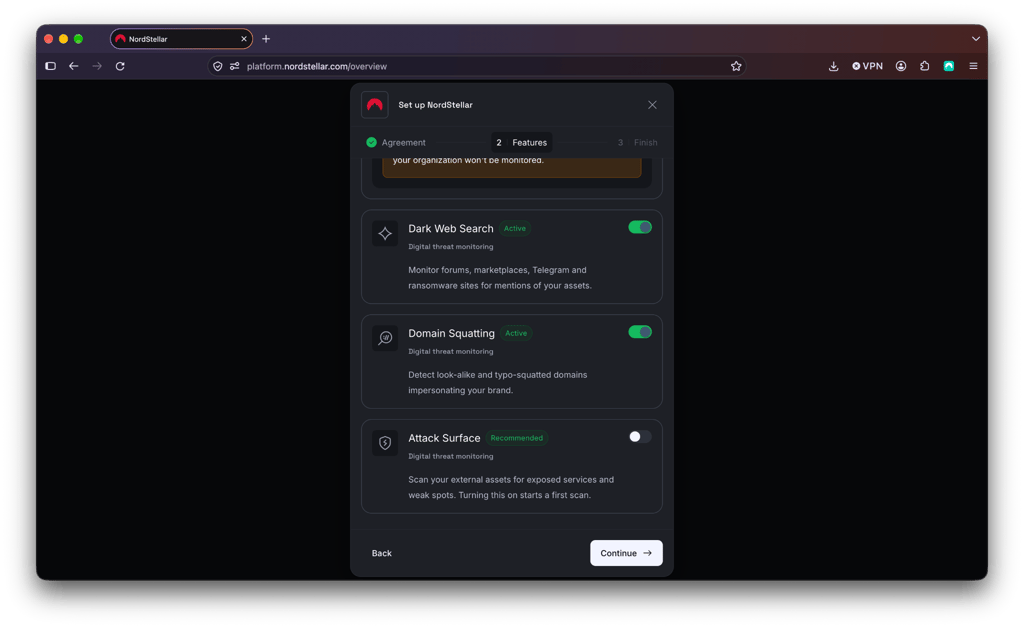
Setting up NordLayer Intelligence begins with configuring the security modules the organization wants to use. During onboarding, administrators can review the service agreement and privacy policy, enable or disable available modules, and confirm their selections before entering the platform.
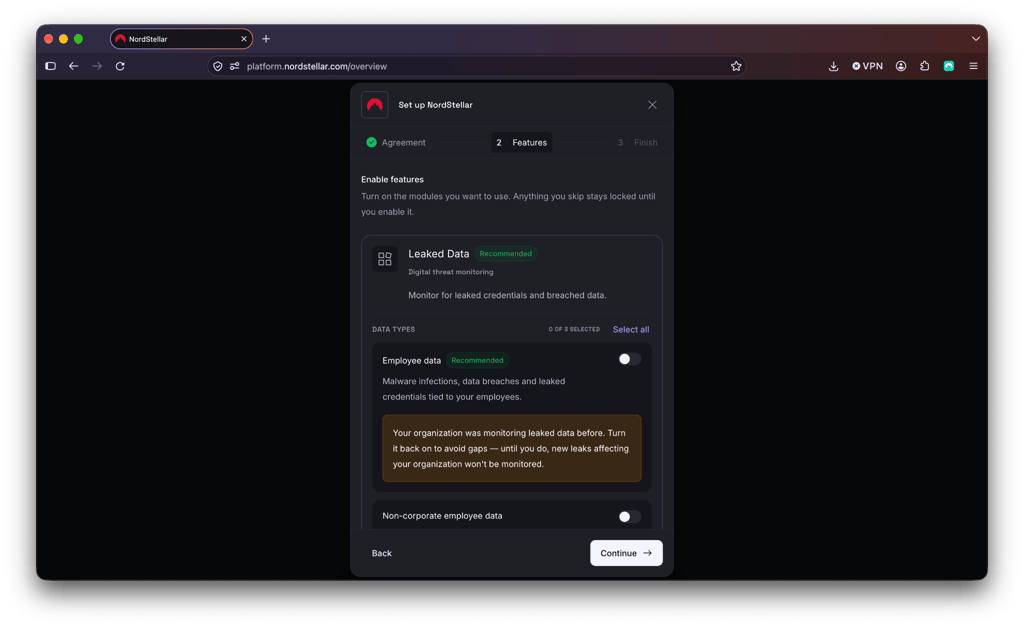
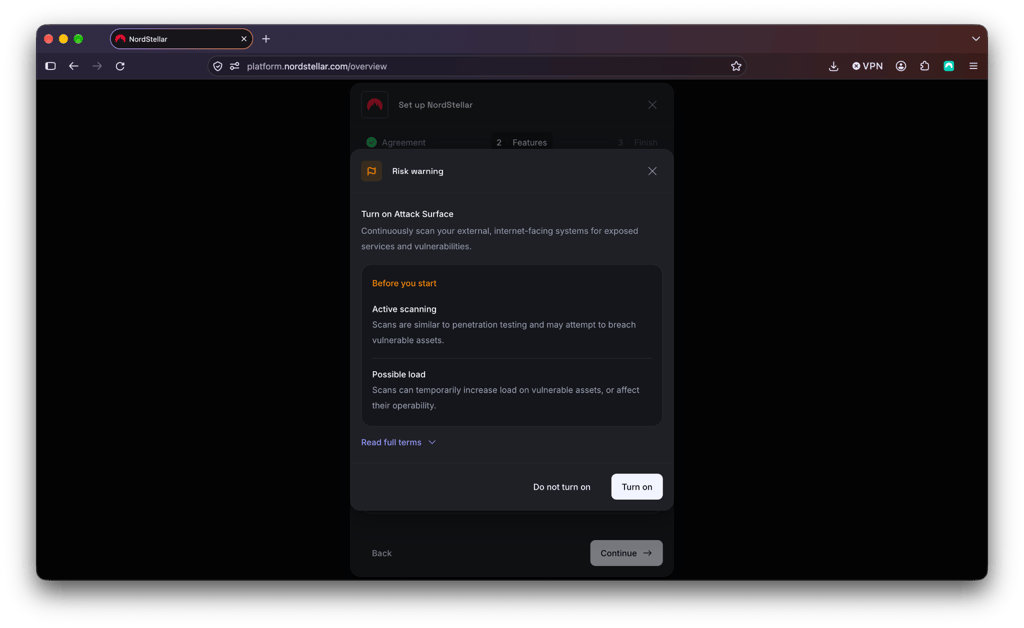
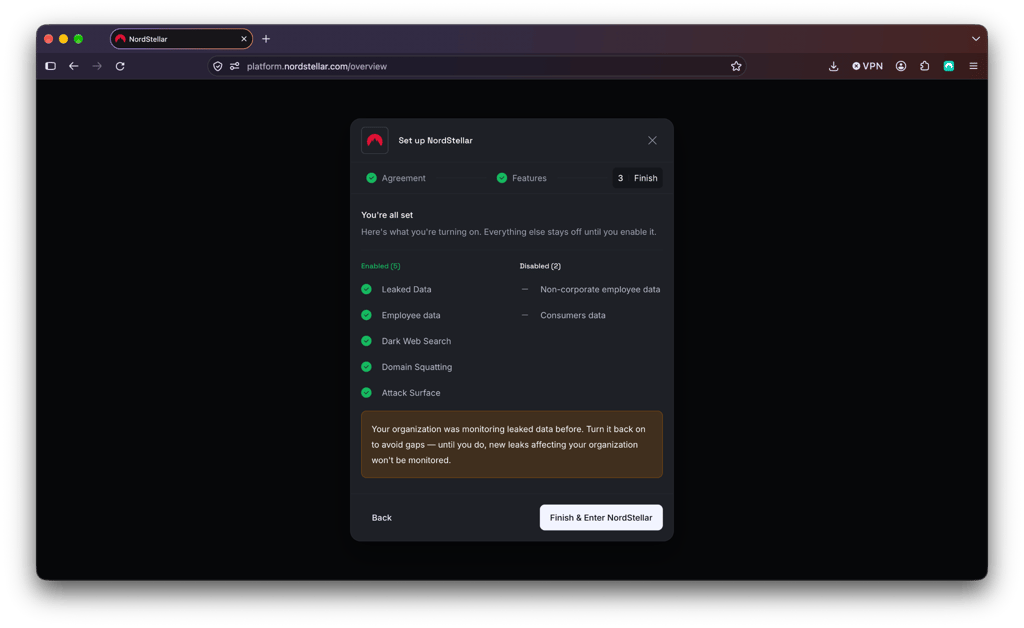
The next step is to add and verify the organization's domains. Domain approval can take up to 24 hours. Once approved, the platform can discover related assets and establish monitoring rules for the organization.
Administrators can then customize monitoring keywords, run attack surface scans, and configure alerts. They can also review historical events to identify outstanding issues and connect identity providers or other security tools if needed.
The platform's setup process is straightforward, but organizations should still decide which assets and data they need to monitor, as well as who will be responsible for investigating the findings.
Overview dashboard
The overview dashboard provides a high-level summary of the organization's security events. During testing, it displayed event trends over the previous 90 days, including breakdowns by severity and resolution status.
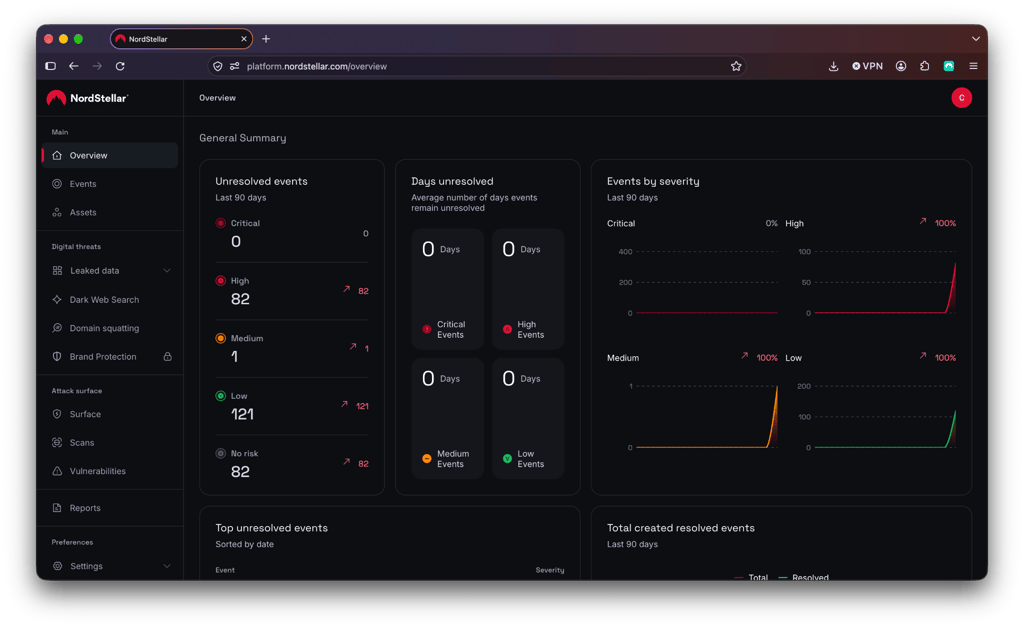
The dashboard also highlighted unresolved events and exposed data findings, making it easier to identify areas that may need further investigation. Some unresolved findings were associated with infostealer malware families, including redline, nexus, and raccoon.
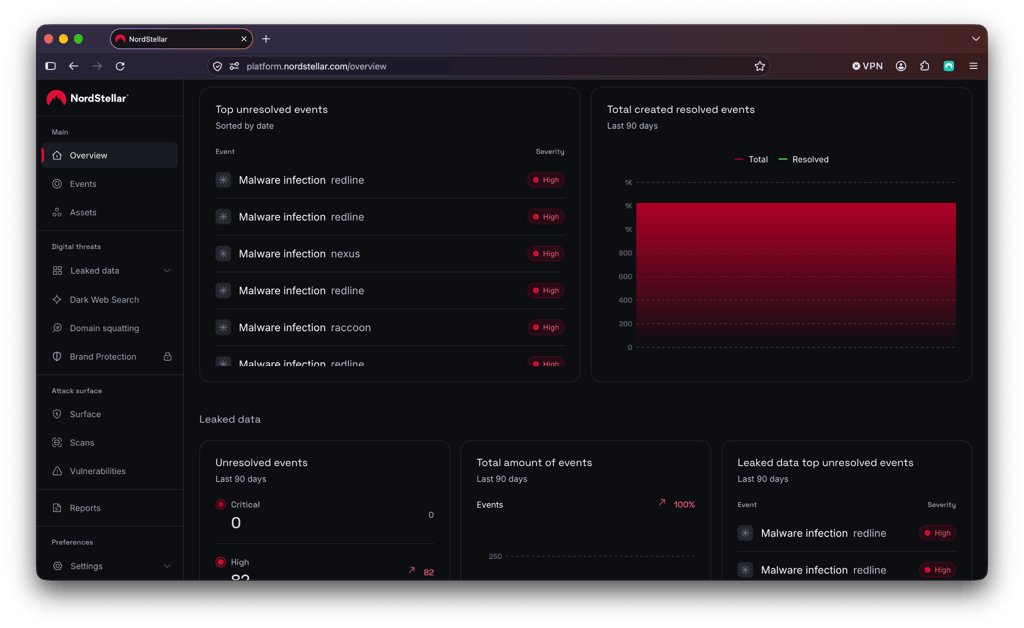
These indicators help security teams understand what the platform has detected, but a finding still needs to be assessed in context. Its severity, the affected asset, and whether the issue has already been addressed all matter when deciding what to investigate first.
Assets dashboard
The Assets dashboard provides an inventory of the organization's monitored and unmonitored digital assets. It includes asset types such as domains, IP addresses, and email addresses, giving administrators a clearer view of the infrastructure and identities associated with their organization.
A filterable table displays details for individual assets, including their monitoring status, discovery source, and date added. This helps teams review which assets are covered and identify items that may need attention.
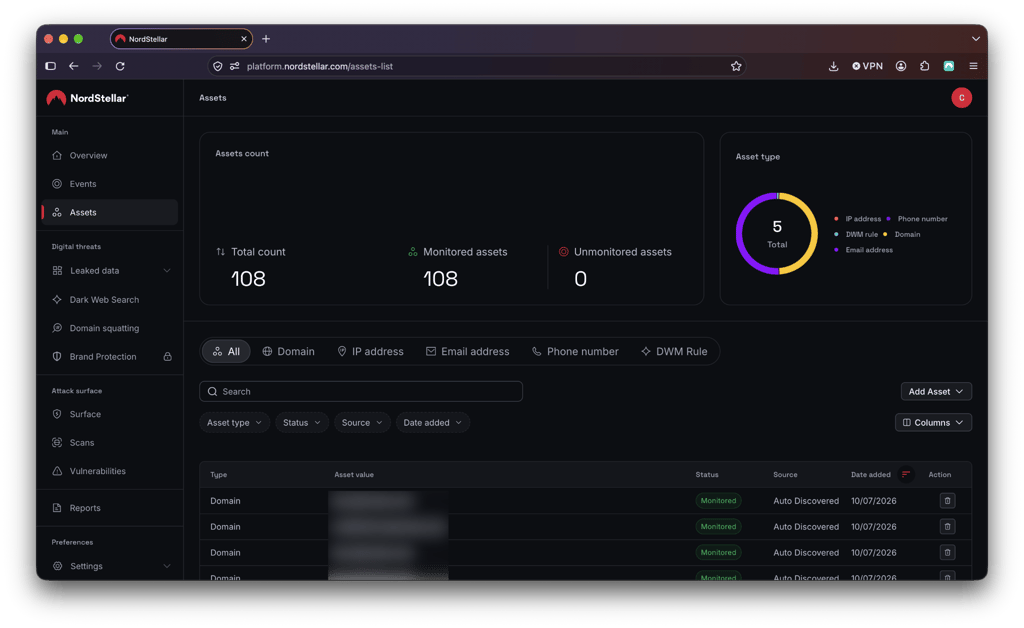
Maintaining an accurate asset inventory is an important part of external attack surface management. If relevant domains or services are missing, the organization may not have a complete picture of its exposure.
Events dashboard
The Events dashboard is where users can examine detected security issues in greater detail. Its filterable table includes information such as event type, threat name, affected asset, tags, risk level, and relevant dates.
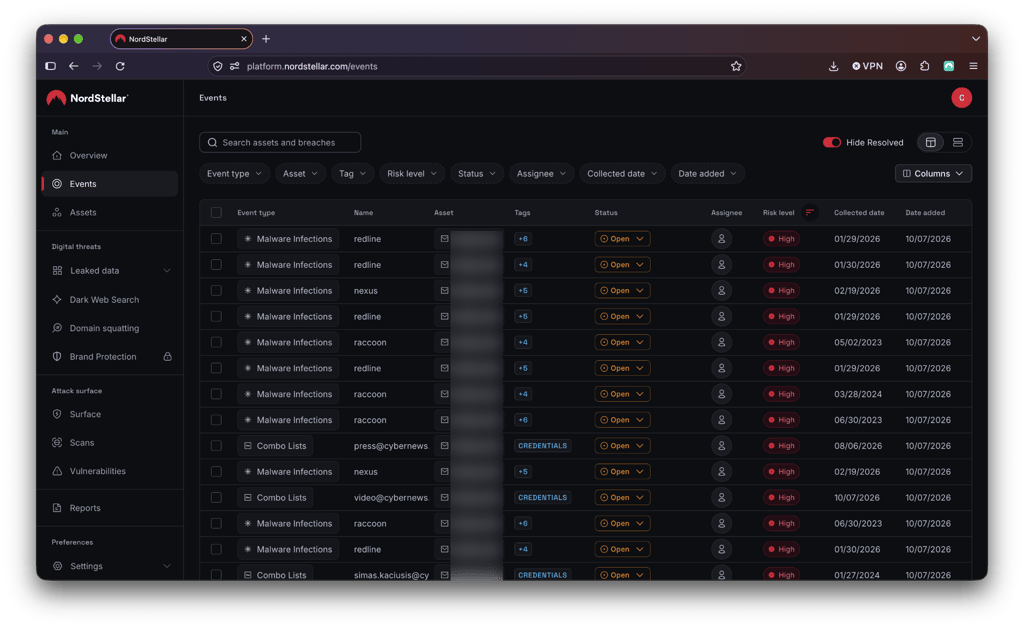
During testing, events could be organized by status and managed through a dropdown menu. Active statuses included Open, Under investigation, and Remediation. Resolved outcomes included Resolved, Duplicate, False positive, and Won't fix.
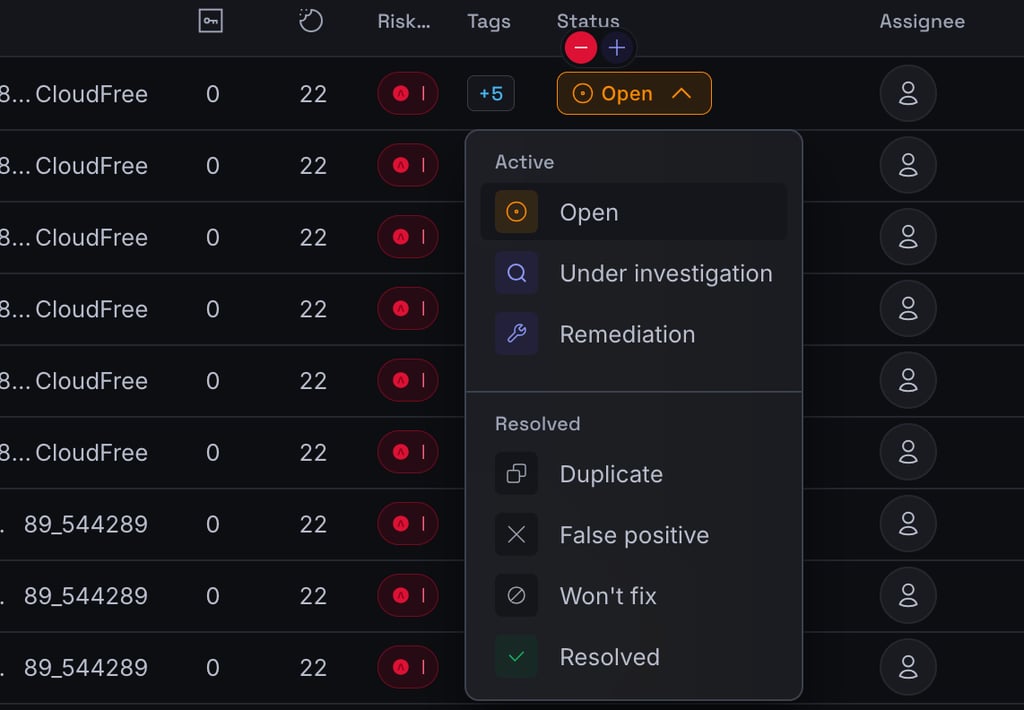
This workflow gives security teams a way to track findings from initial discovery through investigation and resolution. It also helps distinguish current issues from duplicate reports, false positives, and findings that the team has decided not to remediate.
Dark Web Search
Dark Web Search lets users query monitored deep and dark web sources for information relevant to their organization. The results are organized into categories that include forums, Telegram posts, ransomware blogs, and marketplaces.
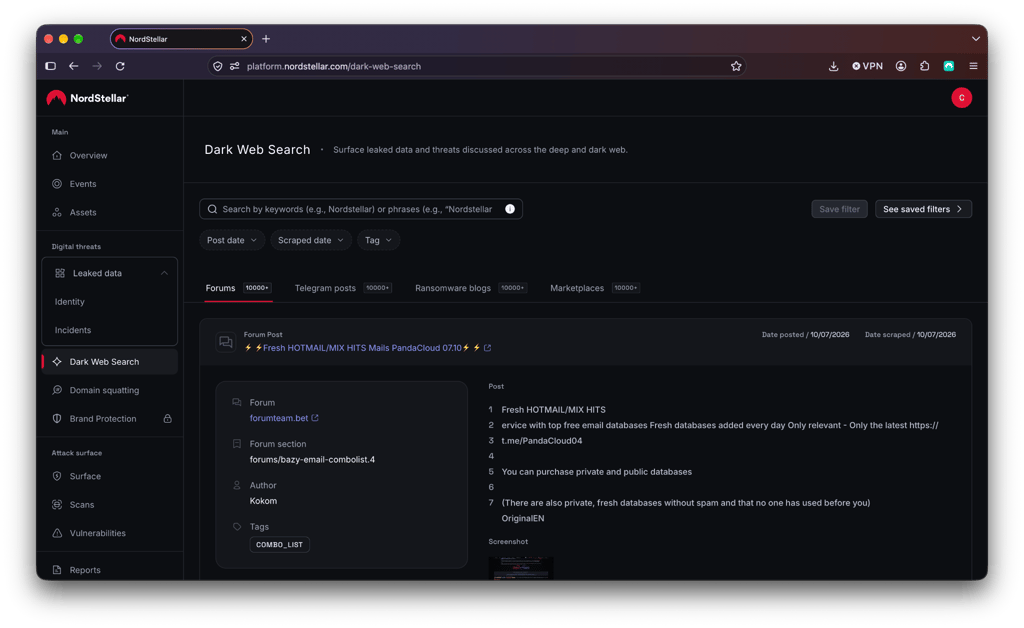
Search results can include details such as the original post content, source, author, and collection dates. This context helps analysts assess why a result may be relevant and whether it warrants further investigation.
For example, a security team could search for company-related terms to investigate potential exposure of employee information or other sensitive data. A match does not automatically confirm that an account has been compromised, but it can provide a starting point for checking the affected information and deciding what action to take.
Data breach and leaked data monitoring
Data breach monitoring focuses on information that may have been exposed through data leaks, compromised databases, or malware-related activity. Depending on the finding, this can include employee credentials, email addresses, cookies, tokens, and other sensitive information.
The platform integrates these findings into its security-event workflow, where teams can review details, assess severity, and track an issue's status. Testing also showed findings associated with infostealer malware, which can collect credentials and other information from infected devices.
If exposed credentials or session data appear in a finding, the organization may need to investigate affected accounts, reset passwords, revoke sessions, or check devices for malware. NordLayer Intelligence helps surface the information needed to begin that process; the response depends on the nature of the finding and the organization's security controls.
Domain Squatting
The Domain Squatting dashboard focuses on suspicious domains that resemble an organization's legitimate domains. Look-alike domains can be used for phishing, impersonation, or other fraudulent activity.
The dashboard presents summary metrics for detected and high-risk domains, alongside a breakdown of domain permutation types. These can include changes to the top-level domain or alterations to the domain name itself.
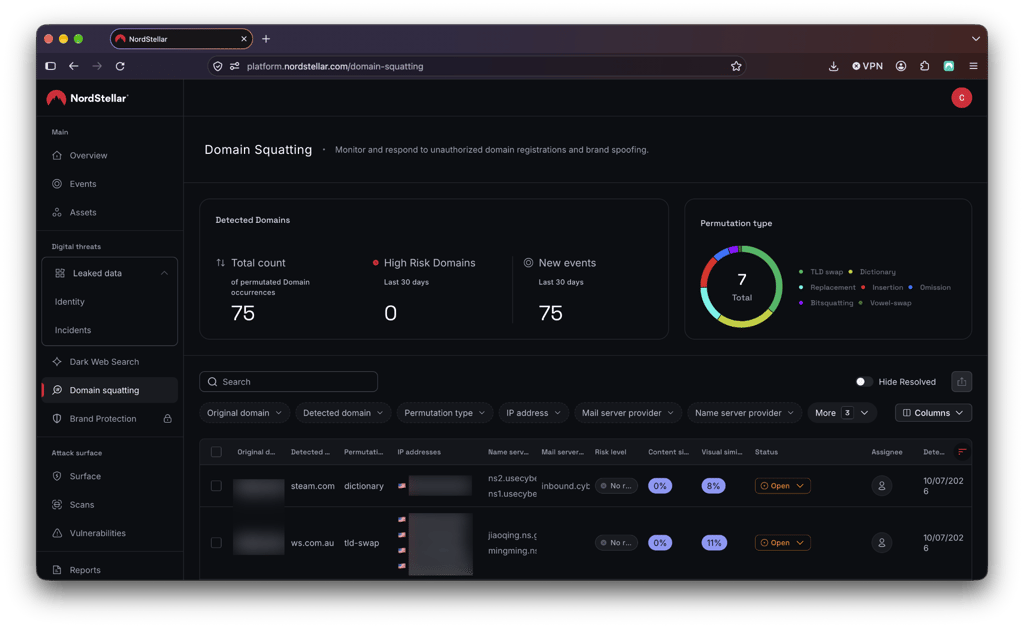
A detailed table lists detected look-alike domains, associated IP addresses, server providers, risk levels, and visual similarity scores. These details help security teams assess which domains pose the greatest potential risk and decide whether further investigation or protective action is necessary.
Detection is an important first step, but it does not mean that every suspicious domain can be removed automatically. Any takedown action depends on the available service and the circumstances of the case.
Brand Protection
Brand Protection is a separately priced offering designed to help organizations identify and address online impersonation. It covers threats such as fake social media profiles, phishing websites, look-alike domains, and malicious or cloned applications.
The dashboard presents detection and takedown information over time, including incidents that have been resolved and those still in progress. It also outlines the scope of the managed service, helping organizations understand the types of impersonation threats it is designed to address.
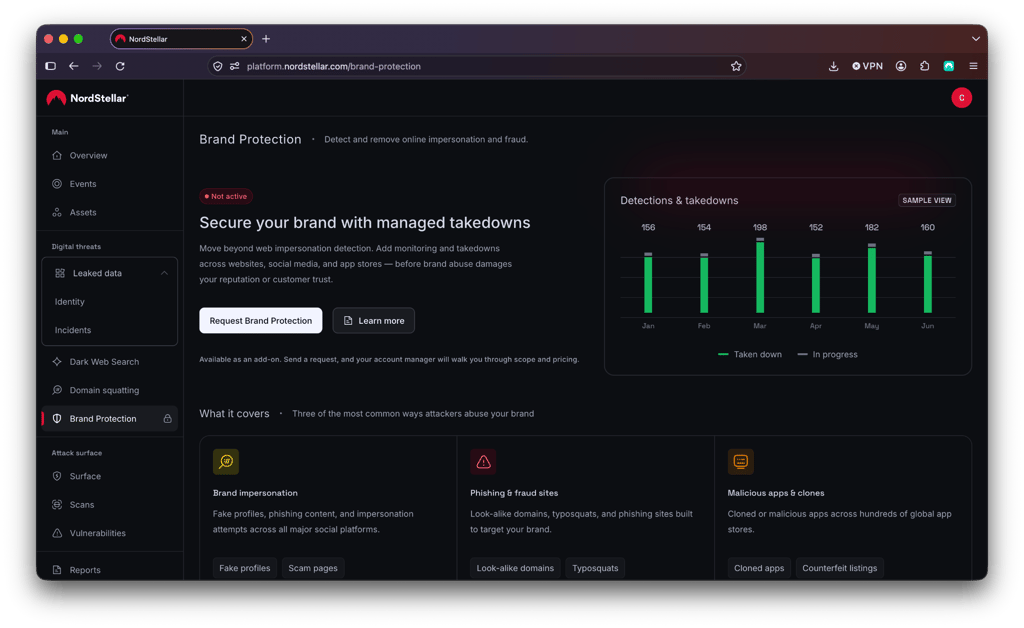
This feature is particularly relevant to businesses whose customers, employees, or partners could be targeted through fake websites or accounts impersonating the brand. Because Brand Protection is an add-on, organizations should confirm its scope and pricing separately from the core Security Console.
Vulnerability management and attack surface scanning
The Vulnerabilities section provides a centralized view of security weaknesses detected across an organization's external assets and infrastructure. A summary area displays vulnerability severity and counts of resolved and unresolved findings.
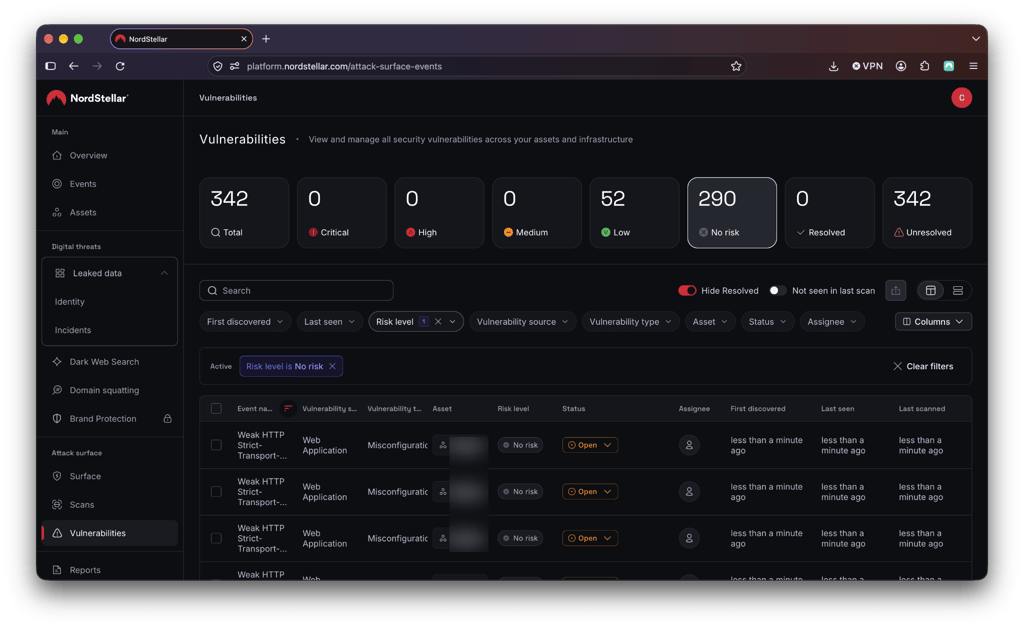
Below it, a filterable table provides more detail about individual issues, including the event name, vulnerability source and type, affected asset, risk level, resolution status, and discovery and scan dates.
These details help teams identify weaknesses that may require investigation or remediation. Administrators can use the findings to prioritize exposed assets and track whether issues have been addressed.
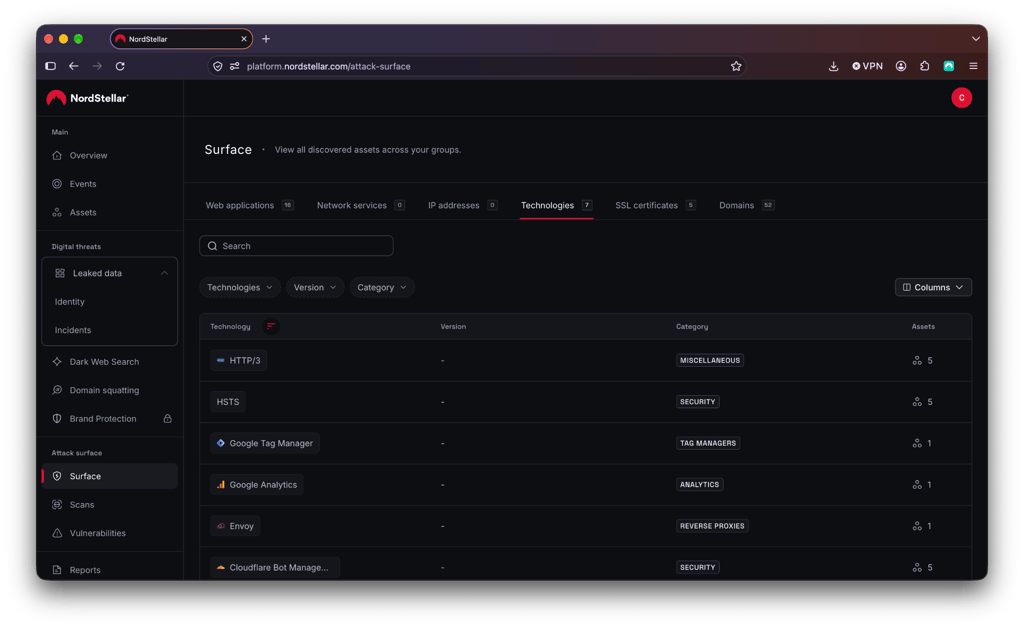
This is an attack surface management and vulnerability-scanning workflow, not a substitute for a traditional penetration test. Organizations that need hands-on exploitation testing should assess that requirement separately.
Alerts and integrations
NordLayer Intelligence supports alerting and integrations to help teams incorporate its findings into existing security workflows. Available notification options include email, Slack, Microsoft Teams, and webhooks.
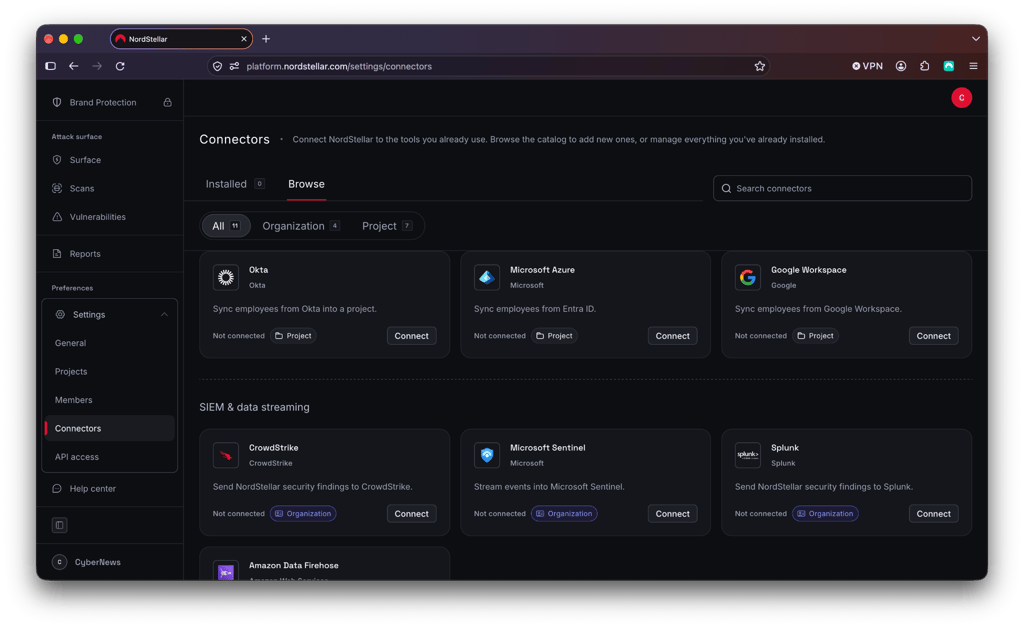
The Settings area also includes a Connectors view for managing available third-party integrations. Administrators can search for, filter, and manage connectors at the organization or project level. Other administrative options cover projects, team members, and API access.
The platform's documented integrations include Microsoft Sentinel, CrowdStrike, Splunk, and Amazon Data Firehose. These can help organizations route security findings into systems they already use for monitoring and investigation, depending on the connector and configuration.
For organizations with larger teams, identity provider integration can also help align the platform with existing identity management systems. Supported providers include Microsoft Entra ID, Google Workspace, and Okta. Project and role-based access controls help administrators organize assets and assign appropriate permissions to team members.
NordLayer Intelligence MCP
NordLayer Intelligence MCP connects NordStellar threat intelligence with AI tools such as Claude, making security findings easier to explore and understand. Instead of manually searching through different dashboards, security teams can ask questions in plain English, identify key risks, and create custom executive summaries or threat exposure reports.
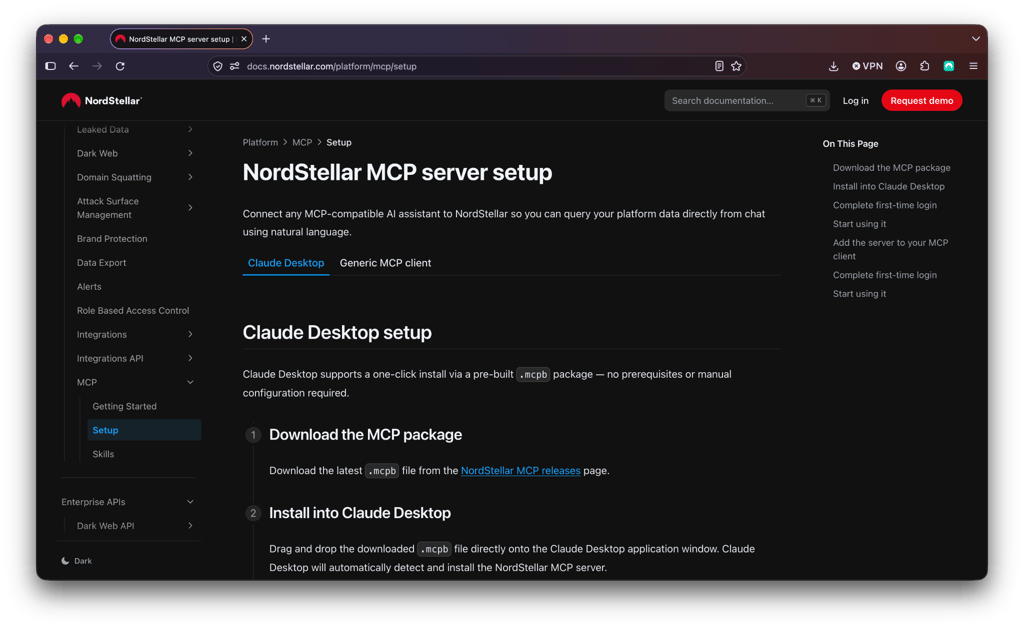
This can help teams review security information faster and explain potential risks to decision-makers. Teams should still review AI-generated summaries and recommendations before deciding how to respond to a threat.
NordLayer Intelligence Dark Web API
The NordLayer Intelligence Dark Web API enables organizations to integrate dark web intelligence and breach alerts into their applications and security tools. It provides access to threat data and privacy-focused checks for leaked credentials, helping businesses identify potential exposure beyond the NordLayer Intelligence platform.
Organizations can use the API to support breach monitoring, check for compromised credentials, and build dark web monitoring into their own products. It can also feed exposure data into existing security workflows, helping teams investigate potential account takeover risks or fraud.
The Dark Web API is offered separately from the core Security Console. Organizations interested in integrating threat intelligence into their own products or systems should confirm available endpoints and pricing with the provider.
Comparison to other cybersecurity solutions
NordLayer Intelligence, SOCRadar, and Recorded Future help organizations understand external threats, but differ in their approach to exposure management and threat intelligence. NordLayer Intelligence stands out for its straightforward platform, which makes external risk findings accessible and actionable for IT generalists without requiring specialized threat intelligence expertise.
Compared with SOCRadar, NordLayer Intelligence highlights active vulnerability verification within its Attack Surface Management module. The platform actively tests detected vulnerabilities to verify whether they are exploitable. This helps teams distinguish confirmed vulnerabilities from potential issues and prioritize remediation.
Recorded Future provides threat intelligence across a broad range of security functions, while NordLayer Intelligence focuses on external threat exposure through a simple, user-friendly interface. Its approach helps IT generalists understand findings, assess external risks, and determine what needs attention without relying solely on dedicated security analysts.
NordLayer Intelligence also offers a free Platform Integrations API that pushes platform events to support integration with other tools and workflows. The separately priced Dark Web API provides dark web intelligence itself, rather than only events about findings generated by the platform.
Conclusion
NordLayer Intelligence brings external attack surface management, dark web intelligence, leaked data monitoring, vulnerability findings, and brand protection together on one platform. Its centralized dashboards and event-tracking tools help security teams investigate potential exposures, prioritize risks, and manage findings through their existing security workflows.
The platform is worth considering for organizations that need greater visibility into external threats, particularly those involving exposed credentials, suspicious domains, and internet-facing assets. Organizations facing spoofing or phishing risks can also extend coverage through the optional Brand Protection add-on to track brand impersonation and coordinate takedowns. However, the $4,500 annual starting price for the Security Console, additional fees for optional services, and the need to investigate and respond to findings may make it less suitable for smaller businesses with limited security resources.
For organizations whose needs and budgets align with its capabilities, NordLayer Intelligence offers a way to consolidate several areas of external threat monitoring. Businesses can explore whether it fits their security requirements by requesting a demo.
FAQ
What is NordLayer Intelligence?
NordLayer Intelligence by NordStellar is a threat exposure management and threat intelligence platform developed by Nord Security. It helps organizations identify exposed data, compromised credentials, external vulnerabilities, and potential brand impersonation through centralized monitoring and security event management.
How does NordLayer Intelligence protect against data breaches?
NordLayer Intelligence monitors external sources for company-related data that may have been exposed, including employee credentials, email addresses, cookies, and tokens. It surfaces relevant findings as security events, allowing teams to assess their severity, investigate potential risks, and track their status.
What features does NordLayer Intelligence offer?
NordLayer Intelligence includes Dark Web Search, data breach monitoring, domain squatting detection, attack surface management, vulnerability scanning, and cybersecurity risk assessment. Brand Protection and the Dark Web API are also available, while alerts, third-party integrations, and identity provider connections help teams incorporate findings into existing workflows.
Can NordLayer Intelligence monitor the dark web for company data?
Yes, Dark Web Search lets users search monitored deep and dark web sources, including forums, Telegram posts, ransomware blogs, and marketplaces. Results can include post content, source information, author details, and collection dates to help teams investigate potentially exposed company data.
How does NordLayer Intelligence prevent account takeovers?
NordLayer Intelligence helps identify exposed credentials, cookies, tokens, and other data associated with breaches or infostealer activity. These findings can alert security teams to potential account risks. The Dark Web API also supports integrations for account-takeover prevention, depending on how it is implemented within an organization's systems.