Your lights are lying to you – how artificial nighttime light wrecks brain and body
How artificial nighttime light wrecks brain and body

Image by Cybernews

 Follow us
Exposure to artificial light at night may be quietly damaging your brain and metabolism, says neuroscientist Dr. Randy J. Nelson. His latest research links circadian disruption from mistimed light to inflammation, mood disorders, and obesity.
I recently noticed that I’ve been doing eight hours of working on my laptop a day, four hours of TV with family, and four hours of scrolling. That’s a colossal sixteen hours of blue light a day.
This disrupts my sleep and has a knock-on effect on other matters like high caffeine intake and an abnormal amount of burritos.
However, artificial light doesn’t only cause sleep deprivation – it wreaks havoc on the body.
According to one leading expert in the field, artificial light at night has recently been uncovered to be a full-on biological disruptor.




Light vs the brain
Dr. Randy J. Nelson, who chairs the Department of Neuroscience at West Virginia University, has recently published research on artificial light interference.
“Light at night doesn’t just affect sleep quality; it fundamentally alters immune function, triggers neuroinflammation, disrupts metabolism, and influences mood regulation,” Nelson told Brain Medicine.
Circadian rhythms have been an evolutionary constant, and even when the Industrial Revolution was happening, at least Grandpa shoveling down the pit wasn't riddled with screentime like today.
Disrupted exposure to light leads to a disrupted circadian rhythm, which in turn causes neuroinflammation – negatively affecting mood and contributing to weight gain.
“The body evolved to expect light during the day and darkness at night. When that pattern breaks down, so do key regulatory systems,” Nelson’s lab reports have shown.
It’s not just sleep you’re messing with
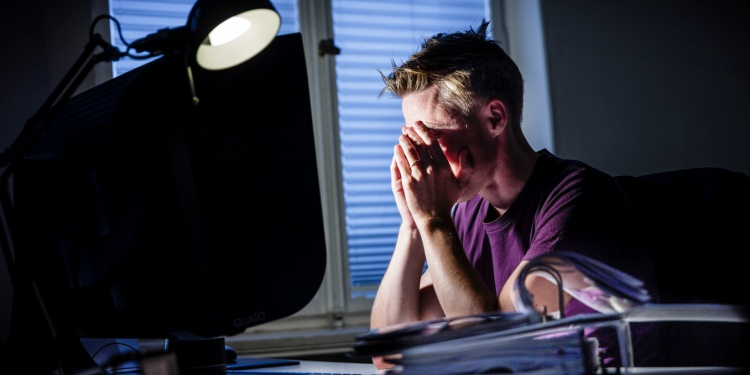
ALAN (artificial light at night) has been linked to rising rates of depression and anxiety – especially in urban areas and shift workers.
Mood disorders and problems with metabolism are a knock-on effect of being exposed to light at the wrong time of the day, throwing off our melatonin regulation.
It gets even worse for shift workers like night shift nurses. Disruptive blue light could negatively impact patients as well.




So what can we do?
Practical tips that can help include warm lighting after sunset, screen curfews, daylight exposure in the morning, and consistent sleep timing.
As Nelson puts it, “Circadian rhythms are a fundamental aspect of biology, and much is known from foundational science about them. However, little of this has been translated to clinical medicine.”