Canny v1.1
Last updated: 18 December 2025
What is Canny v1.1?
Canny v1.1 is a robust feedback management system designed to streamline how businesses gather, organize, and prioritize user input. By providing a single hub for feedback, it empowers companies to make smarter product decisions rooted in customer needs. Customers, stakeholders, and team members can easily submit ideas, report bugs, and vote on features.
With a sleek interface and advanced analytics, Canny bridges the gap between product teams and end-users. It brings transparency to product development, ensuring that users feel heard and engaged while allowing companies to confidently align their roadmaps with real demand.
Key Features:
-
Centralized Feedback Boards:
Enables teams to create public or private boards where users can submit, discuss, and upvote feedback. This fosters a community-driven product improvement loop and helps identify the most pressing user needs efficiently. -
Automatic Feedback Categorization:
Canny leverages tags and categories to automatically organize incoming suggestions and bug reports, making it much easier for teams to sift through large volumes of feedback. -
Prioritization and Roadmapping:
Feedback can be easily prioritized based on votes, comments, and internal business priorities. Canny's integration with roadmap features ensures that high-impact requests move seamlessly into planning. -
Integrations With Popular Tools:
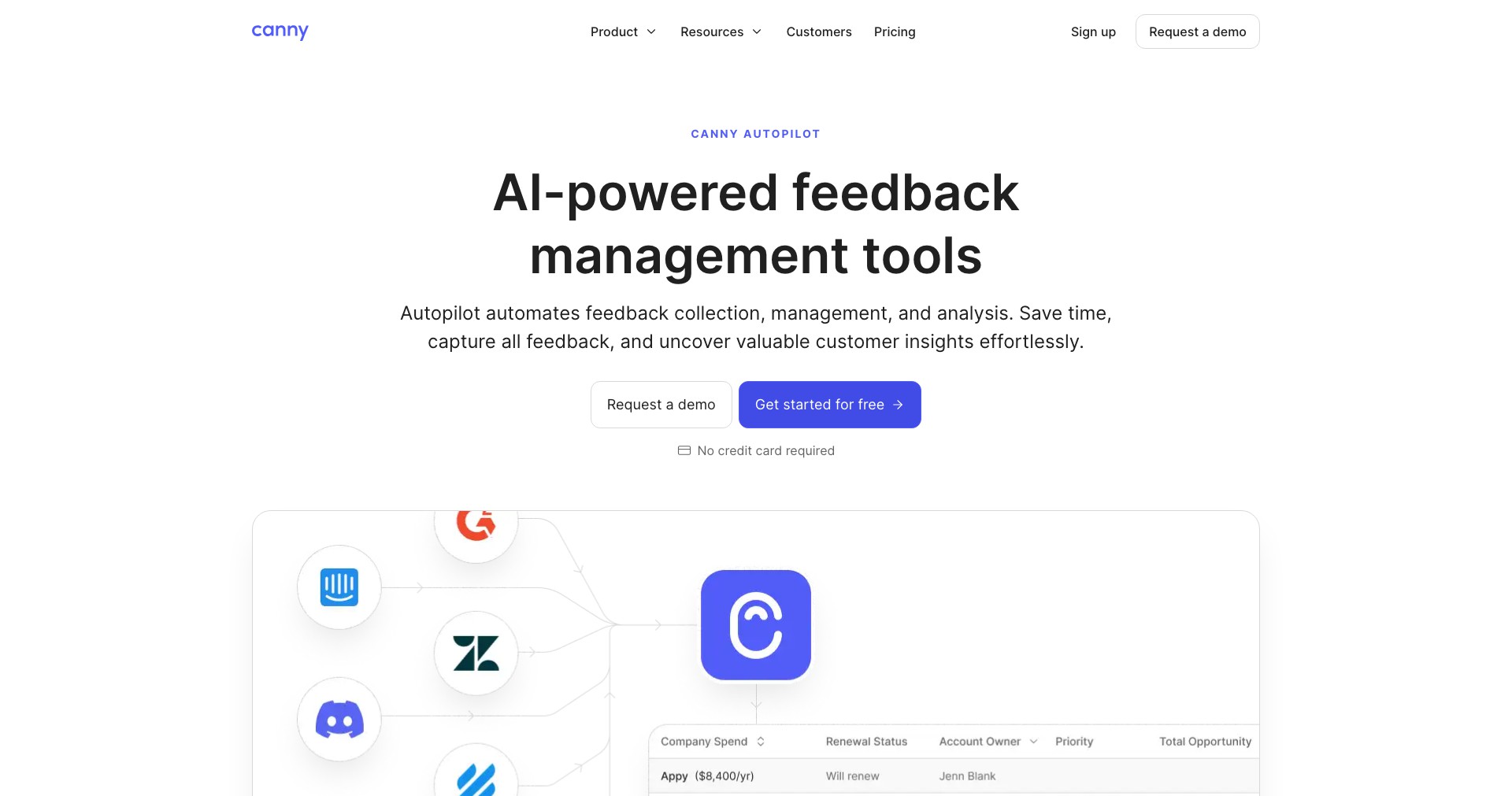
Offers integrations with platforms like Jira, Slack, Intercom, and Zapier to ensure feedback is actionable and context remains within existing workflows. -
Change Log and Product Updates:
Canny lets teams close the loop with users by publishing release notes and change logs, making product improvements visible and keeping the community informed.
What makes Canny v1.1 unique?
Canny's user-centric design and straightforward implementation make it stand out from generic project management and survey tools. Its focus on actionable prioritization and highly customizable boards allows companies to engage deeply with their communities, unlike many feedback tools that simply collect data without actionable insights.
The transparent nature of Canny's platform also fosters trust; users can see how their suggestions are being handled in real-time. Combined with extensive integrations and robust analytics, Canny supports seamless workflow adoption without disrupting existing processes.
Pros and Cons
Who is using Canny v1.1?
Product Managers: They rely on Canny to gather, organize, and prioritize user and team feedback, ensuring that product development aligns with customer needs and company goals.
Customer Success Teams: Canny aids these teams by providing a channel to route feedback directly from users, offering insights into common pain points and potential improvements.
SaaS Companies/Digital Product Teams: Fast-growing tech companies and startups employ Canny to scale up user-driven innovation and maintain a transparent communication pipeline between users and developers.
Product Evolution Summary
Since its initial launch, Canny has continuously refined its core interface, making it more accessible and visually appealing to both end-users and administrators.
Significant updates have included improved integrations with third-party tools, robust API enhancements, and more granular permission controls to support various organizational needs.
Canny's recent focus has been on advanced analytics and workflow automations, helping teams extract actionable insights from feedback data and close the loop faster with users.
Pricing
| Plan | Price | About |
| Starter | $50/month | For small businesses needing essential feedback management capabilities. |
| Growth | $200/month | For growing companies wanting more integrations, customization, and reporting options. |
| Business | Custom | For larger organizations needing advanced analytics, roles, SSO, and dedicated support. |
Verdict
Canny v1.1 excels as a purpose-built feedback management solution, providing immense value for teams that depend on customer insights to drive product development. Its user-friendly design, integration capabilities, and transparent prioritization systems make it an excellent fit for SaaS businesses, product managers, and fast-scaling tech companies.
While the price point and some advanced features may pose challenges for smaller organizations, the overall package ensures that growing and established companies can efficiently channel user feedback into meaningful product enhancements, maintaining a healthy cycle of customer engagement and innovation.


