Data on Demand
Last updated: 18 December 2025
What is Data on Demand?
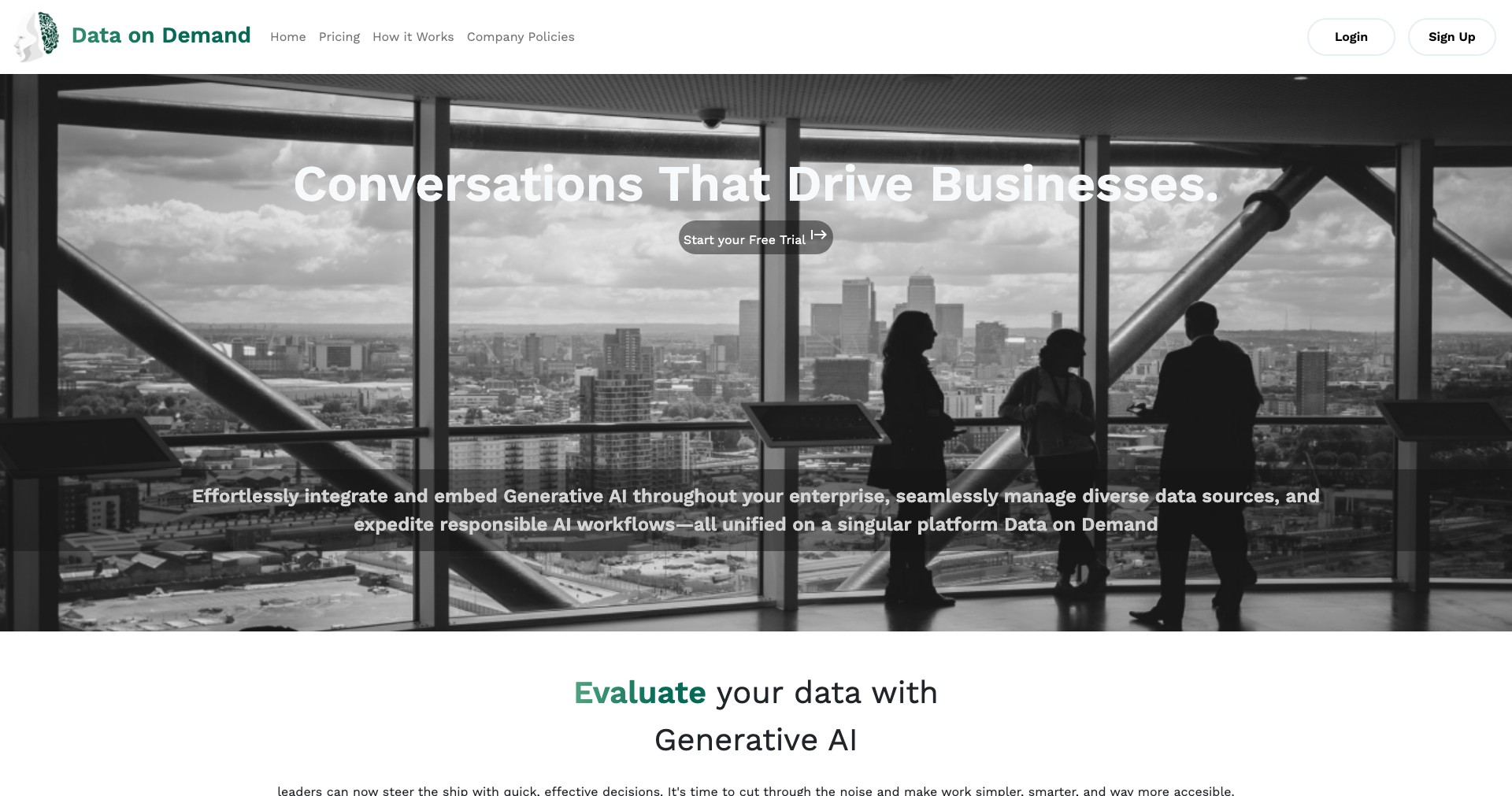
Data on Demand is a powerful analytics and data delivery platform that empowers organizations of any size to access, analyze, and visualize data at their fingertips. Built with flexibility and scalability in mind, it accommodates everything from simple data lookups to complex, real-time analytics workflows.
Whether you’re a business analyst, researcher, or a decision-maker seeking actionable insights, Data on Demand bridges the gap between raw data and informed decisions. Its intuitive interface reduces technical barriers, allowing users with varying levels of expertise to extract the information they need quickly and efficiently.
Key Features:
-
Instant Data Access:
Users can query datasets and receive results instantly, removing bottlenecks associated with traditional data request workflows. This feature lets teams make real-time decisions based on current information. -
Customizable Reporting:
The platform allows users to personalize reports and dashboards with interactive visualizations and branded exports. Reports can be scheduled, shared, and modified to fit specific business needs. -
Advanced Analytics Tools:
Data on Demand offers predictive analytics, trend analysis, and statistical modeling. This enables businesses to uncover hidden insights and anticipate future developments. -
Robust Data Integrations:
With integrations for popular databases, cloud storage, and third-party APIs, the system aggregates data from multiple sources seamlessly, ensuring analytics are both comprehensive and up to date. -
Secure User Management:
Admins can assign granular permissions and define workflows, ensuring each team member accesses only the data relevant to their role. Security protocols protect sensitive information and support compliance.
What makes Data on Demand unique?
What sets Data on Demand apart is its focus on rapid, user-friendly access to both internal and external datasets without requiring complex technical setup. The intuitive interface and customizable queries lower the learning curve compared to traditional BI tools.
In addition, Data on Demand emphasizes integration and automation, providing a unified analytics environment where data flows are streamlined from source to insights. Its combination of scalability, customization, and security make it uniquely suited for dynamic organizations with diverse analytical needs.
Pros and Cons
Who is using Data on Demand?
Business Analysts: Business analysts use Data on Demand to create real-time reports, analyze trends, and present data-driven insights to decision-makers quickly and effectively.
Researchers: Researchers in various fields benefit from instant access to large, structured datasets and robust analytics tools, facilitating in-depth studies and data exploration.
Enterprise Teams: Large organizations or cross-functional teams leverage the platform’s integration and security features to manage workflows, ensure compliance, and foster collaborative analytics.
Evolution and Enhancements
Since its launch, Data on Demand has continually expanded its integration ecosystem to include more database types, cloud providers, and third-party services, making it highly versatile.
User interface improvements have made the platform more accessible, with guided onboarding, self-serve tools, and detailed analytics templates now available for various industries.
Security and compliance protocols have also been enhanced, responding to customer feedback and regulatory standards, ensuring the platform meets the needs of sectors such as healthcare and finance.
Pricing
| Plan | Price | About |
| Professional Subscription | $99/month per user | Includes instant data access, customizable reporting, and basic integrations. |
| Enterprise Plan | Custom pricing | Designed for larger teams with advanced integrations, analytics, and dedicated support. |
Verdict
Data on Demand stands out as a powerful, scalable data analytics solution capable of serving a wide range of industries and user types. Its blend of instant access, customizable reporting, and robust security makes it an excellent choice for organizations aiming to leverage data for real-time decisions.
While enterprise-focused pricing and advanced features may require an upfront investment in onboarding and configuration, the efficiency gains and depth of insights provided make Data on Demand a valuable platform for data-driven organizations.


