OpenEvidence
Last updated: 18 December 2025
What is OpenEvidence?
OpenEvidence is a cutting-edge AI-driven platform created to support healthcare professionals by providing instant, reliable summaries of the latest medical research. Its powerful natural language processing technology parses thousands of scientific articles and clinical trials to offer concise evidence and clinical guidance within seconds.
This tool is particularly valuable for clinicians, researchers, and students who need quick access to quality evidence when making decisions or working on academic projects. By turning a mountain of dense literature into actionable knowledge, OpenEvidence helps users save time and improve accuracy in their practice.
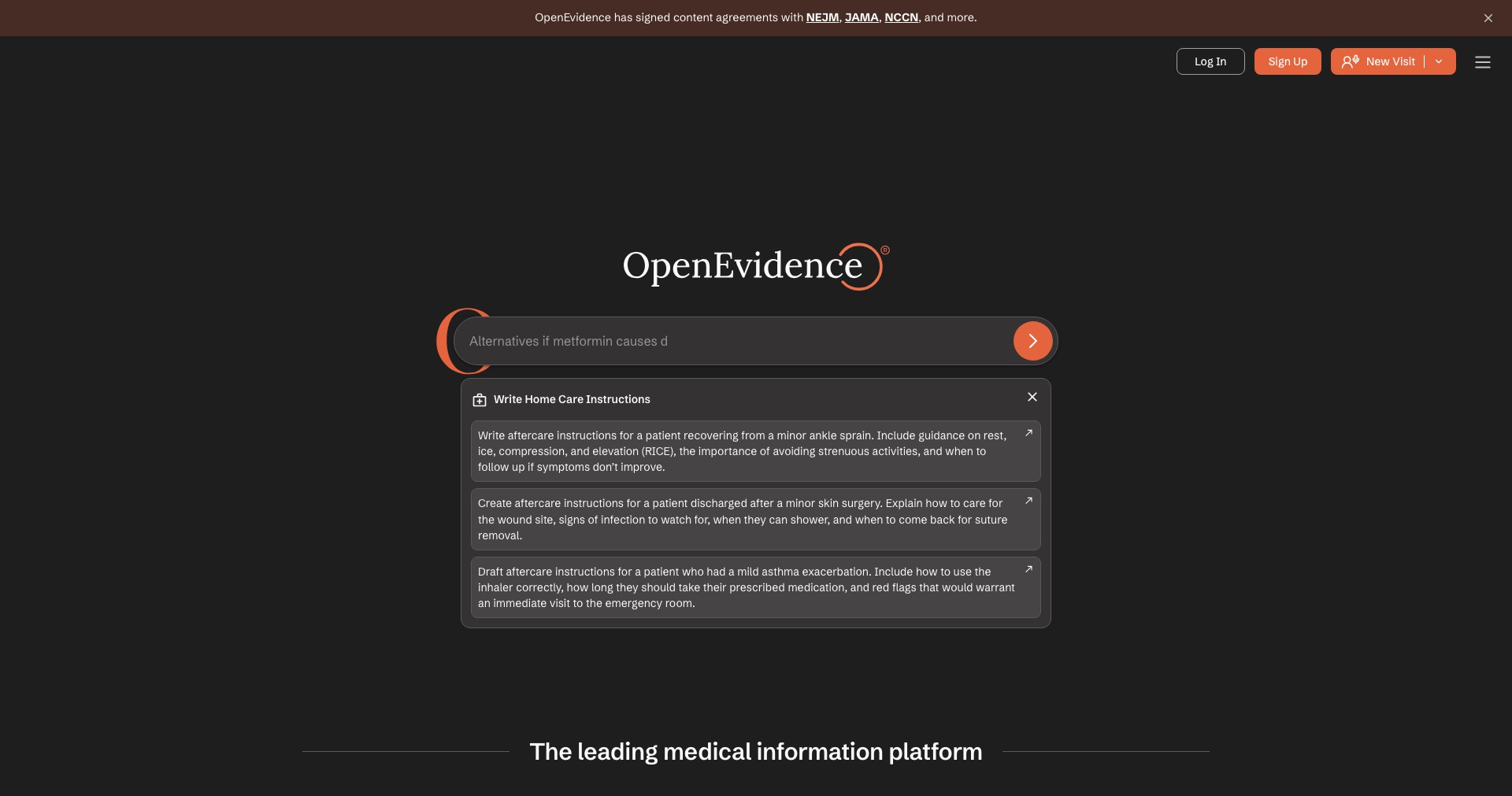
Key Features:
-
AI-Powered Literature Summaries:
Utilizes advanced AI to scan and distill thousands of peer-reviewed articles, clinical trials, and meta-analyses into clear, actionable summaries. This feature ensures that users always have access to the most relevant evidence without having to manually sift through pages of research. -
Customizable Evidence Reports:
Users can generate tailored reports on specific clinical questions or topics, making it easy to share findings with colleagues or include in presentations. -
Up-to-Date Database:
Continuously updates its massive database with the latest published studies and guidelines, keeping users informed on new developments as soon as they are available. -
User-Friendly Search Interface:
Features an intuitive search and filtering system that helps users target the most relevant studies based on specialty, patient demographics, or keyword. -
Integration and Collaboration Tools:
Allows seamless integration with electronic health record (EHR) systems and enables collaborative work among healthcare teams, improving workflow and information sharing.
What makes OpenEvidence unique?
What sets OpenEvidence apart from its competitors is its focus on instant evidence synthesis using advanced natural language processing trained specifically on biomedical literature. Unlike generic AI summarizers, OpenEvidence tailors its algorithms to understand medical terminology, study designs, and clinical context, producing high-quality, trustworthy summaries tailored to clinical needs.
Additionally, its easy-to-use interface and comprehensive integration capabilities make it ideal for use in fast-paced medical environments. The platform not only supports individual research but fosters team-based collaboration and integration with clinical workflows—a feature not commonly found among traditional literature review tools.
Pros and Cons
Who is using OpenEvidence?
Clinicians and Physicians: Doctors and other healthcare providers benefit by gaining instant access to evidence-based recommendations, streamlining decision-making at the point of care.
Medical Researchers: Researchers can swiftly identify gaps in existing evidence, support systematic reviews, and accelerate discovery without exhaustive manual searches.
Medical Students and Educators: Students and educators use OpenEvidence to enhance learning, stay updated on clinical guidelines, and prepare reports or presentations grounded in the latest science.
Evolution and Milestones
Since its launch, OpenEvidence has undergone significant improvements, including expansions of its underlying medical database and advancements in AI summarization models. Early iterations focused on indexing a limited set of journals, but the platform has now broadened its reach to incorporate data from a wide range of international journals and guidelines.
The user interface has been overhauled to improve usability, with enhanced search filters, customizable report formats, and easier integration with hospital IT systems.
Recent updates have focused on collaborative features, including permissions management for teams, and support for multi-user clinical environments, reflecting the platform's growth into an enterprise-ready tool for hospitals and research institutions.
Pricing
| Plan | Price | About |
| Institutional Subscription | Custom pricing | Designed for hospitals, clinics, or universities with access for multiple team members. |
| Free Trial | Free (limited time) | New users can explore platform features at no cost for a trial period. |
Verdict
OpenEvidence stands out as one of the most useful AI platforms for medical professionals seeking to stay current with medical research. Its ability to deliver evidence summaries rapidly and with contextual accuracy makes it invaluable for clinical settings and academic use alike.
While its subscription cost and automated approach may not suit every user, those in fast-paced healthcare or research environments will find its time-saving features and collaborative capabilities well worth the investment.


