QueryBox
Last updated: 18 December 2025
What is QueryBox?
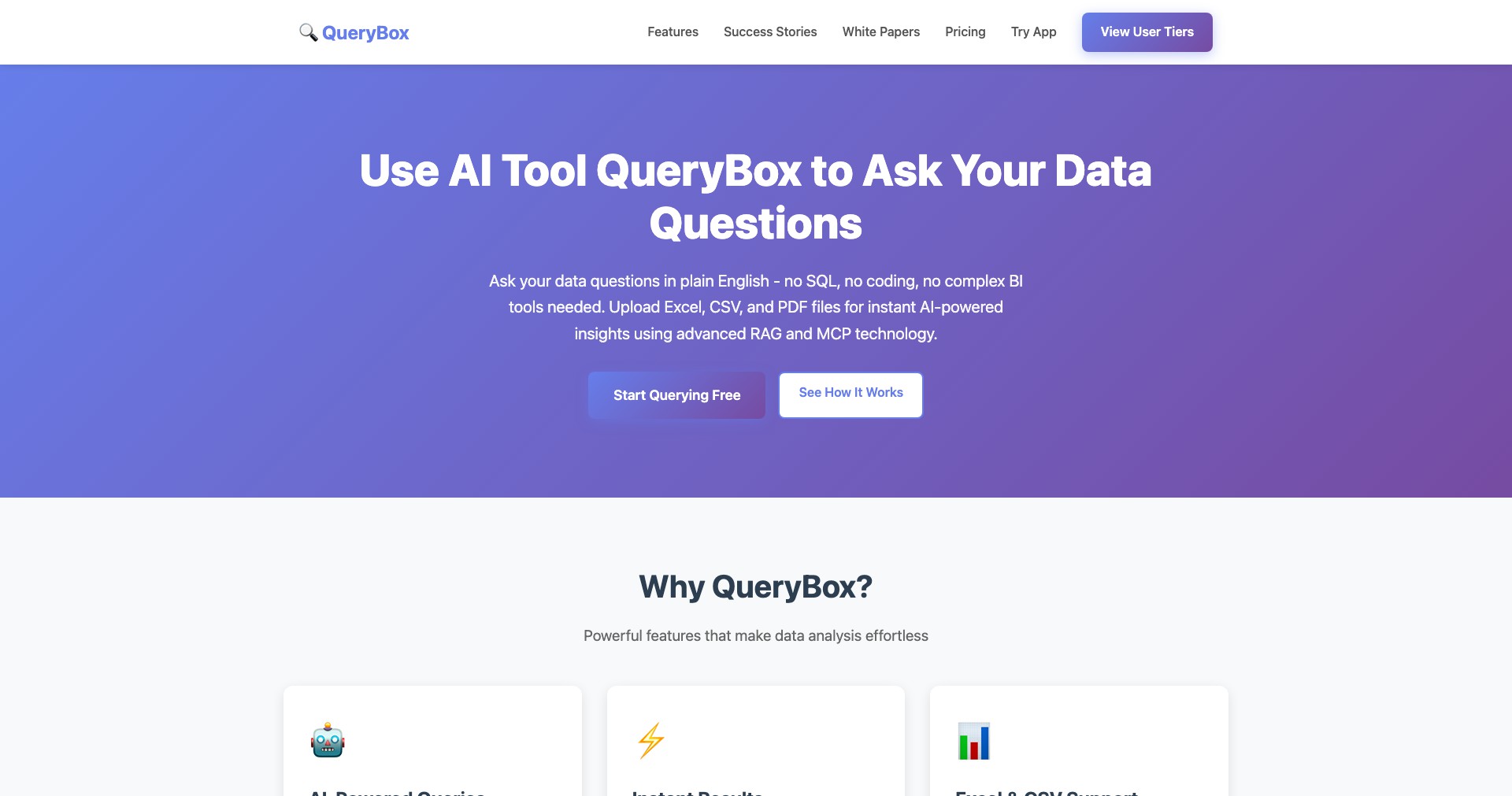
QueryBox is a cutting-edge AI tool designed to democratize data exploration by translating plain-language questions into powerful database queries. Whether you’re an analyst, business user, or developer, QueryBox makes retrieving and analyzing data a seamless process—no advanced SQL knowledge required.
Its intuitive platform serves both technical and non-technical users, removing barriers to complex data analysis and enabling faster decision-making. If you struggle with traditional database querying, QueryBox provides a user-friendly solution to work smarter, not harder.
Key Features:
-
Natural Language Querying:
Users can enter questions in everyday language, and QueryBox interprets and translates them into SQL or other database queries, saving time and making data more accessible. -
Multi-Database Support:
Compatible with various popular databases such as MySQL, PostgreSQL, and Microsoft SQL Server, QueryBox allows users to connect and query different data sources from one interface. -
Smart Query Optimization:
The AI automatically optimizes queries for better performance, ensuring efficient retrieval of results—even with large or complex datasets. -
Visualization Tools:
Built-in visualization features let users instantly create graphs, charts, and dashboards from their query results, enhancing data storytelling and actionable insights. -
Collaboration and Sharing:
Users can share queries, results, and visualizations with team members or stakeholders, enabling collaborative decision-making and knowledge transfer.
What makes QueryBox unique?
What makes QueryBox stand out in the competitive landscape is its sophisticated natural language understanding, which goes beyond keyword matching to grasp the intent behind user questions. This advanced processing ensures more accurate and relevant data retrieval.
Additionally, its seamless integration of query translation, optimization, and interactive visualizations in one streamlined package is a rare combination. This cohesive approach empowers organizations to unlock value from their data without juggling multiple disconnected tools.
Pros and Cons
Who is using QueryBox?
Business Analysts: Business analysts benefit by quickly accessing and analyzing data without relying on technical teams, leading to faster reporting and insights.
Non-Technical Managers: Managers and executives who lack SQL expertise can independently query databases and visualize trends to support strategic decisions.
Data Teams: Technical users and data engineers save time with auto-generated queries, using QueryBox as a rapid prototyping tool or for collaborating with less technical team members.
Evolution and Updates
Initially, QueryBox launched with basic natural language querying for a handful of popular databases, focusing on ease of use for basic questions.
Recent updates have included advanced query optimization, support for additional databases, and the release of robust in-app visualization options, responding to user demand for deeper analytics.
Ongoing development aims to further improve the accuracy of natural language processing, expand integration options for proprietary databases, and bolster collaborative features to support large enterprise teams.
Pricing
| Plan | Price | About |
| Freemium | $0 | Free tier with limited queries and restricted features. |
| Pro | $29/month | Increased query volume, priority support, and advanced visualization options. |
| Enterprise | Custom Quote | Customizable features and integrations for larger organizations, with dedicated support. |
Verdict
QueryBox is a powerful ally for organizations seeking to harness database insights without relying solely on technical expertise. Its natural language querying, combined with smart optimization and collaborative visualization tools, makes it a well-rounded solution for data-driven decision-making.
While it may not replace hands-on SQL expertise for the most complex tasks, QueryBox shines as a time-saving bridge between technical users and business stakeholders. It's a particularly great fit for teams looking to democratize access to data and speed up their analytical workflows.


