UiPath
Last updated: 16 June 2026
What is UiPath?
UiPath is a comprehensive platform for Robotic Process Automation (RPA) that allows businesses to automate repetitive, rule-based tasks typically performed by humans. The platform offers an intuitive interface with drag-and-drop functionality, enabling organizations to design, build, and manage automation workflows at scale without requiring deep coding expertise.
From banking and finance to healthcare, UiPath is transforming industries by enhancing operational efficiency, minimizing human error, and accelerating digital transformation initiatives. Its suite of AI-enabled tools and robust integrations make it a go-to solution for businesses looking to optimize their end-to-end processes.
Key Features:
-
Drag-and-Drop Workflow Designer:
UiPath Studio’s visual workflow builder allows users to create automation by dragging and dropping actions, making it easy for both developers and business professionals to design complex processes without extensive programming knowledge. -
AI Computer Vision:
Leverage advanced AI to accurately recognize UI elements and images across virtual desktops, enhancing automation reliability even with dynamic or changing interfaces. -
Attended and Unattended Automation:
UiPath supports both attended robots (working alongside humans) and unattended robots (fully automated background tasks), giving organizations flexible deployment options to suit various operational needs. -
Extensive Integration Ecosystem:
UiPath seamlessly integrates with popular enterprise applications—like SAP, Salesforce, and Microsoft Office—plus APIs and cloud platforms, allowing organizations to automate workflows across a wide range of software environments. -
Centralized Orchestration & Analytics:
With UiPath Orchestrator, users can manage, monitor, and deploy automation robots at scale, complete with role-based access control, scheduling, and analytics dashboards to optimize and track performance.
What makes UiPath unique?
UiPath sets itself apart with its user-friendly interface, making automation accessible to both technical and business users. Its advanced computer vision capabilities, comprehensive training materials, and robust community ecosystem further distinguish the platform, enabling rapid onboarding and troubleshooting.
Few competitors offer the breadth of attended and unattended automation alongside such extensive integrations and centralized management. UiPath’s continuous innovation—especially in AI and cloud automation—keeps it at the forefront of the RPA industry, making it highly scalable and future-ready.
Pros and Cons
Who is using UiPath?
Enterprise IT Departments: Large organizations with complex digital ecosystems benefit from UiPath’s ability to automate cross-platform workflows, improve compliance, and reduce operational costs through large-scale, unattended automations.
Business Analysts & Process Owners: Business professionals without programming expertise can leverage UiPath’s low-code design to automate repetitive tasks, increasing efficiency and freeing up time for higher-value work.
SMBs Embracing Digital Transformation: Small and medium-sized businesses looking to compete in the digital era can use UiPath’s Community edition or affordable plans to pilot and scale process automation, improving productivity without hiring additional staff.
Product Evolution & Updates
UiPath began as a simple RPA tool and has rapidly evolved into a full-fledged automation platform supporting AI, machine learning, process mining, and citizen development.
Continuous product updates have introduced powerful features, such as AI Computer Vision, cloud-native orchestration, and expanded integration with modern enterprise applications.
UiPath’s commitment to education and an active developer community has fueled ecosystem growth, making it easier for organizations of all sizes to adopt and innovate with RPA technology.
Pricing
| Plan | Price | About |
| Community Edition | Free | Designed for individual users, small teams, and developers to explore RPA solutions with limited capacity. |
| Pro/Enterprise Edition | Custom/Quotation-based | Offers advanced features, scalability, and dedicated support for larger teams and enterprise requirements. |
| Automation Cloud | Tiered, starting at per-user rates | Hosted cloud solution with flexible subscription pricing, including integration and enterprise automation management. |
Verdict
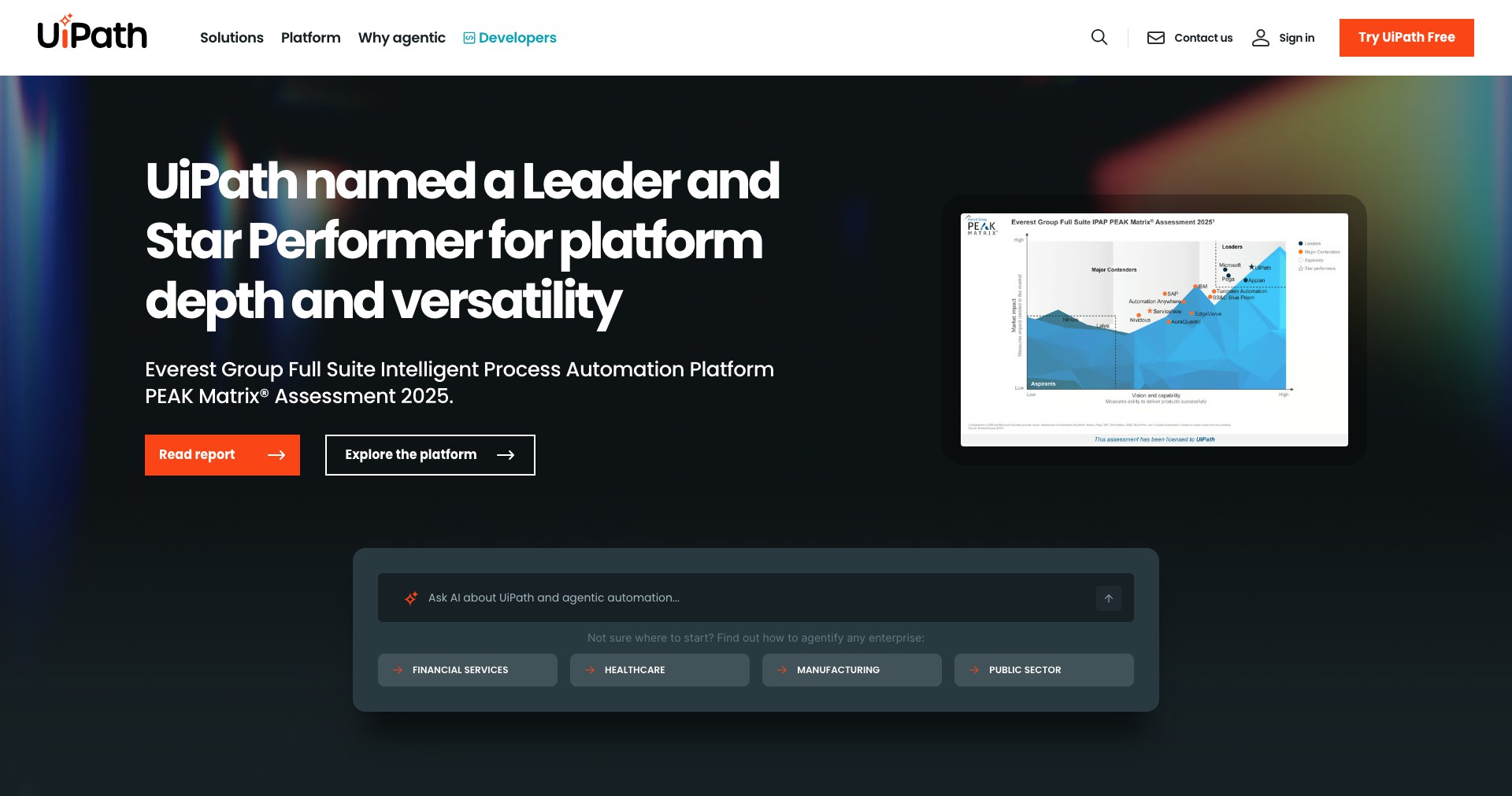
UiPath remains a leader in the RPA landscape, offering a highly accessible, robust, and scalable platform ideal for organizations at any stage of digital transformation. Its strength lies in balancing power and usability—making process automation achievable for developers and business users alike.
Though pricing and potential technical complexity might pose challenges for smaller organizations, its rich feature set, extensive integrations, and proactive development roadmap make it a compelling choice for enterprises prioritizing efficiency and innovation.


