Humans out, AI in: Do Oklahoma layoffs hint at a not-so-distant future?
Oklahoma-based Paycom has become the latest large company to openly acknowledge the impact of automation on its workforce. Some experts say this proves the future will be grim, but others see no significant disruption of the labor market so far.
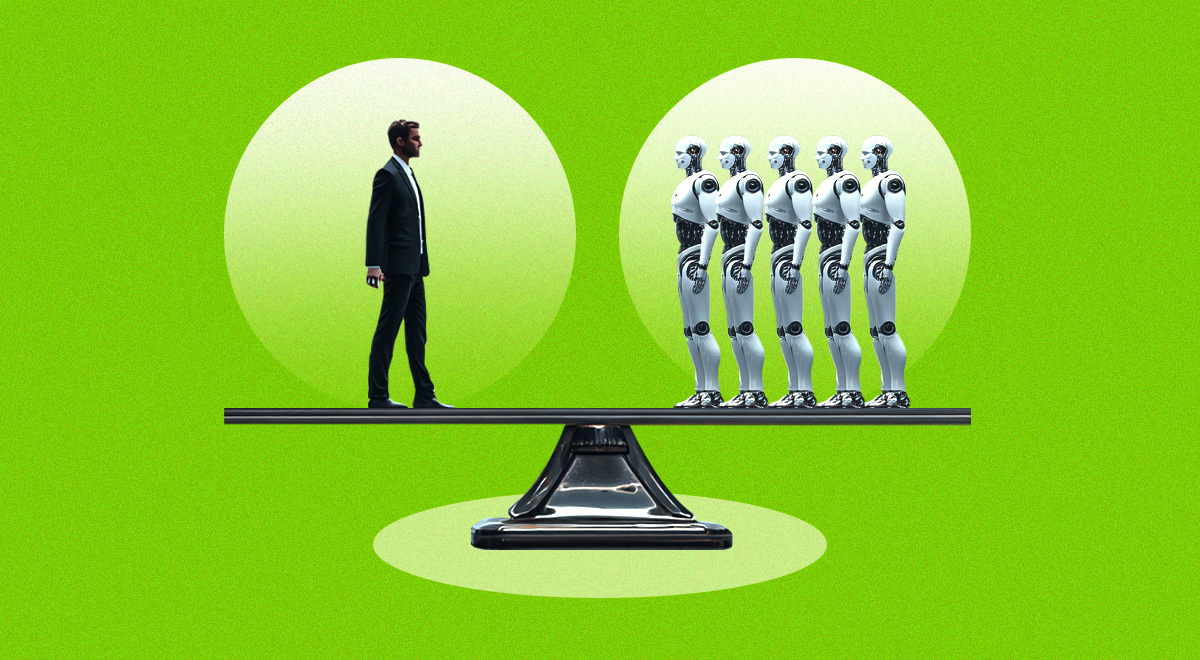
Image by Cybernews.

 Follow us
Oklahoma-based Paycom has become the latest large company to openly acknowledge the impact of automation on its workforce. Some experts say this proves the future will be grim, but others see no significant disruption of the labor market so far.
It’s not a pretty story. On the face of it, job cuts are happening every day, so the fact that Paycom, an HR and payroll software company based in Oklahoma, announced that it was laying off over 500 employees shouldn’t exactly come as a surprise.
However, the company plainly explained that the reason for the firings was “efficiencies in advanced automation and AI-driven technologies.”
That’s different: most firms choosing machines over humans to save operating costs tend not to be very open about it. Worker backlash is a scenario most businesses would like to avoid.
Laptops frozen overnight






However, in a press release shared with The Journal Record, Paycom said: “The updates impact only non-client-facing roles that have been automated, while client-facing roles remain focused on the high-touch, relational service for which Paycom is known.”






The company added that it has recently made significant investments in automating core business systems, which have “created new efficiencies.”
Indeed, in late July, Paycom launched IWant, the HR industry’s first command-driven AI engine, to automate the way all users navigate and access their information within a single database. The writing was on the wall, so to speak.
Besides, even though Paycom is bragging about awards for its workplace culture, it seems that not everything is well on that front, either.
Yes, Paycom has pledged to offer severance packages, outplacement services, and internal job opportunities to those whose positions were eliminated.

But most affected employees were told they couldn’t comment publicly on their situation due to confidentiality agreements.
One employee, though, anonymously told News 4 that she received a text message at 5:00 a.m. alerting her not to come to the office. Her Microsoft Teams access was immediately revoked, and her company-issued laptop was frozen.
The humanoids are coming
Some experts say that the move highlights a much-anticipated shift in corporate strategy to prioritize automation over human labor.
Already in 2023, Goldman Sachs economists Joseph Briggs and Devesh Kodnani wrote in a report that roughly two-thirds of US occupations are exposed to some degree of automation by AI.
“Shifts in workflows triggered by these advances could expose the equivalent of 300 million full-time jobs to automation,” they said.
And that’s what seems to be happening. For example, Accenture has laid off over 11,000 employees, citing AI adoption, and IBM replaced 200 HR roles with AI chatbots.
Microsoft laid off 15,000 people, redirecting resources to Copilot and OpenAI, and Intel plans to eliminate up to 25,000 jobs globally, shifting its focus to AI-centric manufacturing. Of course, the list gets longer every day.
And it might only be the beginning – the era of humanoid robots is almost here, after all, as Bloomberg puts it.
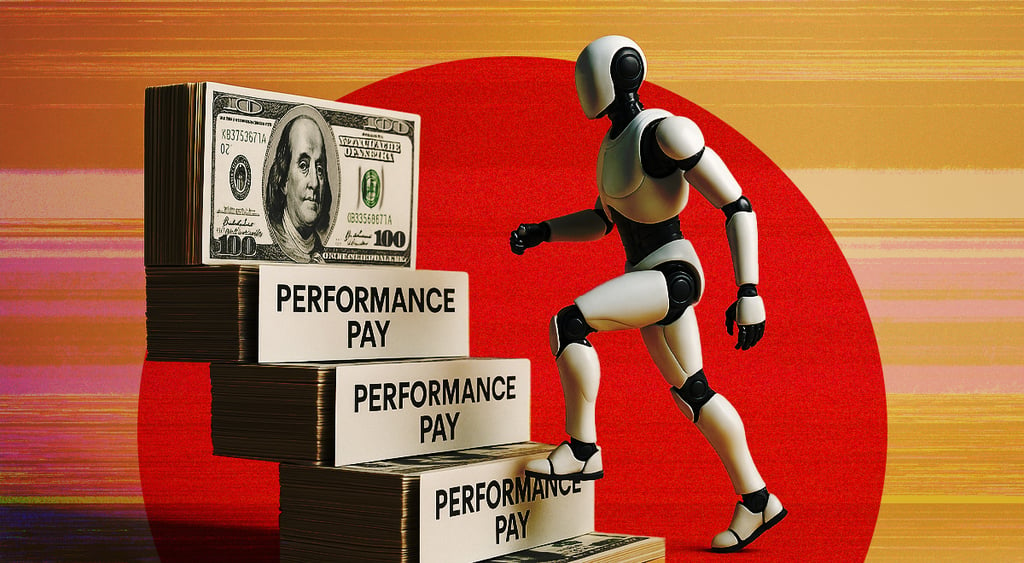
Even if most people overestimate what robots can do right now, some studies forecast nearly 1 billion humanoids in service by 2050 – and they’re much, much cheaper than human workers.
CEO's question: What will be the hourly cost of work of a humanoid robot?
undefined Dr Pero Micic (@PeroMicic) August 31, 2025
Several projections have been published, e.g. by @CernBasher, @adam_dorr and @GoingBallistic5. Here's my take.
I've produced a long-form video on this question (see link in comments).
Here is the… pic.twitter.com/R6DiymVmzk
Dr. Pero Micic, a management expert and founder of FutureManagementGroup, recently said on X that while a skilled worker’s fully-loaded work hour is around $42, a humanoid’s work hour will cost $14 at most.
RethinkX, an independent research organization that forecasts the speed and scale of technology-driven disruption, even projects that a humanoid’s work hour could cost less than $1 by 2035. In other words, it’s not going to be a difficult business decision for most companies.
No significant disruption?
It may be a bit early to panic, though, says the Budget Lab at Yale, a non-partisan policy research center.
After investigating AI's impact on the labor market, researchers said in a new report that measures of exposure, automation, and augmentation currently “show no sign of being related to changes in employment or unemployment.”
Widespread technological disruption tends to occur over decades rather than months or years.
“Overall, our metrics indicate that the broader labor market has not experienced a discernible disruption since ChatGPT’s release 33 months ago, undercutting fears that AI automation is currently eroding the demand for cognitive labor across the economy,” says the report.
The obvious caveat is that widespread technological disruption tends to occur over decades rather than months or years, so it might simply be too early to say whether this time is different.
Unlock more exclusive Cybernews content on YouTube.