Vision GPT
Last updated: 18 December 2025
What is Vision GPT?
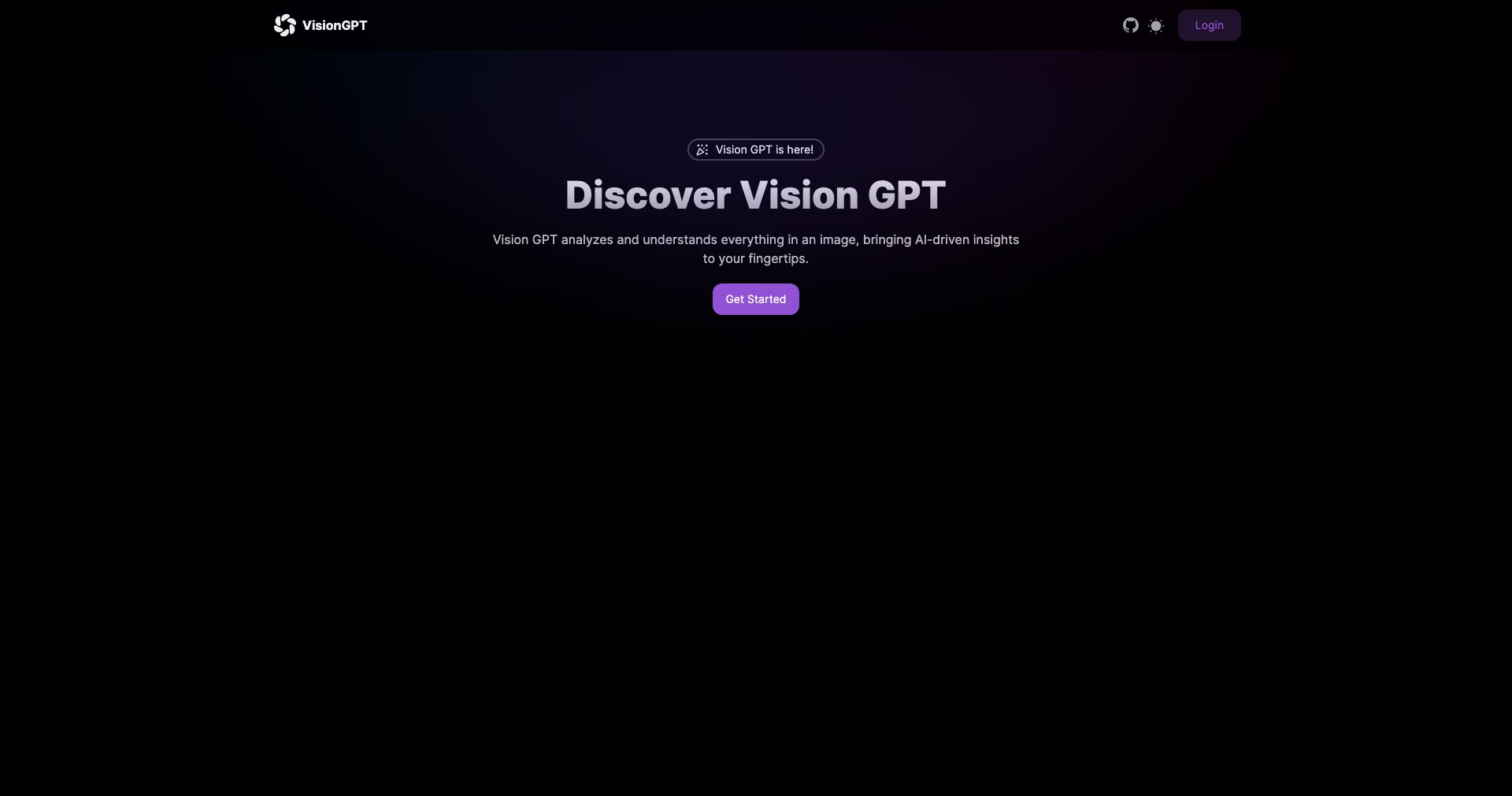
Vision GPT is a next-generation AI model that specializes in understanding and generating insights from visual content such as images and videos. Developed by leaders in artificial intelligence, it leverages cutting-edge machine learning and deep learning algorithms to interpret complex visual data quickly and accurately.
Whether you're a business looking to automate content moderation, a researcher dealing with massive image datasets, or a creative professional seeking smart asset management, Vision GPT offers a versatile platform for transforming how you interact with visual material. Its robust set of features enables more actionable insights and smarter workflows across multiple industries.
Key Features:
-
Advanced Image Analysis:
Vision GPT can interpret and annotate images with high accuracy, identifying objects, scenes, and context to deliver meaningful metadata and insights. -
Video Content Understanding:
The system processes entire video feeds, enabling real-time scene detection, summarization, and event recognition to support security, media, and research needs. -
Natural Language Integration:
Vision GPT bridges visual content with natural language, enabling image-to-text conversion, smart captioning, and visual Q&A features for enhanced accessibility. -
Custom Model Training:
Users can fine-tune Vision GPT on their proprietary datasets, allowing for tailored recognition, classification, and analysis suited to domain-specific requirements. -
Seamless API Integration:
The platform provides robust APIs for easy integration with existing workflows, apps, and cloud environments, ensuring flexibility and scalability for businesses.
What makes Vision GPT unique?
Vision GPT distinguishes itself through its hybrid approach, merging state-of-the-art computer vision with powerful language modeling for deeper contextual understanding of visual content. While other tools focus heavily on either image recognition or language, Vision GPT’s dual capabilities power more nuanced insights and practical applications.
Its ability to undergo custom training on user-supplied datasets and the provision of seamless API support further set it apart, making it highly adaptable to industry-specific use cases. The platform’s commitment to scalability and privacy—by enabling local or cloud-based deployments—offers organizations flexibility that few competitors can match.
Pros and Cons
Who is using Vision GPT?
Enterprise Businesses: Large organizations dealing with massive volumes of visual content, such as e-commerce or media companies, benefit from Vision GPT’s ability to automate content analysis and tagging.
Researchers and Data Scientists: Academic and industrial researchers gain value from Vision GPT’s advanced annotation, summarization, and custom model training features, which streamline the management and analysis of complex image/video datasets.
Creative Professionals and Agencies: Ad agencies, design studios, and marketing teams use Vision GPT to automate asset curation, generate captions, and ensure content accessibility, saving time and enhancing productivity.
Evolving Visual Intelligence
Since its initial release, Vision GPT has expanded from basic image recognition capabilities to a full suite encompassing video analysis, multimodal understanding, and advanced language integration.
Ongoing updates have introduced custom training pipelines, enhanced support for real-time processing, and improved accuracy through continual AI research advancements.
In response to user demands, security features and flexible deployment options have been added, allowing the tool to serve regulated industries and privacy-sensitive applications more effectively.
Pricing
| Plan | Price | About |
| Enterprise Subscription | Custom pricing | Tailored packages for organizations requiring extensive use, dedicated support, and custom integrations. |
| Developer Plan | Varies | Usage-based pricing for developers seeking access to APIs and standard features, with rates depending on volume and features used. |
Verdict
Vision GPT stands out as a sophisticated platform for visual content analysis, merging the power of deep learning in computer vision with natural language processing for unmatched versatility. Its ability to adapt through custom training and integrate with various ecosystems makes it a formidable choice for organizations tackling complex visual data challenges.
While cost and complexity could deter smaller teams or non-technical users, its strengths in accuracy, customizability, and API connectivity make it invaluable for enterprises, researchers, and creative professionals needing robust visual intelligence solutions.


