It’s not schizophrenia, it’s a skedaddle
War and totalitarian-style modern surveillance have become my biggest fears.
By Cybernews

 Follow us
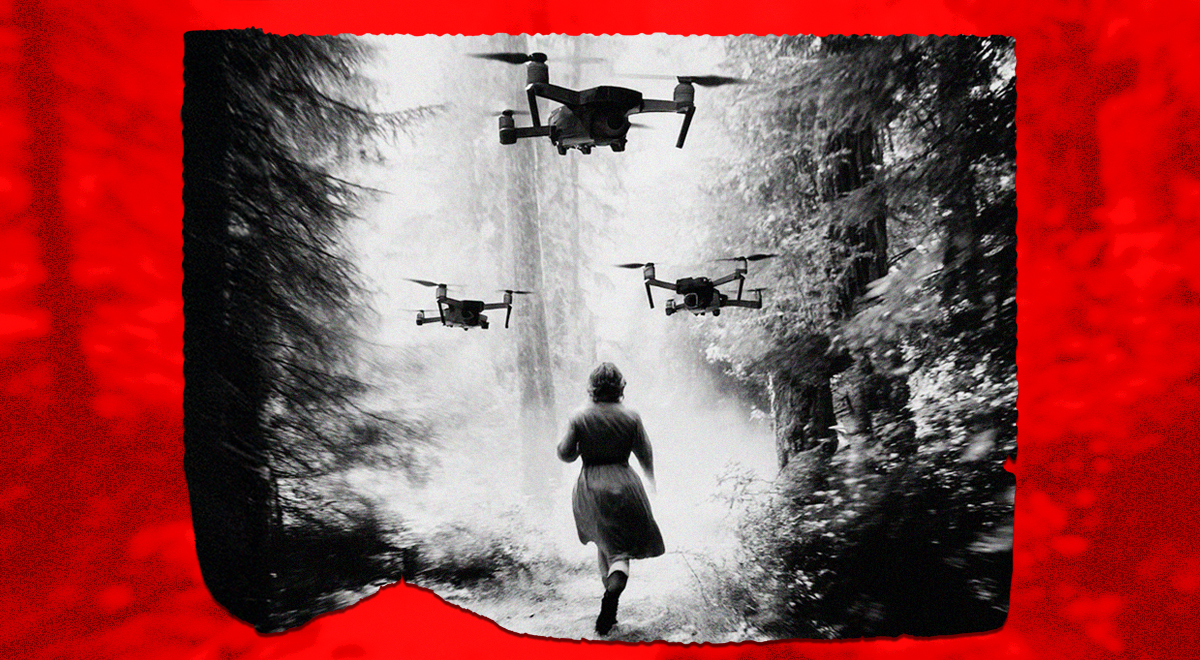
A swarm of drones circles above my head as I, having abandoned my car after it ran out of gas, make for the woods. I drag two cages – my red-breasted parakeet in one and a pair of degus in the other – having already lost my cat in the chaos. I worry whether my family has made it safely across the border into Poland. I can’t call them because, when panic set in, I threw away all my devices for fear of being tracked down.
Just because it’s only happening in my head, does it mean it’s not real?
War and totalitarian-style modern surveillance have become my biggest fears.
For about a month now, everyone’s been talking about Ed Gein’s story, revived by Netflix, and the atrocities by the Bitch of Buchenwald portrayed in the series. Dozens of psychiatrists have been invited to give their two cents on what watching crime documentaries to relax tells us about us.
I don’t exactly relax watching these eerie series. However, because they are distant from me, they give me fewer nightmares than the real world around me. It’s a form of escapism, not a form of relaxation.



To all those judgmental, self-taught "psychology prophets" out there: it's not schizophrenia – it's a skedaddle, to paraphrase the now-infamous line from The Monsters: Ed Gein Story. Escapism at its best.
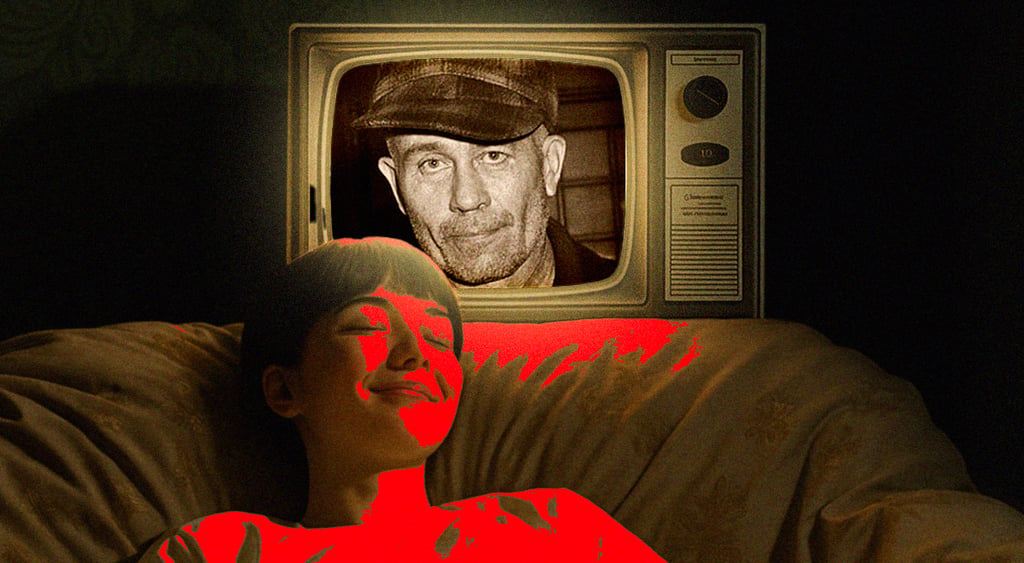
Today, I bring two digitally-enabled brewing catastrophes to your attention. And one book recommendation.






Warlords experiment with technology
Cybernews is based in Vilnius, Lithuania, so the war has hit close to home for us. We’re preparing for the worst: our go-bags are packed, and even small things – like an empty gas tank in my car or the fact that I don’t have a transportation cage for my parakeet when it’s go time – freak me out.
The role of modern technology in warfare is largely uncharted, and emerging applications of disruptive technologies such as AI only add fuel to the fire.
Just a few weeks ago, I was visiting my relatives in Druskininkai, a small Lithuanian town near the border with Belarus. As I jogged through the forest where the borders of the two countries meet, a loud sound like thunder would erupt from time to time. It was the sound of Russia’s Zapad 2025 military exercises. They appear to extend beyond traditional drills, some of which are designed like military parades, to demonstrate power and intimidate an enemy. There are signs of a growing emphasis on cyber warfare and AI tools.
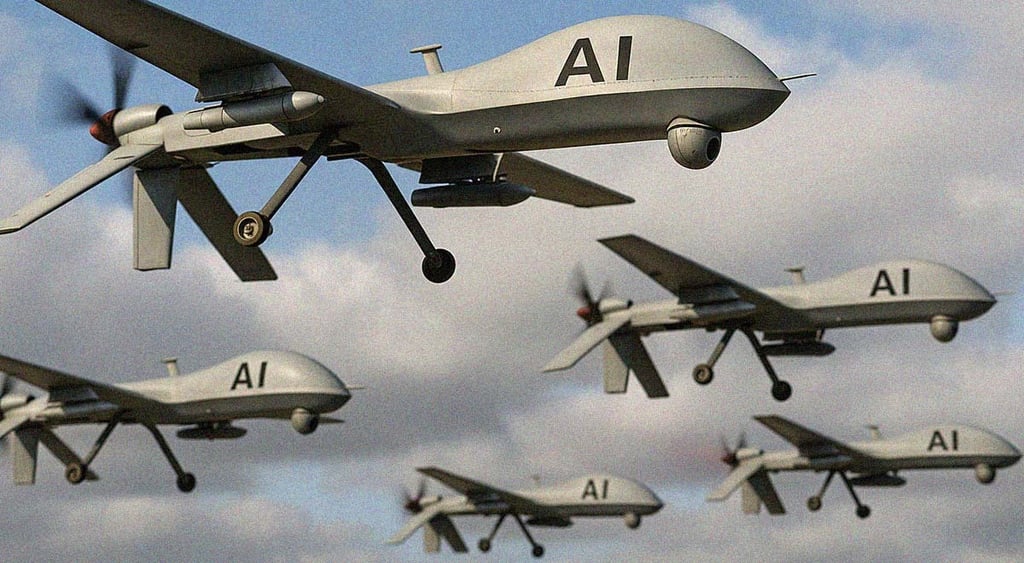
Suspected Russian drones are currently terrorizing Europe. They’re employed to attack targets in Ukraine daily, but are also being sent westwards as they’ve recently flown over critical infrastructure sites in Belgium, Poland, Romania, Denmark, and Germany.
“Even something as harmless as flour from the kitchen – if dropped from a drone – could cause mass panic among the crowd. Fearing the white powder could be poisonous, you’ll have people running to escape and screaming, leading to a high chance that some will be injured or killed in the stampede,” Ash Alexander-Cooper, Vice President for the EMEA and APAC regions at Dedrone by Axon, one of the leading drone defense companies in the industry, recently told Cybernews.
The hybrid war is on, and it has paralyzed Europe.

Orwellian present
Nietzsche is dead, but so is God, and so is privacy. We love pointing fingers at China, highlighting the utopia of a social credit system while building a panopticon for ourselves at the same time.
It turns out that even if you don't have any devices with you, you can still be identified. Walk past a WiFi router and bam, you're busted.
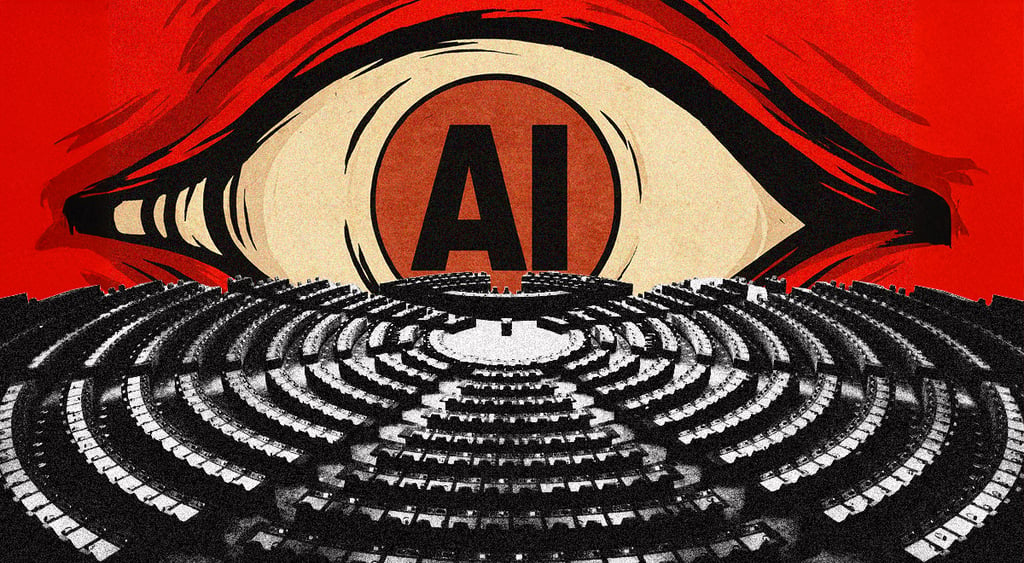
There’s a growing debate on an Orwellian future where governments abuse AI to centralize power and force compliance.
Our governments and adversaries alike can tap technology to profile and track us. What's more disturbing is that we give up without a fight and imprison ourselves in the panopticon in exchange for tailored content and trashy personalized Reels or Shorts.
We’ve built ourselves an Orwellian present. I don’t see how I could disappear into the night if I needed to during wartime. As in totalitarian regimes, the only space free from surveillance and control that I have now is my mind’s palace.
Book recommendation
But when you skedaddle, where do you land? Unless you’re in real danger, books are a great way to escape. And since I mentioned Orwell a few times, I'd like to recommend one of his books this time.
If you aren’t familiar with George Orwell or the metaphors associated with him, you should probably start with Animal Farm and 1984.
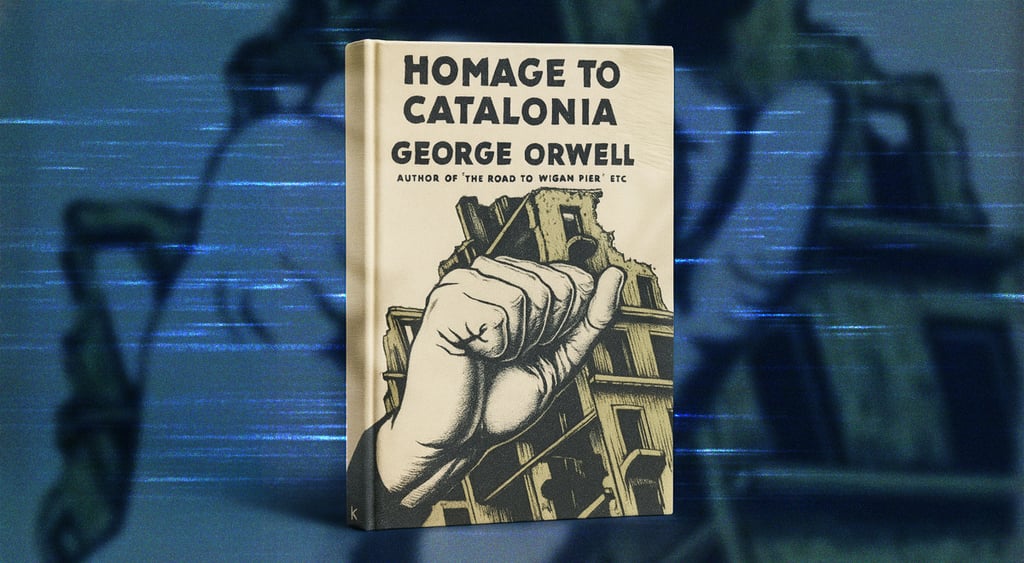
However, perhaps Orwell's best (and most unexpected) book is Homage to Catalonia – a memoir in which the author recounts his personal experiences in the Spanish Civil War.
I loved it because it was full of dark humour. What else but laughter can help relieve the weight of pain sitting on our chests?
Follow for more
More from Cybernews
- The integration of various popular apps has brought ChatGPT closer to becoming the "everything app" that Elon Musk dreams of but hasn't yet succeeded in building. But can it become the Western version of the Chinese WeChat?
- California became the first state to force browsers to include global browser-level privacy controls. Starting in 2027, browsers must offer Californians a way to send an opt-out preference signal to websites, which must be respected.
- A new report from the British Standards Institution (BSI) suggests artificial intelligence (AI) will continue to cut entry-level jobs.
- A new study by Anthropic, the AI company behind Claude, has found that poisoning large language models (LLMs) with malicious training is much easier than previously thought.
- A new study has analyzed almost five million prompts submitted to the AI image generator Midjourney. The results listed the artists, directors, and brands that are most often mentioned in users' prompts.