Wait, what? WiFi signals can be used to ID you even if you carry no device
Your local cafe’s WiFi might reveal who you are, even if you’ve never connected to it. Researchers warn that WiFi networks can identify people without phones or devices, raising major privacy and surveillance concerns for everyday users.
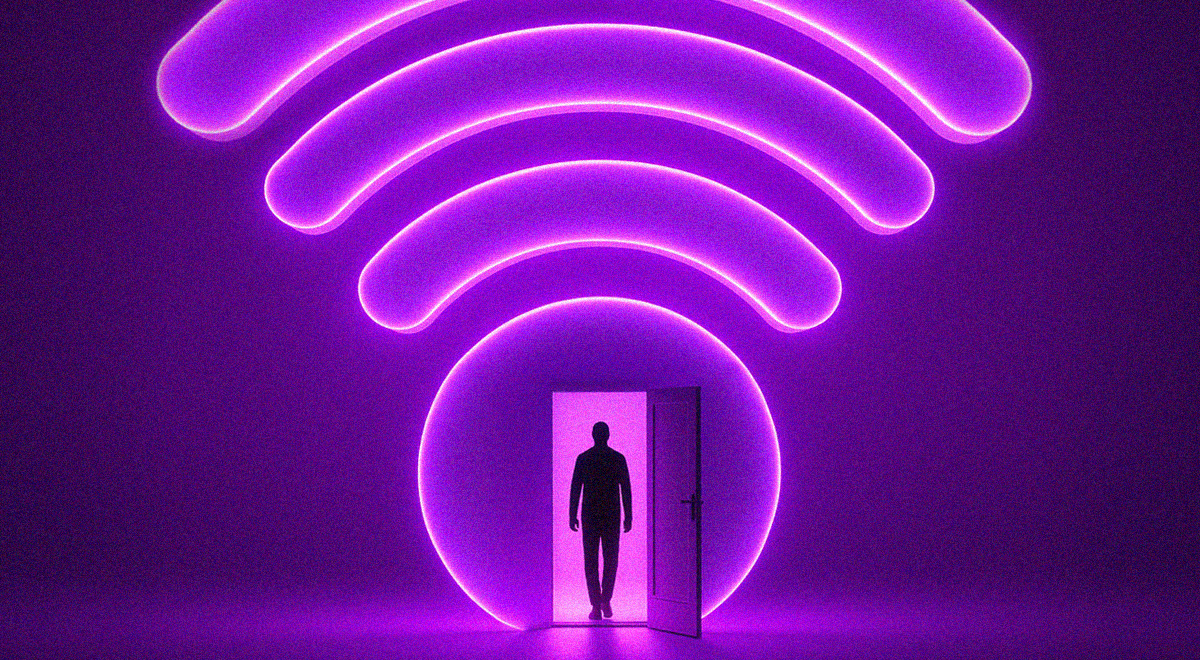

Your local cafe’s WiFi might reveal who you are, even if you’ve never connected to it. Researchers warn that WiFi networks can identify people without phones or devices, raising major privacy and surveillance concerns for everyday users.
Researchers from the Karlsruhe Institute of Technology (KIT) in Germany have discovered that it’s possible to identify and recognize people solely through WiFi signals, even if they’re not connected to a network or carrying a device at all.
As long as there are WiFi networks nearby, you’re effectively visible. Simply walking by your favorite coffee shop or someone’s home router could leave a digital footprint.
“By observing the propagation of radio waves, we can create an image of the surroundings and the persons there,” said Professor Thorsten Strufe from KIT’s Institute of Information Security and Dependability.
"This works similarly to a normal camera, the difference being that in our case, radio waves instead of light waves are transformed into an image," explained Strufe.











Devices connected to a network regularly send small “beamforming feedback” signals to routers. These signals are unencrypted and can be read by anyone within range.
When processed through a machine-learning model, they can produce images of people’s shapes and movements, effectively turning WiFi waves into a kind of X-ray camera.
Once trained, the system could identify individuals with almost 100% accuracy, regardless of their angle, gait, or position.
This eyebrow-raising discovery might have severe implications for privacy and security.
“This technology turns every router into a potential surveillance tool,” noted one of the researchers, Julian Todt.
CCTV is still the easiest way to track people, but WiFi is far more pervasive. However, researchers point out that routers are everywhere quietly pulsing radio waves through everything and everyone nearby.
In theory, public authorities, companies, or anyone with access to the right data could recognize you, all without a single camera or phone involved.
Why does it matter?
The KIT team says the implications are massive.
"The technology is powerful, but at the same time entails risks to our fundamental rights, especially privacy," said Strufe.
Have thoughts about this topic? Others do, too. Join them in the discussion.
They warn that such methods could be weaponized, particularly in authoritarian countries where identifying and tracking citizens could be done in secret.
To avoid that future, the researchers are urging regulators and developers to bake privacy protections into the next major WiFi standard, IEEE 802.11bf, before this kind of “radio vision” becomes mainstream.
Unlock more exclusive Cybernews content on YouTube.