The 5 best eCommerce platforms for 2026: a definitive comparison
Our team of experts and researchers rigorously test and evaluate website builders through transparent, in-depth testing procedures and methods using both in-house and industry-approved tools.
Drawing on cybersecurity insights, we provide unbiased, empirical rankings and analysis to help users make informed digital platform choices.
Learn more

eCommerce is rapidly overtaking traditional commerce, with trillions in global sales expected in 2026. In this environment, choosing the best eCommerce platform isn’t just a technical step but a strategic decision that will affect your business’ security, scalability, and long-term growth. A reliable platform should not only power your online store but also protect customer data, support integrations, and adapt as your business grows.
With so many eCommerce website builders claiming to do it all, identifying the right fit can be challenging. With the help of our research team, I analyzed the top providers and found the 5 best eCommerce platforms to help you choose one that aligns with your business model and goals.
5 best eCommerce platforms in 2026
- Wix – overall best eCommerce platform
- Shopify – best platform for scaling your business
- BigCommerce – platform for businesses with large product catalogs
- WooCommerce – highly customizable and open-source eCommerce platform
- Squarespace – design-first eCommerce platform, ideal for creatives
Best eCommerce platforms in 2026 – my detailed list
After analyzing the top eCommerce platforms, the research team and I narrowed the list down to the best 5 options. The providers below will help you build, manage, and grow your online store with easy-to-use interfaces, reliable performance, helpful marketing tools, and good value-for-money subscription plans.
1. Wix – the most versatile all-in-one eCommerce solution

| Rating: | |
| Price: | $11.75/month |
| Payment gateways: | Wix Payments, PayPal, Stripe, Square, and more |
| Current deal: | Get Wix with 50% OFF |
Well-suited for both beginners and experienced users, Wix eCommerce offers a wide selection of customization and marketing tools, AI-powered features, and professional eCommerce capabilities, allowing website owners to cover their needs in one place while supporting growth from small stores to large-scale operations.
Unmatched design freedom
One of Wix’s key benefits is its design flexibility. You can select from more than 2000 existing templates, write a prompt for Wix’s AI website builder (Wix Harmony), or create a custom design yourself – which still works for beginners thanks to intuitive navigation and no-code design features. This ease of use, design-first approach, and flexible customization options are what position it above Shopify, which has a more structured, fixed design and advanced features.
Wix’s famous drag-and-drop editor allows store owners to customize layouts more visually, quickly changing animations, interactive details, color palette, and other details, which is essential for building a more distinctive brand identity.
Wix’s advanced eCommerce features
Wix combines ease of use with advanced retail capabilities, offering tools for high-performance stores and growing businesses. From product management and automated tax calculations to AI-powered product recommendations and advanced abandoned cart recovery features, Wix’s eCommerce platform provides a complete toolkit for increasing conversion and average order value.

Stand out capabilities include:
- Free website templates designed specifically for online stores
- Extensive marketplace integrations (Amazon, eBay, Etsy, Facebook, Instagram, and more) through Wix Apps
- Advanced tools for subscriptions, memberships, print on demand, dropshipping, and service-based offerings, supporting diverse business models
- Global and omnichannel eCommerce with multilingual storefronts, multi-currency payments, marketplace and social selling, mobile apps, and integrated point-of-sale systems for online and offline sales
The power of AI in 2026
AI plays a central role in Wix’s ecosystem. Wix Harmony, the hybrid creation experience that blends vibe coding with limitless drag-and-drop in one interface, lets you create an online store with a simple prompt, generating or adjusting pages, sections, images, and even texts, all while allowing manual edits if needed.
Additionally, AI agents accessible via the dashboard guide users through platform navigation, website content management, inventory tracking, performance tracking, and growth optimization, making Wix a scalable and smart eCommerce solution.
Integrated business suite
Wix also provides a unified platform for business operations, including domain registration, CRM and SEO optimization tools, email marketing, and booking systems. This allows users to manage multiple tasks from one dashboard, streamlining workflows and supporting long-term growth and customer retention.
Why Wix wins for small to medium businesses
For many entrepreneurs, Wix balances advanced features with accessibility, providing professional eCommerce tools while remaining user-friendly. Its combination of high-performance retail features, customer retention tools, multi-revenue support, global operations, and robust technical infrastructure makes Wix a platform that scales with your business. For businesses seeking an all-in-one solution that can grow alongside them, Wix is a strong choice against other eCommerce platforms.
2. Shopify – the industry standard for scaling

| Rating: | |
| Price: | $29.00/month |
| Payment gateways: | Shopify Payments, Stripe, PayPal, Amazon, and more |
| Current deal: | Try Shopify free for 3 days + 3 months for $1 |
Shopify has spent more than a decade focusing almost exclusively on the eCommerce infrastructure and is often considered one of the most reliable online store builders on the market – fit for high traffic and busy e-stores.
Built for high-volume sales
One of Shopify’s key strengths is reliability when handling high traffic. This is especially helpful during sale campaigns that create spikes in visitors and transactions (like seasonal promotions or Black Friday), when running a rapidly growing business, or if you simply worry about unpredictable traffic patterns.
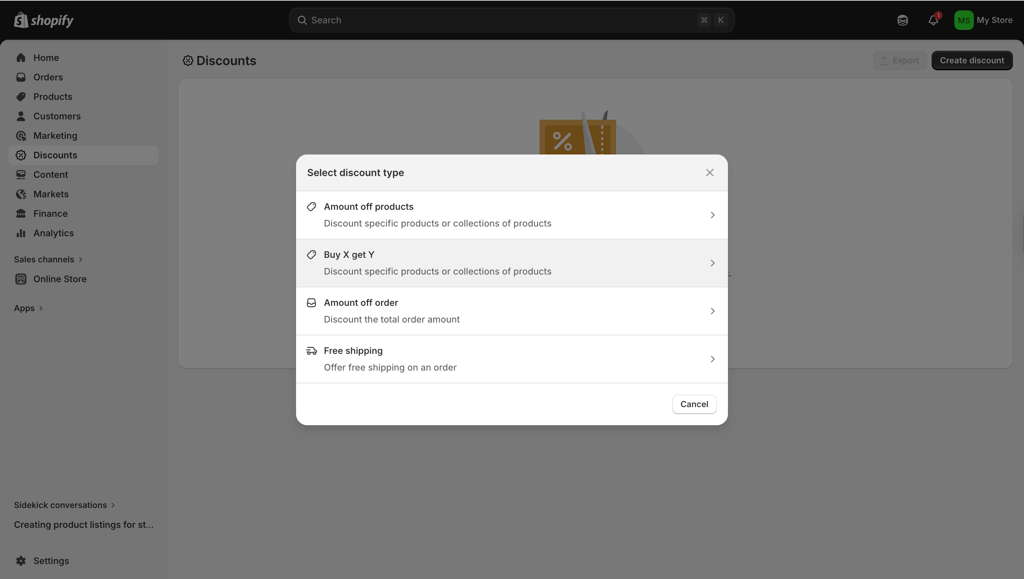
The app store ecosystem
Another thing that makes Shopify stand out is its extensive app ecosystem available through its app store to extend your website’s functionality. The selection ranges from translation tools to email marketing and SEO optimization.
However, while this can help customize your store and its capabilities, the abundance of apps without a clear vision can also result in overcrowding your dashboard. Another downside worth keeping in mind is the gradually increasing costs, as only selected apps are available for free.
Transaction fees and payments
Like Wix, Shopify has its own payment system called Shopify Payments, which aims to eliminate the need for a third-party payment provider or merchant account – instead, you’re able to automatically accept most major payment methods. However, if you still prefer external payment providers, this may result in extra charges, raising the overall cost of using the platform once again.
3. BigCommerce – the choice for complex catalogs

| Rating: | |
| Price: | $29.00/month |
| Payment gateways: | PayPal, Stripe, Adyen, Authorize.net, and more |
| Current deal: | Get up to 25% OFF BigCommerce! |
BigCommerce is another platform aimed at growing or big-scale enterprises, especially when it comes to more complex operations and reduced reliance on third-party apps. For businesses with large product catalogs that aim for long-term usability and international operations, it’s an option worth considering.
Native features vs apps
One of BigCommerce’s biggest benefits is its focus on native features where platforms like Shopify would rely on third-party apps – with tools like catalog syncing and multi-currency support already accessible via the dashboard (although integrations are also available). This keeps operations centralized, which is especially beneficial for busy and international businesses with multiple products.
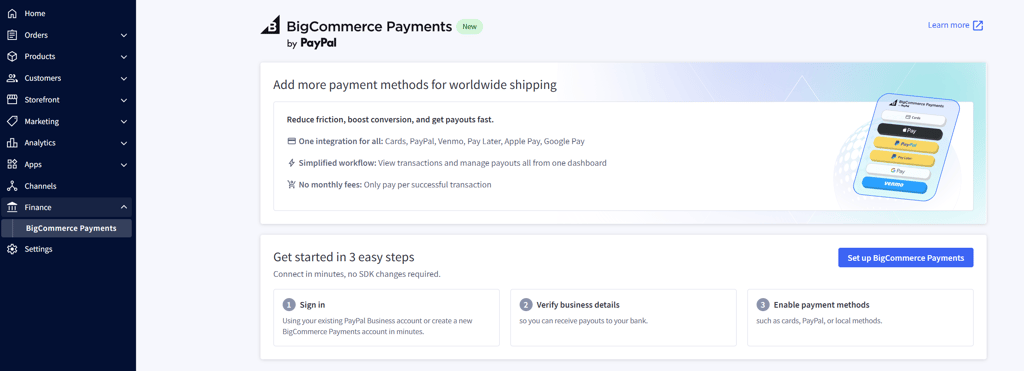
Enterprise-grade SEO
With search visibility essential for eCommerce, BigCommerce places an emphasis on SEO as well – helping you develop a strategy for better search results and recognition. Some of the key offerings include customizable and automated URLs and metadata, automated redirects, enhanced listings, and SEO optimization.
BigCommerce also claims to offer increased site speed thanks to its CDN (content delivery network) that ensures the site loads quickly, with its ranking improved in the process.
The trade-off: complexity
The impressive feature depth may also result in a trickier onboarding process, especially compared to user-friendly builders like Wix or Squarespace – making BigCommerce a more intimidating option for beginners. While this will be manageable for bigger companies, solo entrepreneurs and first-time launchers may find the platform overwhelming.
4. WooCommerce – an open-source powerhouse

| Rating: | |
| Price: | Free (requires server) |
| Payment gateways: | WooPayments, Stripe, PayPal, Square, and more |
| Current deal: | Get WooCommerce for free! |
WooCommerce is an open-source platform for WordPress that promises you high customizability and full control over the site’s processes, from marketing to payments. Best fit for businesses looking for full control and tech-savvy users, it’s easily one of the most popular eCommerce tools on the market – thanks to WordPress’ global domination.
Infinite customization (if you have the skills)
While there are hundreds of extensions and customizable themes available for your website at an additional price, WooCommerce is an open-source software above all, meaning developers can write and modify the code, taking personalization to a whole new level.
For technically skilled teams, WooCommerce provides almost limitless possibilities, allowing for enhanced scalability, custom design, and a unique user experience.
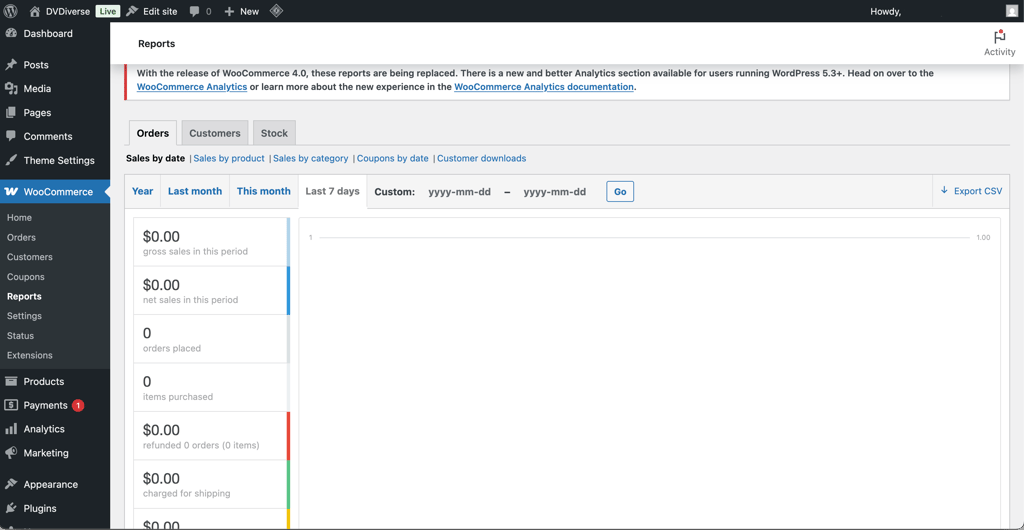
The burden of maintenance
Unfortunately, flexibility and personalization come at a price, as you might need to manage your own hosting environment, maintain security updates, and ensure plugin compatibility. For entrepreneurs without a technical background or a dedicated team, this can become an overwhelming and time-consuming task. If you need an easy-to-use eCommerce platform, Wix is a better choice, as it’s fully managed and has AI tools for faster website design.
Cost variability
Technically, WooCommerce is free, but the total cost of ownership can vary widely as you start to customize your experience. Additional features, compliance tools, premium extensions, and even website themes all come for an additional fee, which means the price will increase together with your site’s overall complexity.
5. Squarespace – for the design-conscious creative

| Rating: | |
| Price: | $16.00/month |
| Payment gateways: | Squarespace Payments, Stripe, and PayPal |
| Current deal: | Get up to 36% OFF Squarespace |
While some platforms emphasize large-scale retail operations, Squarespace focuses on design and creative branding. This can make it especially attractive to artists, boutique brands, and shops that heavily depend on visual presentation.
Stunning visuals and templates
One of Squarespace’s strengths is its design-first approach and an impressive collection of templates with a huge focus on the visual aspect. Layouts are designed with creative professionals in mind, especially fit for portfolios, digital products, and visually driven stores. And even if you can’t find the right template for your needs, Squarespace offers an AI website builder for personalized solutions.
Simplified eCommerce tools
Despite its focus on design, Squarespace also includes integrated eCommerce functionality such as product listings, secure checkout, order management, SEO optimization, and email campaigns, among others, somewhat reducing the reliance on third-party tools.
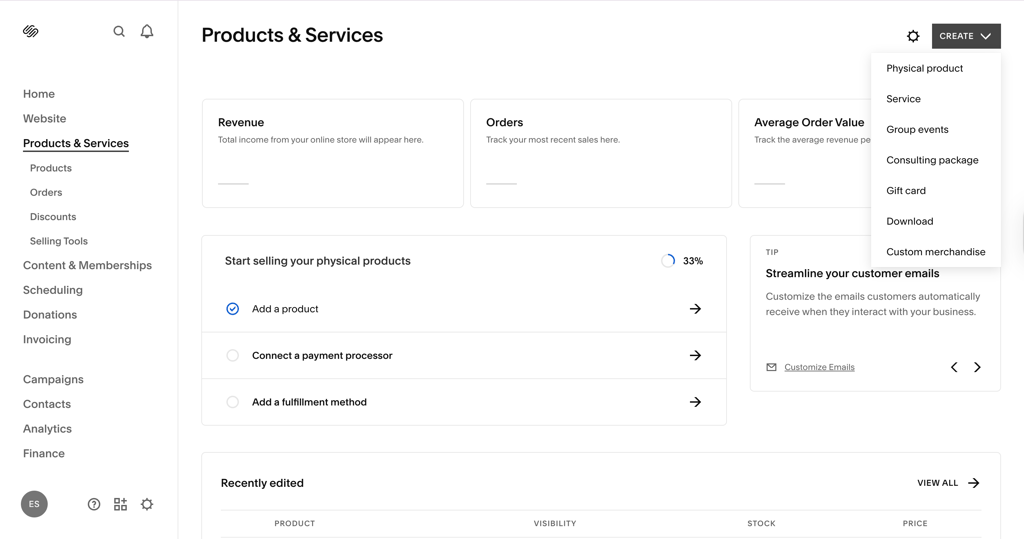
However, compared to Wix and Shopify, Squarespace offers fewer advanced eCommerce capabilities, such as large-scale inventory management or extensive multi-channel selling, meaning you might require additional resources and platforms. While it won’t be a problem for smaller businesses, scaling enterprises might feel limited.
Strategic comparison: which platform is right for you?
To find the best web builder for eCommerce, you need to consider your business’ scale and goals. Some platforms prioritize ease of use and reduced reliance on third-party tools, while others focus on scalability and advanced customization features – which is why it’s important to understand your needs and priorities.
Best for beginners and solopreneurs
For solo entrepreneurs, rookies launching their first online store, and startups, simplicity, easy onboarding, and user-friendly navigation are essential when launching and managing the website.
That’s why Wix stands out as an all-in-one solution that combines advanced features and customizability with accessibility and drag-and-drop design. It also covers website creation, domain registration, marketing tools, SEO optimizations, and advanced eCommerce tools, allowing you to keep all processes within a single dashboard.
Best for rapidly scaling startups
If your business is expecting significant growth or builds its strategy on sales and promotions and wants to prioritize reliability, Shopify may prove a good option for scaling – designed specifically for eCommerce and with a reputation built on handling high traffic volumes and order influx. That said, it also heavily relies on additional fees and payments, which may be a turnoff for some business owners.
Best for developers and tech-savvy owners
If you feel confident dealing with code or have a business with development resources, the open-source flexibility of WooCommerce can provide you with advanced customization options for WordPress-powered systems. Developers can modify almost every component of their store, create custom functionality and unique user journeys – which wouldn’t be possible with closed platforms.
Best for large enterprises with complex needs
Companies with large inventories and international operations that require advanced features like multi-currency support or catalog syncing can benefit from BigCommerce. It offers reliable functionality for bigger businesses, with advanced built-in tools and flexible SEO capabilities included in the package.
Future trends: eCommerce in 2026 and beyond
eCommerce is constantly evolving, with new tools and approaches emerging rapidly. Here are some of the latest trends that are currently in the spotlight – set to reshape how online stores operate.
The rise of social commerce
Social media is now also a shopping channel – often encouraging shopping within the platform instead of redirecting customers to external websites. TikTok, Instagram, Facebook, and many others are placing a bet on in-app purchases, meaning classical eCommerce platforms also need to adjust to the new reality.
Many sites integrate these channels directly into their dashboards to align and synchronize catalogs, expand their reach and target audiences, and build a smoother customer journey.
AI-driven personalization
Artificial intelligence is getting increasingly integrated into eCommerce strategies, with platforms relying on it for a whole range of purposes.
In addition to handling design-related tasks (such as building custom websites based on prompts), AI-powered functionality can help businesses analyze customer behavior and adjust the shopping experience accordingly, optimize pricing, and build personalized marketing strategies, increasing engagement and conversion rates.
Sustainability and ethical shopping
Sustainability and ethics are also taking the center stage, with consumers paying closer attention to how products are sourced, manufactured, and shipped. That’s why many businesses also choose to highlight sustainable practices, such as transparent supply chains and eco-friendly shipping options, during the checkout process.
It’s a long-term investment, building brand reputation and customer trust for years ahead, which may prove decisive in the competitive eCommerce market.
FAQ
Which eCommerce platform is the cheapest?
The cheapest platform depends heavily on which plan you choose and which add-ons you purchase. For example, although WooCommerce is initially free, getting extensions will gradually raise the price. Meanwhile, Wix, which offers a free plan, and Shopify stand out for offering cheaper starter plans, at $11.75/month and $29.00/month, respectively.
Can I switch eCommerce platforms later?
Yes, you can switch eCommerce platforms, although it’s a complicated process that usually requires specialized tools and extensive manual efforts, as well as adjusting design layouts and integrations in some cases. In order to avoid costly and time-consuming transitions later, choosing a platform that fits your long-term goals at the start is essential.
Do I need to know how to code?
No, unless you select a website builder targeted specifically toward developers and open-sourcing. Today, most leading eCommerce platforms are designed with beginners in mind, offering drag-and-drop interfaces and easy navigation. While coding can offer you additional customization opportunities, in most cases, it’s avoidable.
Which eCommerce platform is best for SEO?
While most platforms offer SEO tools, Wix is considered the best choice due to its built-in SEO suite, high-performance managed cloud hosting, strong scores in Core Web Vitals, and deep integration with Google and other indexing tools. While the platform provides powerful features, ultimate SEO success depends on your content and marketing strategy.
How do I handle international shipping and taxes?
Many eCommerce platforms automate aspects like shipping and taxes, using either built-in tools or various extensions to convert currencies, integrate multiple payment systems, handle localization, and calculate taxes. However, while this can help automate and simplify processes, it’s always worth double-checking with a legal expert to ensure your website’s compliance.