Sinister cybercrime subculture “The Com” is poisoning young minds, FBI warns
The Com is not a traditional cybercrime gang but a sinister, decentralized cybercriminal network spreading rapidly among youth aged 11 to 25. This online subculture operates secretly across many Discord, Telegram, and private forums, and it blends hacking, violence, and exploitation.

Image by Cybernews.

 Follow us
The Com is not a traditional cybercrime gang but a sinister, decentralized cybercriminal network spreading rapidly among youth aged 11 to 25. This online subculture operates secretly across many Discord, Telegram, and private forums, and it blends hacking, violence, and exploitation.
The FBI calls The Com – short for The Community – one of the most urgent online threats to young people, warning the public about the growing dangers it poses.
They’re not vigilantes and have no intent to enforce any version of justice. The Com is only motivated by money, notoriety, retaliation, and exploitation.
The sophistication of The Com's criminal activity has grown over the last four years, and now young members involve themselves in the most sinister and serious online crimes, including sextortion, swatting, child exploitation, and physical violence-for-hire.
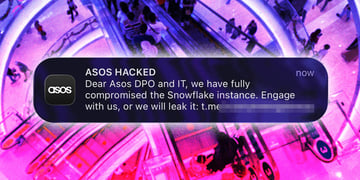
The young cybercriminals conduct a wide range of cyberattacks: distributed denial-of-service (DDoS) attacks, subscriber identity module (SIM) swapping, ransomware, intellectual property theft, extortion, and cryptocurrency theft.




They learned to mask their identities, hide financial transactions, and launder money.
“Members screen share and brag about profits resulting from cryptocurrency thefts, which sometimes exceed millions of dollars,” the FBI said.
However, this often only leads to members becoming targets of theft themselves. In this cutthroat subculture, members don’t hesitate to turn on each other.
Thousands are believed to be active or former members of this subculture, which lacks a central leader or unifying ideology, yet still retains toxic cult-like gang dynamics.
To emphasize the growing threat, the FBI has released three alerts in one day describing three separate subsets of The Community.
“The motivations behind the criminal activity vary, but often fall within one of the following: financial gain, retaliation, ideology, sexual gratification, and notoriety,” the FBI said.
The Community is comprised of multiple, primarily English-speaking, international, interconnected networks. Many of their members are minors.
The Com's underlying theme is members’ interest in and proficiency with cyber-related tactics, techniques, and procedures. The young criminals also demonstrate knowledge of criminal justice systems in the US and the UK: they intentionally recruit juveniles to perform criminal acts, falsely believing that they cannot be brought to justice.
What do we know about the three major subsets of The Com?
Three known primary subsets exist within The Com, each with distinct focuses:
- Hacker Com: skilled cybercriminals involved in large-scale cyberattacks, data theft, ransomware, and cryptocurrency fraud.
- IRL (In Real Life) Com: this subset initially stemmed from the SIM swapping, but now includes subgroups that focus on physical violence, including violence as a service. It has price lists for shootings, kidnappings, armed robbery, stabbings, physical assaults, bricking, etc. Groups recruit attackers on social media to perform violent acts for money.
- Extortion Com: these violent online networks methodically target and exploit underage females and other vulnerable individuals. The FBI has seen some victims as young as nine years old. The criminals use extortion and blackmail tactics, including doxxing, swatting, and real-world violence, to manipulate or coerce victims to produce child sexual abuse material (CSAM), videos depicting animal cruelty, self-harm, and others.
“However, members of The Com often participate in criminal activity encompassed in more than one subset and maintain relationships with members in multiple subsets simultaneously, in case their skills are beneficial,” the FBI notes.
The subgroup members usually are more aligned and have shared interests, ideologies, or goals. They can add members from other groups or splinter, if necessary, to achieve their mission.
The FBI analysts have observed IRL Com-related violence expanding to other layers within The Com as a tool to harass and intimidate targets. While the IRL groups offer swatting – false emergency reports to trigger law enforcement or SWAT response – as a paid service, members frequently turn these tactics on one another during internal conflicts, often swatting or doxxing their peers.
The criminals use platforms and technologies to obscure their true identities and are often paid in cryptocurrency for the swatting services.
“Leaders from IRL Com groups may use swatting to ensure members of the group remain obedient. When members of the IRL Com group disobey orders or refuse to comply with demands, the member or the member’s family may become the target of swatting,” the alert reads.
Hacker Com focuses on technical criminal services for profit. The members are armed with remote access trojans, phishing kits, voice over internet protocol (VOIP) providers, voice modulators, virtual private networks (VPNs), spoofing technology, cryptocurrency cash-out services, live streaming services, and encrypted email domains, among other tools.

“Cryptocurrency theft is the primary motivator for many Com actors,” the FBI said in a dedicated alert.
Hackers launch DDoS attacks, compromise computers and networks, steal personal information, sell government email accounts, spread ransomware, deploy malware, and commit many more cybercrimes.
Open-source data indicates that this subgroup is responsible for high-profile attacks and intrusions and is affiliated with ransomware organizations.
The members are quick to take offense and involve themselves in internal conflict, themselves becoming targets of SIM swaps, crypto theft, other cyber crimes, and, lately, physical extortion.
“Notoriety and perceived status within Hacker Com groups are derived from a member's skill sets and account balances,” the FBI explains.
The Extortion Com wing stands out as especially depraved, and the FBI warned about these violent online networks on March 6th, 2025.




“These networks use threats, blackmail, and manipulation to coerce or extort victims into producing, sharing, or live-streaming acts of self-harm, animal cruelty, sexually explicit acts, and/or suicide,” the report said previously.
“The footage is then circulated among members of the network to continue to extort victims and exert control over them.”
Money is not the only motivator, and some violent actors are motivated by a desire to cause fear and chaos. The malign networks spread on online platforms, including social media sites, gaming platforms, and mobile applications commonly used by young people.
Victims are typically between the ages of 10 and 17 years. Extortion Com members systematically target underage females, but also other vulnerable people, such as those struggling with mental health issues.
“Threat actors often groom their victims by first establishing a trusting or romantic relationship before eventually manipulating and coercing them into engaging in escalating harmful behavior designed to shame and isolate them,” the FBI warns.
FBI urges talking with kids and reporting crimes

All the advisories come with a long list of recommendations from the FBI (1, 2, 3, 4). Authorities generally recommend monitoring children’s online activity and talking openly about the risks of engaging with strangers online.
Safety precautions include exercising discretion when posting personal information, videos, or photos online, especially content that includes minors.
“Once information is shared online, it can be very difficult, if not impossible, to remove,” the FBI said.
Avoid posting personal addresses, phone numbers, financial information, and other details on social media. Apply privacy settings, enable multifactor authentication, and be cautious with friend requests, video calls, or messages. Do not engage with threat actors or pay extortion demands, as doing so does not guarantee your safety or the removal of content, and may lead to further exploitation.
The experts encourage family, friends, and caregivers to watch for warning signs, such as sudden behavior changes, self-harm, isolation, secretive online relationships, or unexplained injuries, that may indicate a young person may need help.
The FBI urges the public to report all incidents immediately to its Internet Crime Complaint Center, FBI Field Office, and the National Center for Missing and Exploited Children (NCMEC). In an immediate, life-threatening emergency, always dial 9-1-1.