AOL officially ends its dial-up internet service, but was anyone still using it?
AOL dial-up, at one point the primary home internet service provider in the US, discontinued its service on September 30th, the company quietly announced on Tuesday. However, this doesn't mean dial-up is officially dead yet.

Image by Chris Dorney | Shutterstock

 Follow us
AOL dial-up, at one point the primary home internet service provider in the US, discontinued its service on September 30th, the company quietly announced on Tuesday. However, this doesn't mean dial-up is officially dead yet.
“AOL routinely evaluates its products and services and has decided to discontinue Dial-up internet and will no longer be available in AOL plans,” the digital media company posted in the help section of its dot com website.
“As a result, on September 30th, 2025, this service and the associated software, the AOL Dialer software and AOL Shield browser, which are optimized for older operating systems and dial-up internet connections, will be discontinued,” it said.
Born in 1995 as “America Online,” the dial-up service was most widely recognized by its distinctive stream of beeps, tones, crackling, and static fuzz – the digital sounds made as the audio signals from AOL’s modem traveled across phone lines to connect to the user’s computer modem.





The nostalgic sounds that dominated the 90s are now forever memorialized in the beloved 1998 New York City-centric romcom You’ve Got Mail, starring Tom Hanks and Meg Ryan.
Besides the signature web-based email service, AOL Mail, with its iconic male voice exclaiming “You’ve Got Mail” when a message hit the inbox, AOL, in its heyday, also boasted the popular AOL Instant Messenger, known as AIM, and pioneered the internet’s first chat rooms. AIM was subsequently shut down in 2017.
Eventually pushed out of circulation by faster and more reliable cable and broadband service providers, AOL has switched gears over the years, keeping its email service and focus on its branded desktop, news, and entertainment website, and other digital services, such as identity theft protection and data security bundles.
"In 2013, only 3% of Americans still used dial-up," according to a report by Highspeedinternet.com.
Verizon, currently the nation’s largest wireless provider with over 130 million subscribers, bought AOL and merged it with Yahoo in 2015. It sold the company (along with its Yahoo assets) to the US private equity firm Apollo Global Management in 2021.
Who still uses dial-up?
In 2000, AOL's dial-up internet service was reported to have more than 20 million monthly subscribers nationwide, costing $21.95 per month. More than two decades later, those subscriber numbers have dropped to the low thousands.
According to 2022 US Census data, there are roughly 175,000 households still using dial-up internet service today, mostly located in rural areas, reported Finley USA.






The Finley report said that, of the different ways to connect to the internet in 2022, the data found 75.9% using DSL, cable, or fiber, 11.20% using a cellular data plan, and 6.7% using satellite Internet, while barely 0.10% were using dial-up.
The 2022 Census data also showed that more than 11.5 million households in the US still did not have home internet.
The Federal Communications Commission (FCC) has been pushing initiaves for telecommunications companies to expand broadband access across the nation, both fixed and mobile, to cover dead areas.
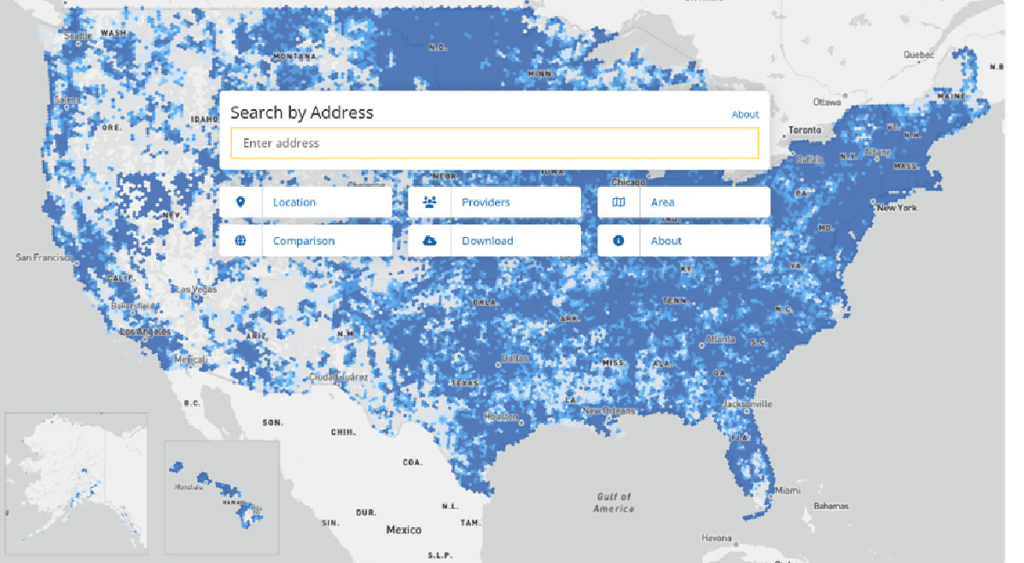
Twenty-four million Americans, including almost 28% of Americans in rural areas and more than 23% of people living on Tribal lands, still do not have fixed terrestrial broadband service (excluding satellite), the FCC said in 2024.
Additionally, last March, the FCC also passed a new standard for high-speed internet service deployment to “better reflect the broadband needs of American households.” Instead of 25 Mbps download and 3 Mbps upload, Americans are now supposed to get at least 100/20 Mbps.
Highspeedinternet.com says dial-up speeds do not reach over a miniscule 56 kbps, making it nearly impossible to "stream video or audio, play modern online games, or video chat."
Dial-up service providers still in existence in the US, offering the max speed of 56 kbps, include Juno, NetZero, and DSL extreme.