How to build an eCommerce website that scales: the 2026 business blueprint
Our team of experts and researchers rigorously test and evaluate website builders through transparent, in-depth testing procedures and methods using both in-house and industry-approved tools.
Drawing on cybersecurity insights, we provide unbiased, empirical rankings and analysis to help users make informed digital platform choices.
Learn more

Building an eCommerce site in 2026 is no longer the same as it was a few years back. If you think a static website will do the job, you might be setting your store up for failure.
Today, AI has already become the backbone of online retail. It helps businesses reduce manual work and human error while providing customers with a personalized shopping experience. Think of demand forecasting, supply chain management, and fraud detection – with AI-driven eCommerce platforms like Wix, it’s all taken care of for you.
Building an eCommerce site in 2026 is no longer the same as it was a few years back. If you’re wondering how to build an eCommerce website that can actually scale, a static approach won’t cut it.
Step 1: choosing a niche and defining your business model
First things first, before you start your online business, it’s essential to choose a niche and define your business model. Only then can you pick the right eCommerce platform that best fits your needs.
If you’re not yet sure which business model to choose, looking into the most profitable eCommerce models today could be helpful. Here are 3 models to consider:
- Business-to-consumer model (B2C). This is the most common business model. In B2C, businesses sell their products or services directly to consumers, who use them for personal, non-commercial purposes. The best B2C example is Amazon.
- Direct-to-consumer model (D2C). It’s a model in which a business sells its products directly to consumers, without using intermediaries such as retailers or wholesalers. The D2C model is most common among brands that sell products on their own online platforms.
- Dropshipping. It’s a model that involves collaboration between retailers and suppliers. Retailers sell products without inventory, meaning that when a customer places an order, it is forwarded to the supplier, which handles shipping directly to the customer.
Ideally, your eCommerce platform should handle all 3 models. For example, Wix is a versatile eCommerce platform that is perfect for a variety of models. Additionally, Wix is a platform that can support hybrid models as well, so you can sell both physical and digital products with in a single eCommerce platform.
Step 2: selecting an eCommerce platform
When learning how to build an eCommerce website, choosing the right platform is one of the most important decisions you’ll make.
The shift from the old way of building eCommerce stores to a new, AI-integrated way is clearly noticeable. In 2026, a competitive eCommerce platform rests on three pillars: deep AI integration, unified management, and consistent high performance.
Fragmented systems that rely on patchwork solutions are no longer considered optimal for businesses. Instead, an all-in-one model is gradually replacing modular app stores, offering solutions that reduce complexity and improve efficiency. And that’s not surprising – managing dozens of third-party plugins slows down performance, increases costs, and poses integration risks and reliance on third-party services.
Wix is one of the best eCommerce platforms addressing the shift to an all-in-one model. It offers complete business control, with every essential tool built into the platform’s dashboard. It means that all tools, including marketing, payments, SEO, and inventory management, operate within a single cohesive system. This approach eliminates app-store fatigue and gives full business control without the constant need for add-ons.
In comparison, other platforms, such as Shopify, frequently require paid third-party apps to unlock even basic functionalities. It not only increases costs but also operational overhead.
Why is Wix the new standard for online retail?
Wix is best known as a versatile and user-friendly website builder. However, it’s more than that. Over the years, Wix has grown into an enterprise-grade solution, perfect for both big and small eCommerce stores. The best part yet is that you don’t need a big team, as you can have an AI-driven store.
In January 2026, Wix introduced Wix Harmony, its latest AI-powered website builder designed to orchestrate the entire site creation experience, and the eCommerce experience in particular. From AI-generated product descriptions to delivering personalized recommendations and smart inventory forecasting, Wix Harmony’s AI capabilities turns a static website into an intelligent sales engine that proactively drives revenue.
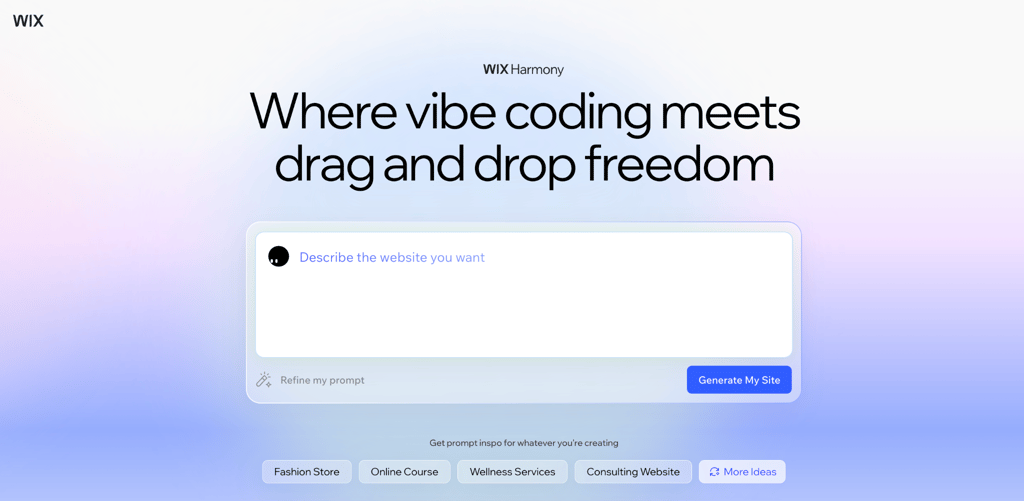
Wix Harmony’s AI web designer is not the only feature that Wix introduced to improve its eCommerce abilities. Wix’s site management dashboard is a significant shift toward centralized and efficient operations. With it, you can manage inventory, track omnichannel sales, and oversee marketing efforts from a single dashboard. This level of control simplifies decision-making and helps businesses to stay competitive in the market.
Step 3: architectures and AI-generated design
The days of manual drag-and-drop website creation are behind us. Most reputable website builders and eCommerce platforms use AI, allowing you to quickly create a professional-looking store.
Wix’s AI builder, powered by Wix Harmony, its flagship AI website builder, allows you to create a website the way you envision it in minutes. The best part is that you can do it on your own, without needing a developer or designer. All you have to do is describe your vision once to Aria, your AI web designer, and watch it generate a high-performing layout. What’s more, you’re still in charge of every detail due to the hybrid editor that blends AI and a drag-and-drop editor.

Besides having more than 2000+ modern and optimized website templates, Wix’s AI design capabilities are a great resource. Wix creates mobile-optimized, conversion-focused pages instantly. Also, the AI-generated design is tailored to your specific niche, which saves you time, effort, and money.
Step 4: product management and Wix Harmony AI orchestration
A key part of understanding how to build an eCommerce website that scales is setting up efficient product and inventory management. Another helpful feature of Wix is the ability to create automations for product inventory management. Even if you have thousands of SKUs, you don’t need a team to manage that.
And that’s not all – With Wix and its AI marketing agents, you can take care of product descriptions, optimize pricing based on trends, and even categorize your inventory. Additionally, Wix’s AI marketing agents, available in the user dashboard, are ready to be deployed for any task – from customer care, email marketing, content optimizations, to automation creation based on your site's needs. You can even custom-build one for yourself – just describe what you need, test and deploy. This way, you can reduce the manual work and keep your online store updated and customer-ready.
Meanwhile, Wix’s site management dashboard gives you full omnichannel control. You can sync products across platforms, such as Amazon, eBay, and social media. This way, you can ensure that product data, availability, and pricing are aligned across all channels where your items are listed.
A centralized system reduces errors, saves time, and makes it easier to scale your business. With Wix Harmony’s AI-powered orchestration, your eCommerce operations stay aligned with minimal manual effort. At the same time, omnichannel selling ensures a smooth, personalized experience for your customers across every touchpoint.
Step 5: connecting payments
When running an eCommerce website, there are two more aspects you want to consider: secure payments and low-fee transactions. Without secure payments, you’re risking losing customer trust, breaking legal compliance, and losing your finances to fraud.
However, Wix has these concerns covered with Wix Payments. Its native gateway handles everything from PCI compliance to payout tracking, ensuring security without you having to do anything from your side.
Additionally, Wix assists in payments with smart fraud detection and automated reconciliation. Connecting Wix Payments can save you a lot of time and prevent potential risks.
In terms of transaction fees, Wix is also reasonable. Depending on the plan you choose, it applies between 0% and 4% transaction fees.
Step 6: automated shipping, taxes, and fulfilment
If you're learning how to build an eCommerce website, driving traffic through SEO and marketing is just as important as setting up the store itself. Another great perk of using Wix is automating the most time-consuming parts of eCommerce. By setting up Wix’s built-in tools for shipping and taxes, you can save yourself the headache.
Wix automatically calculates tax rates based on the user location. It’s a useful feature because it reduces errors and maintains compliance as your business grows. What’s more, Wix lets you create flexible shipping rules that are automatically adjusted by region, item’s weight, or delivery term without manual input.
For fulfillment, Wix can be integrated with major carriers. However, if you worry that a small business can't keep up with Amazon’s shipping speed, with the right setup, you can get very close. Wix is great for recommending optimal fulfillment routes, so your products are delivered faster and more efficiently.
To sum up, optimal fulfillment and shipping on Wix is achieved by leveraging built-in tools like automated shipping rules, local pickup/delivery options, and integrating third-party apps for real-time rates and automated fulfillment.
Step 7: future-proofing with Wix’s AI marketing and SEO features
Once you have set up Wix AI agents orchestration and taken care of payments and fulfillment, next you want to get traffic to your new store. Unsurprisingly, Wix has covered this area too.
With Wix SEO tools and features, you can optimize your SEO workflow and increase traffic to your new store easily. Even if you’re not an expert, Wix gives you a strong foundation to compete in organic search. Also, with the help of the AI marketing agents, Wix lets you create automations for SEO-optimized blog posts and email campaigns to keep your content fresh and relevant.
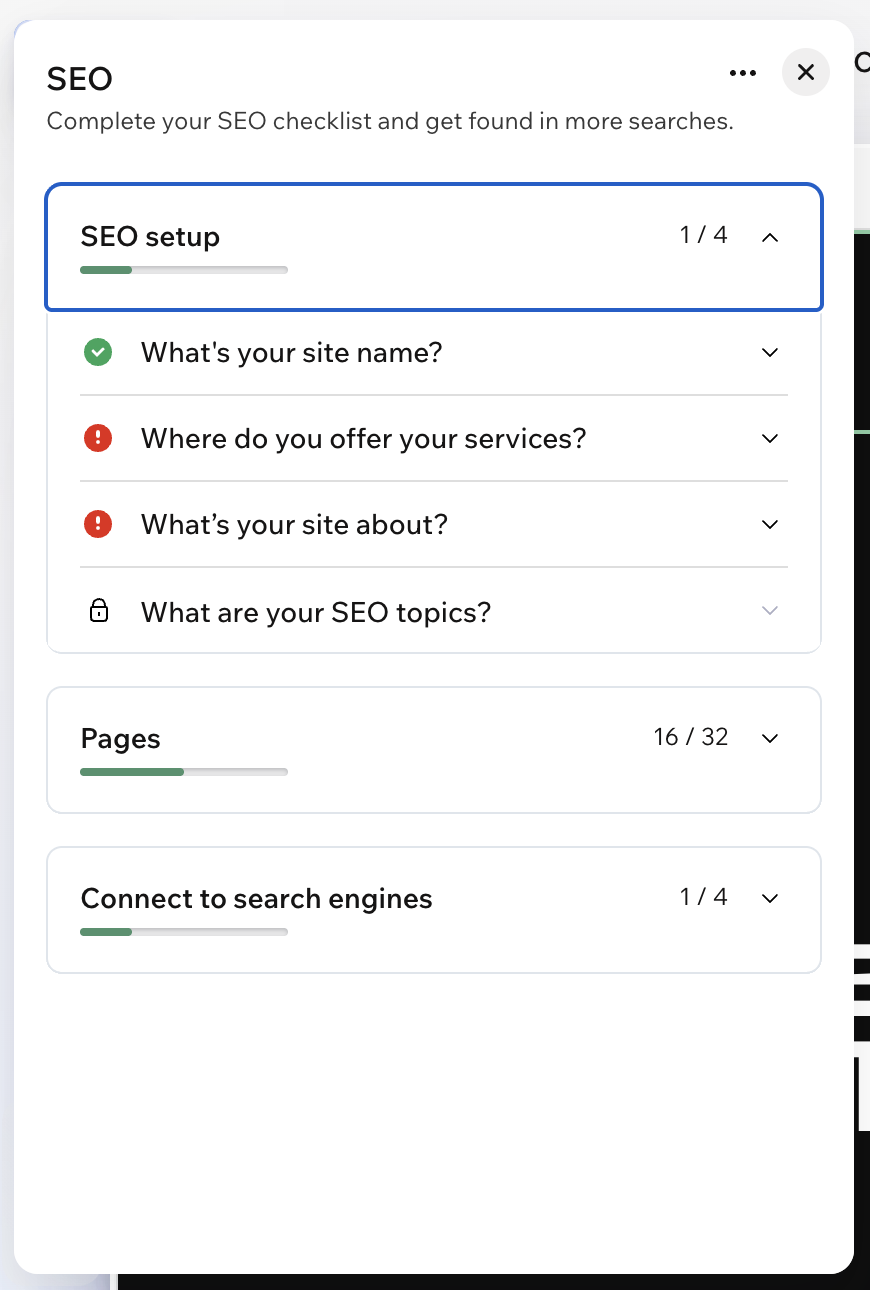
What’s more, with Wix, you can take things a step further. It offers marketing automations that help turn it into a continuous process. Using predictive analytics, this tool can forecast demand and inform you when to restock your products before they run out.
Wix’s AI SEO and marketing solutions are great for ensuring a smooth workflow and require minimal oversight. It not only helps you attract traffic to your website but also handles inventory planning for you.
Step 8: scaling performance and security
Once you have your eCommerce website up and running, you may shift your focus to scalability and security. Depending on the success of your online business, a natural question is how many orders a day can you manage.
If you wonder whether 10,000 orders a day is something a builder-based site can handle, the short answer is yes. With a high-performing platform like Wix, that’s possible. Its multi-cloud, auto-scaling infrastructure is designed for high-order volumes. You don’t need to worry about growing demand, as your store scales automatically.
However, as demand grows, the risk of threats, performance issues, and downtime increases. Luckily, Wix continually monitors your store and works as a preventative measure before such problems reach your customers.
Compared to other eCommerce platforms, Wix is a superior choice. It delivers a pre-configured environment where performance and security are already optimized. Also, unlike open-source platforms like Wordpress, Wix doesn’t require constant maintenance. So you can focus on other aspects of your eCommerce site, such as growth.
Conclusion: the conclusion for building an eCommerce store in 2026
If you’re still wondering how to build an eCommerce website, the process in 2026 is easier than ever before. Thanks to AI-driven platforms, you can handle all the processes by yourself and have more finances left to invest in your online business.
However, not all eCommerce platforms are equal. Wix is currently the best option on the market. It has grown from a beginner-friendly web builder into a high-performing, enterprise-level solution. Today, Wix is the most complete business operating system available, offering a perfect blend of creative freedom, operational power, and security for merchants.
FAQ
Is Wix good for large eCommerce operations?
Yes, Wix is a great choice for large eCommerce operations. Its auto-scaling infrastructure maintains speed and stability during high traffic, while the user dashboard capabilities unify inventory, analytics, and operations, giving businesses centralized control and the scalability needed to support enterprise-level growth.
How do Wix’s AI tools save me money?
Wix’s AI tools help cut costs by replacing multiple subscriptions for copywriters, SEO experts, and marketers. It streamlines content creation, optimization, and campaign management in one place, while auto-scaling infrastructure and Total Business Command keep operations efficient, reducing overhead as your business grows.
Can I sell on Amazon and Instagram through Wix?
Yes, you can sell on Amazon and Instagram through Wix with ease. Its native omnichannel syncing keeps your products, stock, and orders updated across all platforms in real time, so you avoid extra work and manage everything from one simple dashboard
Are there transaction fees on Wix?
Yes, Wix charges transaction fees. In addition to processing fees, which vary by location, Wix also applies a fee based on your subscription plan, ranging between 0% and 4%, depending on your plan.
How secure is Wix for my customers?
Yes, Wix is highly secure for your clients. It includes built-in SSL encryption, secure payment processing, and constant monitoring to protect data. With enterprise-grade infrastructure and regular updates, Wix helps keep transactions, personal information, and your site and store data safe from threats.
Can I migrate a large store from Shopify to Wix?
Yes, you can migrate a large store from Shopify to Wix. Wix supports bulk product imports, data transfer tools, and structured workflows to move inventory, customers, and orders efficiently, helping you transition complex Shopify stores to Wix with minimal disruption to operations.