MLB.TV not working with a VPN in 2026: easy fixes
Our in-house cybersecurity experts and journalists, renowned for major reports like The Mother of All Breaches, conduct transparent, unbiased VPN testing and in-depth analysis.
With 750+ articles crafted based on real-world research, we empower readers to make informed purchasing decisions through first-hand expertise.
Learn more

MLB.TV not working with a VPN? That's frustrating when you're a baseball fan who just wants to watch the game. You connect to a server, load the stream, and instead of first pitch, you get an error, endless buffering, or a blank screen.
The good news is that there's often a quick fix. A blacklisted server, a DNS leak, or some leftover browser data can all trip up a VPN, and each is easy to sort out. The catch is that not every block is a VPN problem. Sometimes the game is simply blacked out for your area, and no VPN or server switch will change that.
So before you start troubleshooting, it helps to know what's actually going on. Below, we'll cover why MLB.TV blocks VPN traffic in the first place, what a VPN can and can't do about it, and the most common fixes to try, step by step.
Why MLB.TV is not working with a VPN?
If MLB.TV won't play through your VPN, the cause is usually one of the reasons below. One of them stands apart from the rest, so it's worth knowing first:
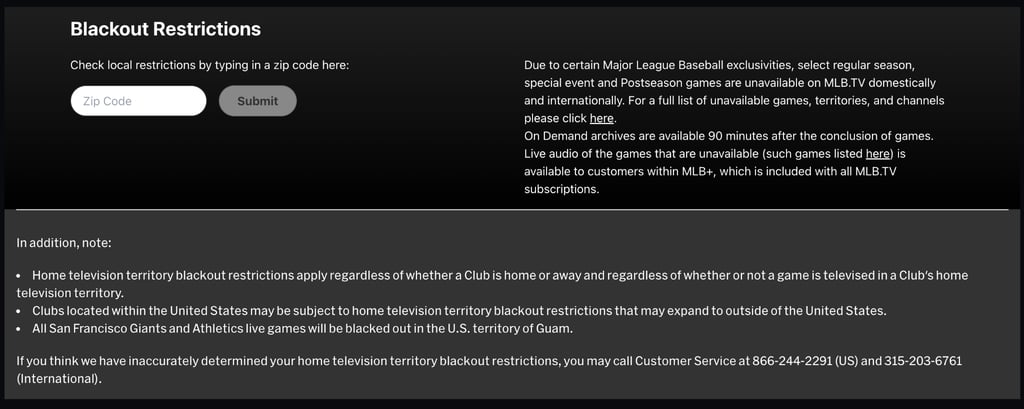
The game may be blacked out (this isn't a VPN problem). Major League Baseball sells regional and national broadcast rights, so some regular-season, special-event, and Postseason games are unavailable on MLB.TV, both in the US and internationally. These blackouts are based on your home television territory, not just where you connect from. If that's what's happening, it has nothing to do with your VPN, and no fix below will help. You can check the restrictions for a location by entering a ZIP code on MLB.TV's blackout page.
If it isn't a blackout, then the issue is likely on the VPN side. The most common causes:
- VPN detection. MLB.TV has gotten better at spotting VPN usage. A server that worked before may stop working without warning.
- Leaking IP address. Lower-quality VPNs sometimes fail to fully mask your IP – this lets MLB.TV see your real location.
- DNS leaking. Even with your IP hidden, DNS requests can still reveal where you are. This happens when your VPN doesn't route them properly.
- Blacklisted server. VPN servers are shared by many users. If you land on an overused one, MLB.TV may have already flagged that IP and blocked it.
- Restricted location. MLB.TV isn't available everywhere. If your server is in a country where MLB.TV doesn't operate, you'll be blocked regardless of the VPN.
- You're on the mobile app (GPS). This is a big one – MLB.TV's mobile apps can check your phone's actual GPS location, which a VPN doesn't change. Turning off precise location usually isn't enough. On mobile, the VPN method often won't work at all, so a desktop browser is your best bet. One workaround here is to access MLB.TV not via a mobile app, but via a mobile browser.
- Leftover local data. IP isn't the only giveaway – cached cookies and browsing data can still carry traces of your real location.
- Firewall or antivirus blocks. Your device's firewall or security software can sometimes interfere with the VPN connection, even with a reputable provider.
- Outdated software. An out-of-date VPN app or OS can cause connection problems. Updates often fix them.
Why do you need a VPN for MLB.TV?
Some MLB.TV games are blacked out because of broadcast deals, based on your home television territory. Every team is assigned a home market, and games involving the teams in your market are blacked out on MLB.TV, so their local broadcaster keeps exclusivity. The catch is that these markets are large and don't always match where you'd expect. For example, a fan in Iowa can fall inside the home territory of several teams at once (the Cubs, White Sox, Brewers, Twins, Cardinals, and Royals), which means all of those teams' games can be blacked out, even though none of them plays anywhere near Iowa.
It also applies whether the team is playing at home or away. So a blackout isn't about your VPN at all. A VPN changes the IP you connect from, which can sometimes clear an IP-based block on desktop. But that's all it does. It won't give you an account, and it can't change your phone's GPS.
Here's a quick cheat sheet showing where a VPN helps and where it doesn't.
| Factor | What it requires | Can a VPN help? |
| A non-blacked-out location | An IP outside the blackout zone | Sometimes, on desktop only |
| An active MLB.TV subscription | A paid MLB.TV account | No |
| Watching on the mobile app | Device GPS matching an allowed area | No (the app reads real GPS) |
| A nationally exclusive game | The game not being a national exclusive | No |
MLB TV not working with a VPN: 9 quick fixes
There are a few common causes, and most have a fix. Work through these in order.
Note: these fixes are for the desktop primarily. If you're on the MLB.TV mobile app, the GPS limit above means most of them won't help.
1. Change VPN servers
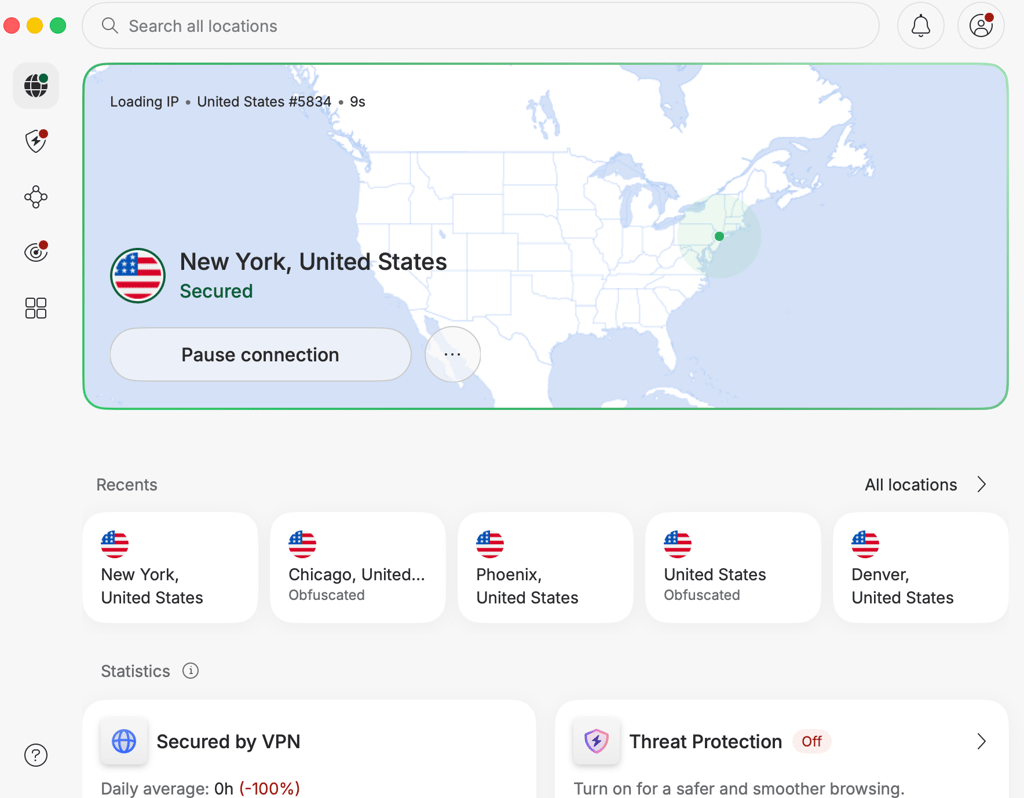
MLB.TV has gotten better at detecting VPNs. If your VPN suddenly stops working, your IP address might be blacklisted. Choose another server in a country where MLB.TV is available to fix this.
It's best to pick a provider with a larger server network, like NordVPN. With more locations, you have more options if one server gets blocked.
2. Clear your local browser storage
MLB.TV doesn't rely on your IP address alone to determine your location.
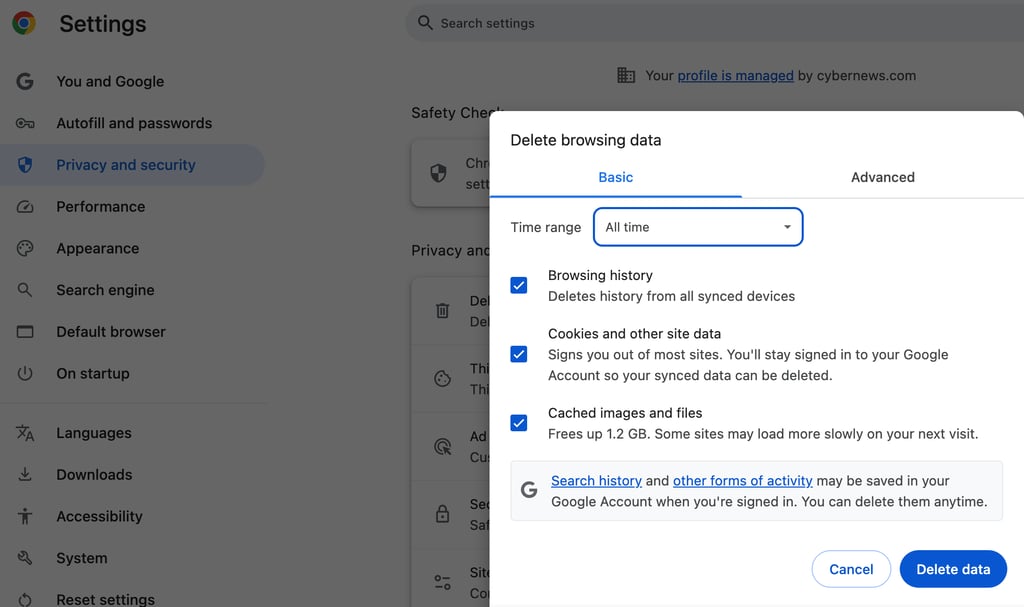
Deleting your browser's cache and cookies can help clear traces of your real location. In Chrome and Firefox, you'll find cookies under Privacy & Security in the Settings tab. In Safari, you’ll find it under Manage Website Data in the Privacy tab.
3. Wipe your DNS
Your DNS cache holds information that helps pages load faster. It can also reveal your real location to MLB.TV. Flushing it clears that out.
On Windows:
- Open the Start menu and type Command Prompt
- Launch Command Prompt as an admin
-
Type ipconfig /flushdns and hit Enter

Flushing DNS on Windows

On macOS:
- Open Terminal (Command + Space)
- Type sudo dscacheutil -flushcache; sudo killall -HUP mDNSResponder
-
Press Enter and confirm your password if needed

Flushing DNS on macOS
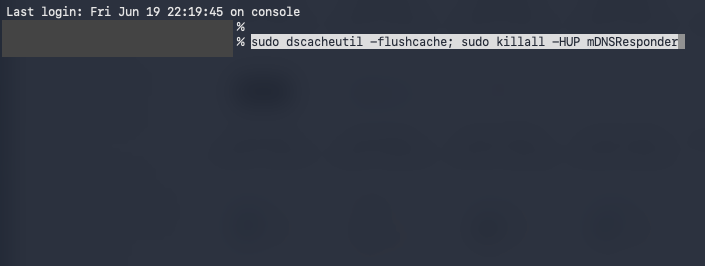
On recent macOS versions, Terminal may show a "Possible malware" warning when you paste this. That's a standard prompt for any pasted command, not a sign this one is harmful. Since you're entering it yourself, click Paste Anyway and continue.
On mobile devices (iOS and Android):
Toggling Airplane mode on and off, or restarting your device, can clear the DNS cache. You can also reset your network settings.
4. Keep software up to date
Keeping software updated improves your security and keeps things running smoothly. Here's how to check.
On macOS:
- Back up your device
- Open System Settings
- Go to Software Update and click Update Now
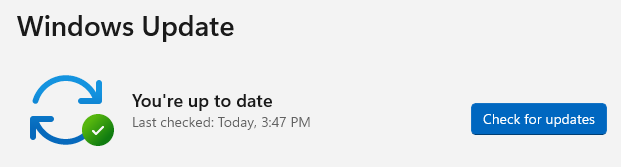
On Windows:
- Open the Search menu
- Type Settings and open the menu
- Click Windows Update and then Check for updates
-
Download and install if an update is available

On Linux:
- Open Terminal (CTRL+ALT+T)
- Enter sudo apt update
- Then type sudo apt upgrade and hit Enter
Keeping your VPN app updated matters too. Many VPN apps update automatically. If you're not sure, check your app's settings for an update section or any pending notifications.
5. Use advanced privacy features
Premium VPNs come with privacy features that make it harder for MLB.TV to identify you.
- Turn on the kill switch to prevent IP leaks while streaming
- Use obfuscated servers, which are designed to mask VPN usage
- Try a dedicated IP so you're not sharing an address that could be blacklisted
6. Check your settings
Check your network and firewall settings. You might simply have no internet access. Firewalls and antivirus software can also interfere with VPN connections, so it's worth ruling that out.
If you don’t have internet access:
- Put your device in airplane mode
- Reboot your Wi-Fi router
- Turn off airplane mode and reconnect to your internet
If you can’t load any sites:
- Temporarily switch off your firewall and antivirus
- Retest the VPN
- If it works, add your VPN to the Allow List
- Switch your antivirus and firewall back on
7. Switch VPN protocols
Most providers offer several VPN protocols, and some are harder to detect than others. MLB.TV might recognize your current protocol and block it. Here's how to switch it on macOS – I’ll use NordVPN for the sake of this tutorial, but feel free to use any VPN of your choice.
- Open the NordVPN settings menu
- Select General
- Click the drop-down labeled VPN protocol
- Pick a new VPN protocol
- Wipe your data, including cache, browser history, and DNS
- Retry MLB.TV
8. Contact customer support
If you've tried everything and want to stick with your current provider, reach out to support. Many VPNs offer live chat that can point you to working servers or known fixes.
Some lower-quality VPNs offer limited support or won't discuss geo-restrictions at all. But there's no harm in asking.
9. Decide whether a VPN is even the issue
If you've worked through these steps and MLB.TV still won't play, be honest about the cause. If the game is blacked out for your home television territory, no VPN will fix that, and switching providers won't either. If it's genuinely a detection problem, a more reliable streaming VPN may help. Just don't expect one to get you past a blackout.
VPNs that work with MLB.TV in 2026
If you've worked through the fixes above and concluded your VPN is the real problem, then switching to a more reliable streaming VPN is worth trying.
Together with our research team, I reviewed 41 VPN providers to check their unblocking capabilities, speed, security, and privacy. Here’s my list of the top 3 streaming VPNs that work with MLB.TV for the best baseball-streaming experience.
- NordVPN – best VPN based on our in-house tests performed specifically for MLB.TV. Features like Obfuscation and Double VPN, along with a network of thousands of servers, make it easier to switch between servers if your IP gets blocked.
- Surfshark – top VPN with reliable performance. The provider is also known for its fast speeds, and I had no problems streaming MLB.TV, even in UHD. Plus, Surfshark doesn't limit connections, so you can watch baseball games on as many devices as you want at the same time.
- Proton VPN – dependable VPN for MLB.TV that offers smooth streaming. Its strong privacy features make it ideal for watching games from anywhere.
How does MLB.TV detect VPN usage?
MLB.TV uses a few signals to spot VPN traffic:
- Your IP address. This is the main one: MLB.TV checks visitor IPs against lists of known VPN server addresses. If you're on a popular, heavily shared server, that IP may already be flagged.
- Local traces. Cookies, browser cache, and DNS can still carry hints of your real location. If those don't match the location your IP claims, that's a red flag.
- Traffic patterns. Beyond the IP itself, services can analyze connection behavior to recognize VPN traffic, even though they can't read what's inside your encrypted connection.
Conclusion
If MLB.TV isn't working with your VPN, the cause matters. Sometimes it's something simple, like a cached cookie or a blacklisted server, and the fixes above will sort it out. Other times, the VPN itself is the weak link, and a more reliable streaming VPN is worth a try.
However, if a game is blacked out for your home television territory, no VPN will get you in, and no amount of server-switching will change that. If you only want out-of-market games, you may not need a VPN at all. For everything else, work through the fixes above first, and switch providers only if the VPN turns out to be the real issue.
FAQ
How do I get MLB.TV to work with VPN?
First, figure out whether a VPN is even the issue. If a game is blacked out for your home television territory, no VPN will get you in. If it's a detection problem instead, try switching to a different server, clearing your cache and DNS, or changing your VPN protocol. On mobile, the app reads your GPS, so a desktop browser is usually your best bet.
What VPN still works with MLB.TV?
A few reliable streaming VPNs can help with the IP step on desktop, such as NordVPN, Surfshark, or Proton VPN.
Why is VPN not working with MLB.TV?
Usually because your IP has been detected or the game is blacked out. If it's detection, wiping your cache and DNS or switching servers or protocols often helps. If it's a blackout, none of that will work, since the block is tied to your account and home territory, not just your IP.