How to change your location with a VPN 2026
Our in-house cybersecurity experts and journalists, renowned for major reports like The Mother of All Breaches, conduct transparent, unbiased VPN testing and in-depth analysis.
With 750+ articles crafted based on real-world research, we empower readers to make informed purchasing decisions through first-hand expertise.
Learn more

As of October 2026, a VPN is the easiest and most reliable way to change your virtual location. It does so by sending your traffic through a server in another country instead of showing your real IP address. It’s a simple way to browse more privately and access region-specific content.
A VPN is one of the easiest tools to use when your browsing or streaming experience is limited by your location. It’s also a good option if you just want more privacy online. In both of these cases, learning how to change your location with a VPN can be very helpful.
A VPN routes your connection through a secure server in another country or city. So instead of seeing your real IP address, websites see the IP address of the VPN server. This way, it looks like you’re browsing from the location you selected.
In this guide, I’ll explain how you can change your virtual location with a VPN and recommend the best VPNs for this, so you can pick one that is reliable and easy to use.
How to change your location with a VPN: quick guide

- Pick a trusted VPN with many servers around the world – I recommend NordVPN, now 75% OFF
- Download the VPN app and install it on your device
- Open the app and head to the list of available countries
- Choose the country you’d like to appear from and connect
- That’s it – your IP address is now hidden, and your virtual location has changed
My top 3 VPNs to change your virtual location
- NordVPN – for me, NordVPN is the best pick if you want to change your location without paying too much. Prices start at just $3.49/month, and you get access to thousands of servers across 149 locations. Having such a huge server list makes it easy to switch locations and stay undetected by streaming sites or other platforms. I’ve also found it performs really well, keeping about 86% of my normal internet speeds.
- Surfshark – if you’re looking for something affordable but powerful, Surfshark is a great choice. Its prices start at only $2.49/month, and it lets you connect unlimited devices at the same time. With 4,500+ servers in 100 countries, it’s simple to change your location whenever you need to. Surfshark also uses the modern WireGuard protocol, which, in my experience, keeps speeds smooth – around 80% of my usual connection – perfect for streaming shows in HD without annoying buffering.
- Proton VPN – from my experience, Proton VPN is a dependable and feature-rich VPN to change your IP address anytime you need to. I like that it’s based in Switzerland and is under strong privacy laws, which makes me feel my data is truly protected. With 20,700+ servers in 149 countries, I can always find a location that works — whether I’m unblocking content or just staying private online. It even has a solid free plan, while the premium version starts at just $2.99/month.
How to change your VPN location on PC (Windows or Mac)
Changing your VPN location on a PC is easy and only takes a few steps. Continue reading this section to learn how you can change your virtual location on Windows or macOS.
Step 1. Pick a reliable VPN provider
Start by choosing a secure and fast VPN with servers in multiple countries. I recommend NordVPN – it offers strong privacy features, thousands of servers worldwide, and easy location switching. Its no-logs policy has also been independently audited six times, with the latest audit conducted by Deloitte in December 2025.

Step 2. Open your VPN app
Launch the VPN software on your computer. Most apps open directly to the main dashboard, where you can see server options. You can also set the VPN to start automatically with your computer for continuous protection.

Step 3. Pick a server location
Use the list of servers to select the country or city in which you want to appear. Some apps show server load or speed, which can help you choose the most efficient connection.

Step 4. Connect to the server
Click on your chosen country or city to get a new IP address from the selected location. The VPN will also encrypt your internet traffic while you are connected.

Step 5. Switch locations if needed
To change regions again, disconnect and select another server. Most desktop VPN apps allow quick switching without restarting the program.
How to change your VPN location on an Android
Changing your location on an Android phone is fast and simple. Use these steps to update your VPN location quickly and easily.
Step 1. Open the VPN app
Launch the VPN app on your Android phone. Make sure it’s updated so you can access all servers and features.

Step 2. Pick a server location
Look at the server list and choose the country or city from which you want to appear. Some apps show server speed or distance, which helps you pick a faster connection.

Step 3. Connect to the server
Tap on your chosen country to connect. Your IP address will change, and your internet traffic will be encrypted. Most apps also show a status so you know when the VPN is active.

Step 4. Switch locations if needed
To change your virtual location, disconnect and select a different server. You can switch as often as you like without restarting the app.
How to change your VPN location on an iPhone
Changing your VPN location on an iPhone works the same way as on Android. Follow these steps to select a different server and update your virtual location.
Step 1. Download and launch the VPN app
Open the VPN app on your iPhone. Make sure the app is updated so all server options and features are available.

Step 2. Select a server and connect
Scroll through the server list to pick the country or city you want to connect through. After you choose your server, tap on the country to link to the chosen server.
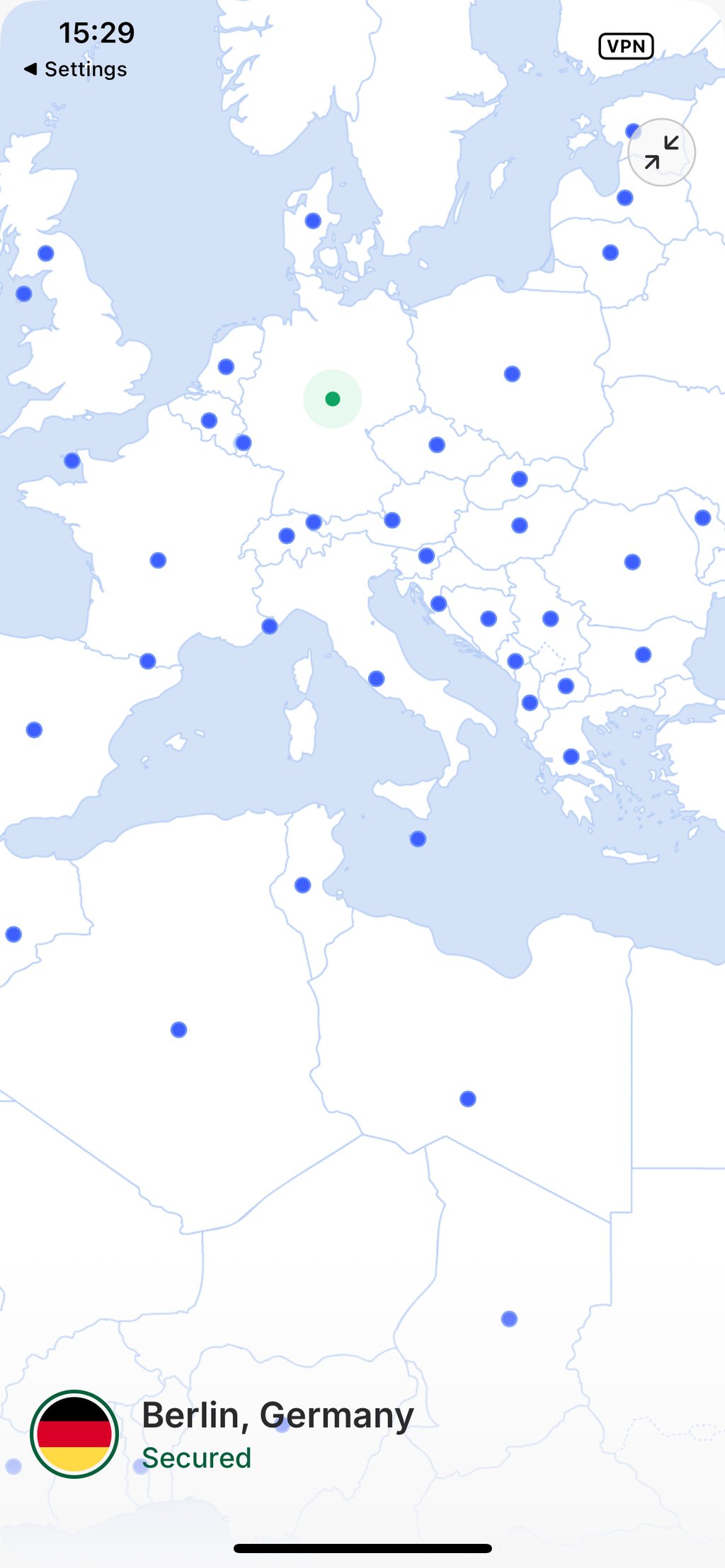
Step 3. Allow VPN configurations
If the app asks, tap Allow to let it add VPN configurations to your device. This step is necessary for the VPN to work properly on iOS.

Step 4. Switch servers if needed
To connect from a different location, disconnect and select another server. Most iPhone VPN apps let you switch quickly without restarting the app.
How to change your VPN location on Linux
Changing your VPN location on Linux can be a bit trickier than on other devices because most VPNs don’t have a graphical interface (GUI) on Linux. There are some rare cases where VPNs do offer a GUI on Linux, such as NordVPN, but this is still uncommon. That’s why, in this guide, I’ll show you how to set it up and change your VPN location using the terminal – a text-based interface where you type commands to control your computer. Don’t worry, it’s easy once you know the commands, and I’ll explain everything step by step in simple language.
Step 1. Open your terminal and log in
Start the terminal on your Linux computer. With NordVPN, type in "nordvpn login" and follow the instructions in your web browser to sign in. If you’re using a different VPN provider, the login command may be different, but the idea is the same: you’re telling your VPN software who you are so it can connect.

Step 2. Check available servers and connect
Use “nordvpn countries" to see supported countries or “nordvpn servers" for individual servers. Then, type in “nordvpn connect [country/server]" to connect and get a new IP address for that location. Some servers are labeled for P2P or extra privacy.

Step 3. Switch servers if needed
To change locations, type in “nordvpn disconnect" to end your current connection, then use the connect command again with a new country or server. You can repeat this whenever you need a different virtual location.

Why would you need to change your virtual location?
Your online location can determine what you can do and see on the internet. Sometimes it’s useful to “move” your virtual location to access content, websites, or services in a different country. Here are some common reasons people do this:
- Access different streaming libraries. Some shows or movies are only available in certain countries. Changing your location lets you watch content that isn’t available where you are.
- Torrent safely. Connecting through a VPN hides your real IP address, making P2P file sharing more private and secure.
- Use public Wi-Fi safely. VPNs encrypt your internet traffic, protecting your data from malicious hackers when you’re on public networks like cafes or airports.
- Bypass age verification. Some social media or adult sites require age verification based on location. A VPN can help you bypass those age checks easily.
- Access geo-blocked websites. Some websites are restricted to certain regions. Changing your location allows you to open sites that would otherwise be blocked.
- Avoid local restrictions or censorship. In some countries, certain apps, websites, or services are blocked. Changing your location helps you bypass these restrictions.
Better online deals. Some online stores and services show different prices depending on your location. Changing your virtual location can help you find cheaper options.
How to change your location on one app only
Sometimes you may want only one app to use a VPN while the rest of your internet traffic stays normal. This is possible with a feature called split tunneling, available on most premium VPNs.
Split tunneling lets you choose which apps or websites go through the VPN and which don’t. For example, you could run a streaming app through a VPN to access content from another country while keeping your games or social media apps on your regular connection for speed and convenience.
Here’s how to enable split tunneling on NordVPN and change the location for a single app:
-
Open the NordVPN app on your device and log in. Make sure you’re using the latest version, as it also includes a Smart Troubleshooting Wizard, which helps quickly fix connection issues if split tunneling doesn’t work as expected.
-
Go to Settings and find the Split Tunneling option. Toggle it on.

-
Choose the apps you want to route through the VPN. On NordVPN, you can either select apps that should use the VPN or apps that should bypass the VPN. Pick the app for which you want to change the location, and that’s it.

Can a VPN change your GPS location?
Usually, a VPN only changes your IP address and virtual location, which affects how websites and apps see your connection. However, some apps, like maps, social media, or location-based games, use your device’s GPS for location data. To truly appear in a different location for these apps, you need a VPN with a GPS spoofing feature.
Surfshark is currently the only major VPN that offers this option. GPS spoofing works by tricking your device into thinking it’s in a different physical location, even while your IP address is routed through a VPN server. This can be useful for testing location-based apps, accessing region-specific features, or maintaining privacy.
Here’s how to enable GPS override on Surfshark:
-
Open the Surfshark app and go to Settings. This is where you’ll find all connections and privacy options.

-
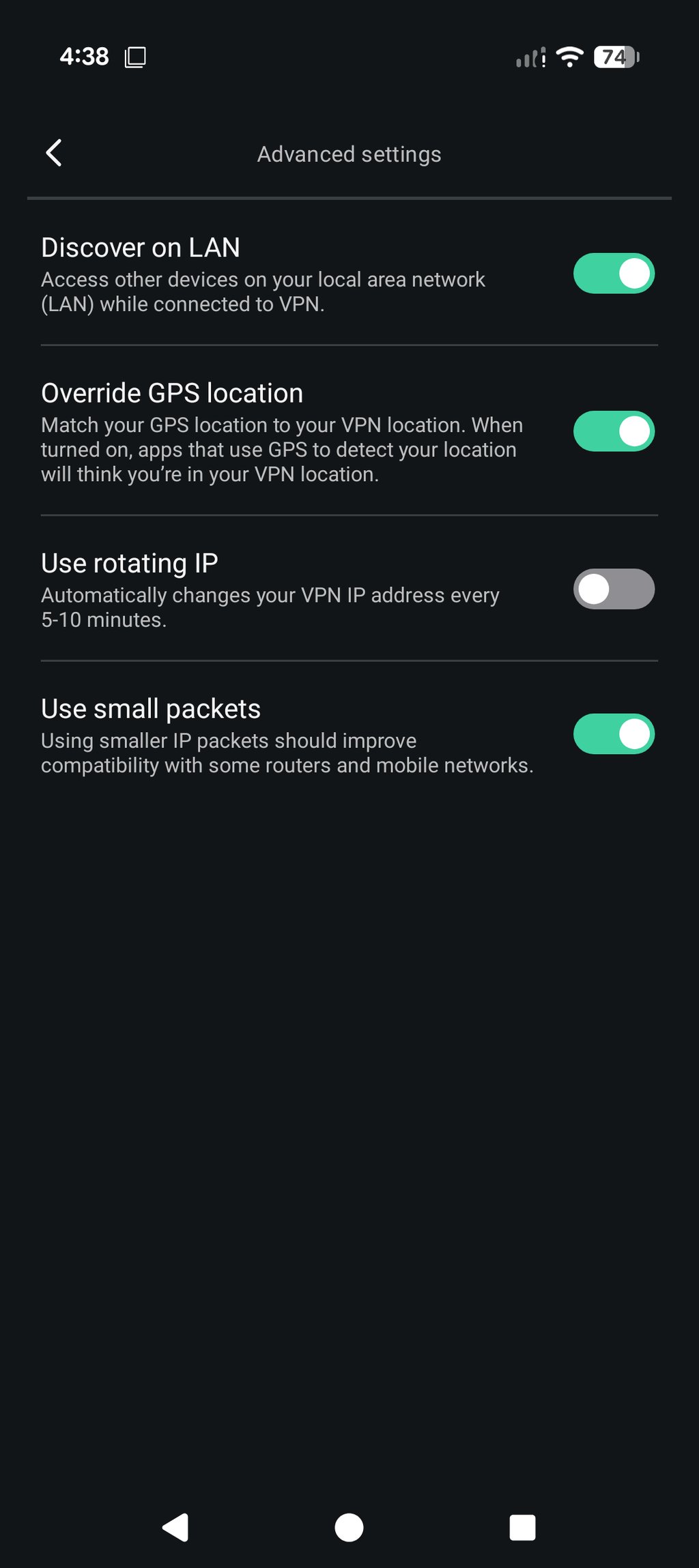
Choose VPN settings and tap on Advanced settings. This section contains extra features, including GPS override.
-
Enable Override GPS location. On Android, you may also need to allow Mock Location in your developer settings for it to work.

Alternative ways to change your virtual location
In addition to VPNs, there are other ways to change your online location. Proxies and the Tor Browser take different approaches, each with its own benefits and drawbacks compared to using a VPN:
- Proxies are intermediaries that route your internet traffic through a server in another location, changing your IP address and hiding your real location. They’re usually easy to set up and often available for free, but they're generally slower and less secure than VPNs. Additionally, most free proxies include ads, posing a risk to your privacy. If you’re looking for reliable proxies, NordVPN has SOCKS5 servers that can be configured in browsers or torrent clients.
- The Tor Browser routes your internet traffic through a decentralized network of servers to conceal your location and online activity. It provides strong anonymity and free access to the dark web but is slower and less versatile than VPNs, which offer faster speeds and broader functionality. Moreover, it’s not suitable for torrenting or streaming, and some websites may even limit or block access altogether. However, NordVPN has Onion over VPN functionality, which adds extra layers of privacy when changing your location.
How to change your VPN location – video tutorial
Summary
The most reliable way to change your online location is to use a high-quality VPN. The service not only assigns you a new IP address but also encrypts your traffic, helping to prevent tracking and bypass geo-restrictions on streaming platforms.
However, not all VPN services are equally effective. To reliably mask your location, I suggest choosing NordVPN. It’s the best provider that prevents DNS leaks, avoids ISP interference, and ensures anonymity. It also delivered the best results in our speed and streaming tests while keeping security uncompromised.
FAQ
Can you use a VPN to change your location?
Yes, you can change your IP address to a specific location using a VPN, but it’s important to note that the VPN server infrastructure may not cover all areas or cities. However, with thousands of servers across 149 locations, NordVPN still has one of the most extensive server networks, so chances are you will find a needed location.
Why is my VPN not changing my location?
There’s most likely a technical issue or a bug if your VPN is not changing your virtual location. In such instances, when you can’t bypass geo-blocks or the location stays the same, it’s best to contact the VPN provider’s customer support.
How do I change the VPN location on my router?
You can change your location by installing a VPN on your router. Providers usually have tutorials and guides on how to configure their VPN connection on a router. I suggest contacting your VPN provider’s customer support to check if a specific router is supported.
Can you change your GPS location with a VPN?
Yes, you can technically change your GPS location with a VPN. GPS spoofing can help you stay undetected by setting up a fake GPS location. Surfshark offers this feature. However, the majority of websites, services, and applications determine your location using more than just your IP addresses. Additionally, GPS spoofing can’t interfere with satellite-based signals, which limits its effectiveness.
Is changing your IP country legal?
Yes, changing your IP address and virtual location is perfectly legal in most countries. However, what you do with a fake IP address might not be legal. Depending on where you are, using a VPN to change your location to bypass government censorship could get you in trouble with the law.